

Not Your Average Hosta: The Showstopping Plant That's Great For Shaded Flower Beds

If you want to add a bit of show-stopping splendor to a shaded flower bed that's just a little underwhelming at present, there's an outstanding hosta variety that you'll want to consider. It's known as 'Empress Wu' and is one of those hostas that grows striking leaves and flowers that truly demand your attention. It was awarded the Proven Winners National Hosta of the Year award back in 2023. Unlike your average hosta, this one is regarded as the largest hosta available commercially, and you'll soon understand why.
The plant itself can reach a height of 50 inches and a spread of 108 inches, but the most striking feature is its enormous leaves, which are 25 inches wide and 28 inches long. These are normally dark green in color (a sign that the plant enjoys plenty of shade), and have very noticeable ribs or veins. To add to the visual impact of this gigantic cultivar, it produces pretty lavender-colored flowers on short stems above the foliage near the beginning of summer. You will find that, once planted in your garden, this particular hosta will take around five years to reach its ultimate size. So, if you have a relatively large space to fill in a shaded flower bed, this is the plant you'll want to grow.
How to grow hosta 'Empress Wu' in your shady garden
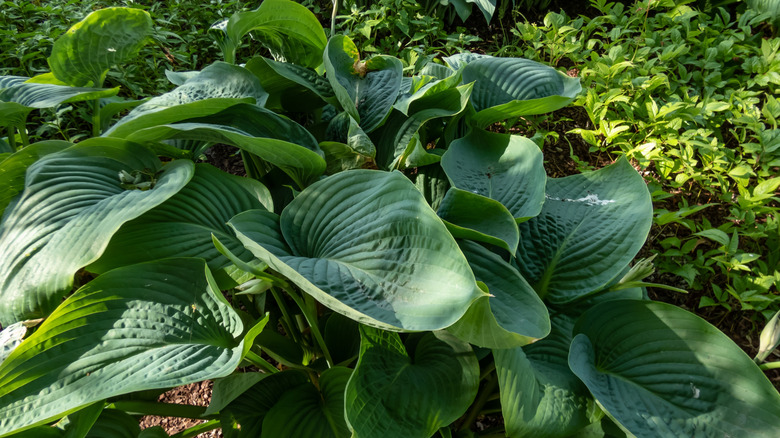
If you live in USDA Hardiness Zones 3 through 8, you can plant 'Empress Wu' in your shady garden bed. Like most hostas, it prefers moist soil that contains plenty of organic matter. Good drainage is also important. If your chosen spot gets a little dappled sunlight, that's perfectly fine, too. There's not a lot of other regular maintenance needed for your hosta to thrive. It's not even necessary to fertilize if your soil contains plenty of organic matter. A balanced fertilizer is only needed if you know your soil is deficient in nitrogen. Your hosta clump will eventually require dividing, but this should only have to be done after around five years.
When you first plant this stunner in your garden or when new leaves emerge from the ground in spring, watch out for slugs and snails because these pests seem to be particularly fond of hostas. Removing old foliage in early winter will take away some of the places that these pests like to hide or lay their eggs. If you live in one of the colder regions, you'll also want to prepare your hostas for winter by covering the plants with a thick layer of mulch to avoid crown heaving when the ground freezes. You should also know that this, along with other hostas, is toxic to dogs, cats, and horses, so keep your pets away from it. Finally, did you know that tulips are the perfect companion flower for hostas? They'll add color and attract spring pollinators.