

The Simplest Way To Get Rid Of Crabgrass Is Also The Cheapest
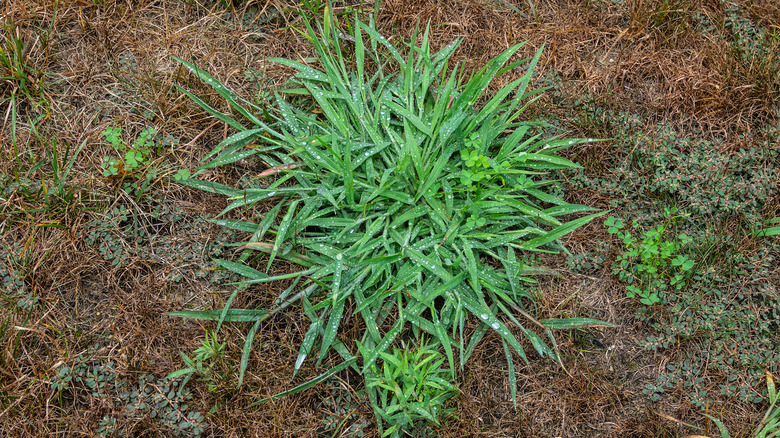
Herbicides may seem like the easiest way to remove crabgrass from your lawn, but they can be expensive. Often, the chemicals are overkill for situations in which early crabgrass has only begun encroaching on garden beds and on the outskirts of lawns. In these cases, you may prefer hand-weeding as not only the more practical approach, but as one that is completely free.
Although there's no shortage of genius tips and tricks for killing crabgrass in your lawn and garden, hand-pulling is the most straightforward. The hand-pulling method works best on young crabgrass plants. First, it's easier to pull weeds when their roots are less established. In addition, young crabgrass won't yet have produced seeds that can get knocked right back into the soil during weeding. Wait to do this kind of crabgrass removal after a good, thorough rain. Alternatively, hose down the soil around the weeds. Wet conditions result in looser soil, which makes removing the roots from the earth easier.
Everyone has their own method of weeding by hand, but perhaps the most common one is to grasp the weed at its base just above the soil line with one hand, and use a garden fork, weeding knife or your other hand to dig under the roots. Using a twisting motion, lift the crabgrass plant up and out of the soil. Even when hand-pulling, take care not to root into the earth too deeply, so that you don't disturb deeper-rooted, ornamental plants growing nearby.
Dispose of crabgrass carefully, and make a plan for larger infestations
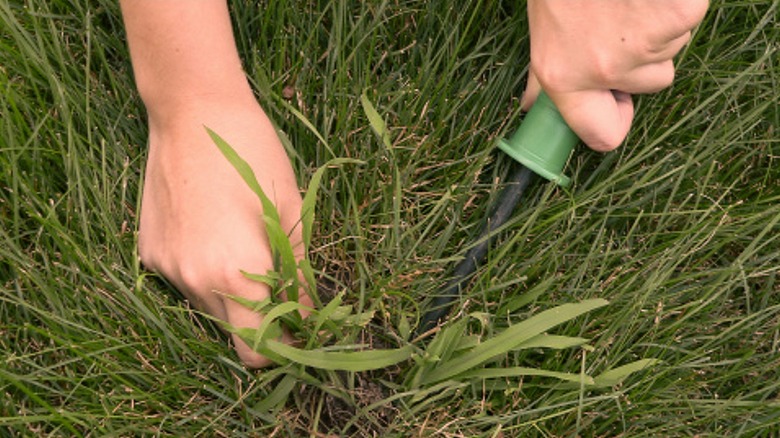
The disposal method of your pulled crabgrass is just as important as the removal process. After you yank out each crabgrass patch, put it in a bag that you seal up when you're done. Dispose of the bag immediately so that the crabgrass seeds don't find a way back into the garden.
Once you've taken out those annoying patches of weeds, do what you can to make sure existing crabgrass seeds don't get a foothold. If you've removed the weedy growth from your lawn, immediately establish grass seeds or sod in the bare patches. In garden beds, applying a thick mulch or a weed-smothering perennial is a good bet.
If hand-picking weeds from your lawn or garden becomes too strenuous for medium-sized patches, there are a couple of other free or almost-free methods worth trying. Boil hot water and pour over each crabgrass plant, being careful not to splash the water on "good" grass or ornamental plants. You can also spray the area with diluted vinegar, again taking care to target only the crabgrass. If you have crabgrass sprouting up all over your lawn, it might be too big of a job for spot treatment. In addition, removing many older crabgrass plants raises the odds of spreading weed seeds. Better strategies for a crabgrass-riddled yard include fertilizing the existing lawn so that the grass muscles out weeds and applying corn gluten meal across a wide area to kill emerging crabgrass seeds.