

What To Do If You Find Foamy Bubbles In Your Lawn And Grass
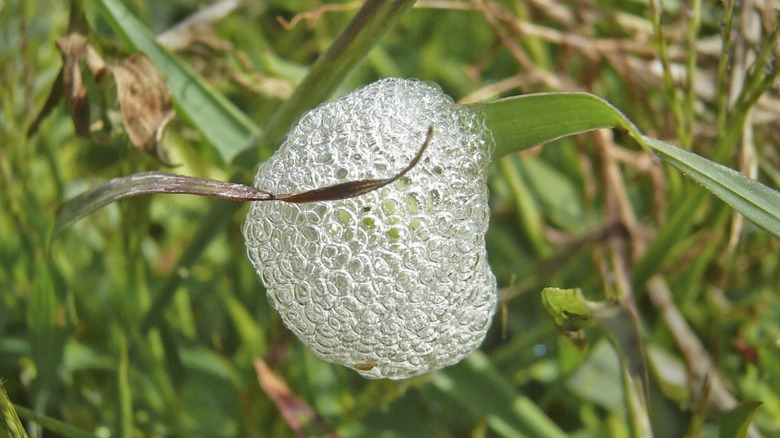
If you go outside to enjoy your garden only to see frothy bubbles on your lawn, it can feel pretty confusing. Thankfully, it probably isn't your neighbor seeing how far they can hock a loogie with your yard as the target. These foamy bubbles are usually caused by a common garden visitor aptly called the spittlebug.
There are more than 30 species of spittlebugs found in the U.S., and you can usually tell they're in your yard by the large clumps of foam they leave on grass and plants. This foam is created when the immature spittlebugs feed. But, unlike spit, it doesn't come from their mouths. The foamy bubbles actually come from their rear end and are mostly made of plant sap. What should you do if you find these bubbles in your yard, and are they any real cause for concern?
Luckily, spittlebugs aren't a huge concern in home gardens. The most common spittlebug, the meadow spittlebug, feeds on grasses and herbaceous perennials, such as chrysanthemums and roses, but the damage they cause is minimal. They rarely feed on plants for long enough to cause any visible or long-lasting damage. However, there are certain situations when this visitor becomes a garden pest you'll want to banish from your yard immediately. Knowing when to act will keep your garden healthy.
Managing spittlebugs in home gardens
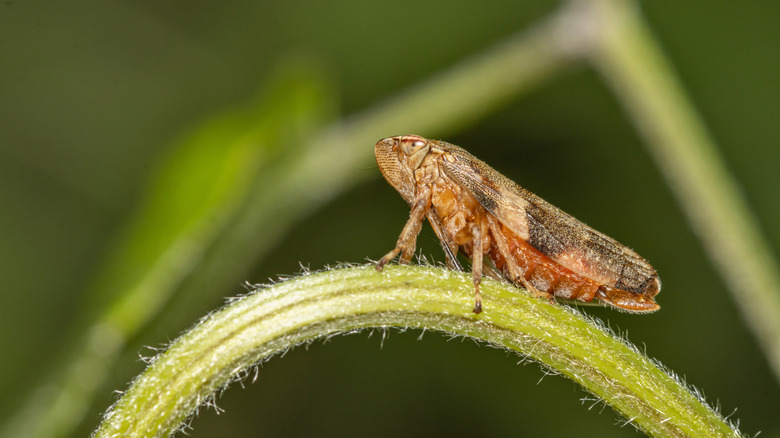
If you only see a few bubbles from spittlebugs, you can leave them alone. However, if you see a lot of bubbles, these tiny insects may become a risk. Feeding by these pests can cause distorted or stunted growth in plants. Furthermore, if you are growing certain crops in your garden, such as strawberries, you may need to act quickly to avoid a ruined harvest. It's time to explore ways to keep these bugs out of your garden.
It is also helpful to consider which species of spittlebug is in your yard when deciding to treat them or leave them be. The most common spittlebug, the meadow spittlebug, is usually the most troublesome. However, pine spittlebugs may be hanging around, too, and this species needs to be dealt with promptly. Pine spittlebugs lay their eggs on trees, and the damage they cause in the process can be significant — it can even lead to the death of the tree. If you live in the eastern U.S., check your trees regularly for early signs of a pine spittlebug infestation, like shoot tip dieback.
For management, spraying your plants regularly with jets of water knocks off the immature spittlebugs. Start here. Make sure to keep on top of weeds, which serve as hosts for these insects. Birds love to eat adult spittlebugs. Adding bird-friendly features, such as nesting boxes and birdbaths, and reducing insecticide use, can attract birds to your garden to help control these pests.