

She Transforms Her Backyard With An Epic Flower Bed Made From Concrete Blocks
We may receive a commission on purchases made from links.
Raised garden beds are a common backyard feature that give you more control over your garden. You can fill them with your own mix of nutrient-rich soil rather than rely on whatever's in the ground in your backyard. They also improve drainage, reduce weeds, and make gardening more accessible and comfortable. Raised garden beds can be made from a wide variety of materials — only materials that might leach chemicals into your soil, like treated wood or old car tires, are off limits.
Concrete is a great option, and there are plenty of ways gardeners can build an epic raised bed entirely from concrete blocks. TikToker Melissa Woods, who goes by the handle welcome2thewoods on the platform, has created a striking concrete flower bed in a fenced corner of her backyard. The contemporary landscaping feature is complemented by long wooden benches and a fire pit.
This is not a DIY project for beginners. It was a massive undertaking that required hours of manual labor, specialized tools, and masonry knowledge, but Woods pulled it off like an expert. In her video, you can see the dedication, planning, and careful execution of the project, along with step-by-step instructions. Woods started with measuring out and mapping the space, leveling off the soil, and removing grass roots. She then installed the frame for the raised flower bed before moving on to building it.
How Melissa Woods built a raised concrete flower bed in her backyard
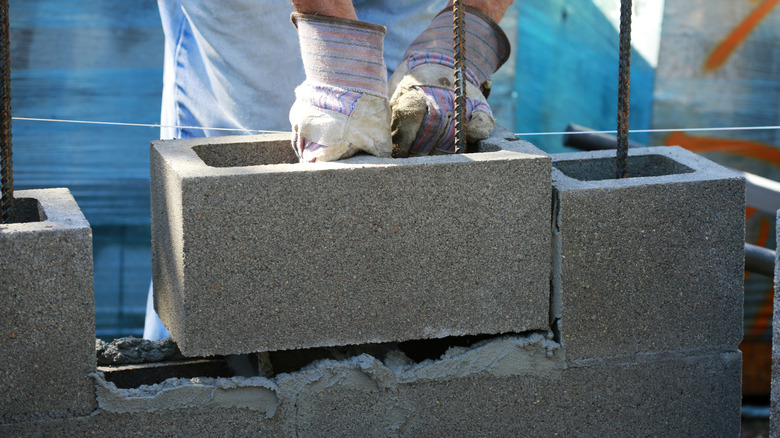
Did you consider trying TikTok's cinder block-and-glue DIY raised garden bed, thinking it would last? If you want something a little more affordable, though just as sturdy, consider taking TikToker Melissa Woods' approach. Instead of using masonry adhesive, she used mortar to adhere the concrete blocks to one another. Both options are easy to work with, create a seamless finish, and are safe for building raised garden beds, which are not structural features. While masonry adhesive requires no mixing, dries quickly, and bonds extremely well, it's expensive. Mortar will hold the concrete blocks firmly in place and is much more affordable. Woods laid the blocks one at a time, overlapping them at the center like a brick wall and spreading mortar between the joins.
@welcome2thewoods What a journey this has been! Don't forget to hit follow if you want to see more badass home improvement projects. 💪 #diyfirepit #concretegarden #diylandscaping #moderndesignfurniture #modernlandscaping #girlswhobuild #diygirl #firepit #diylandscape #backyardvibes #backyardideas #backyardigans #relaxationviibes #relaxationspot #relaxingspot #backyardoasis
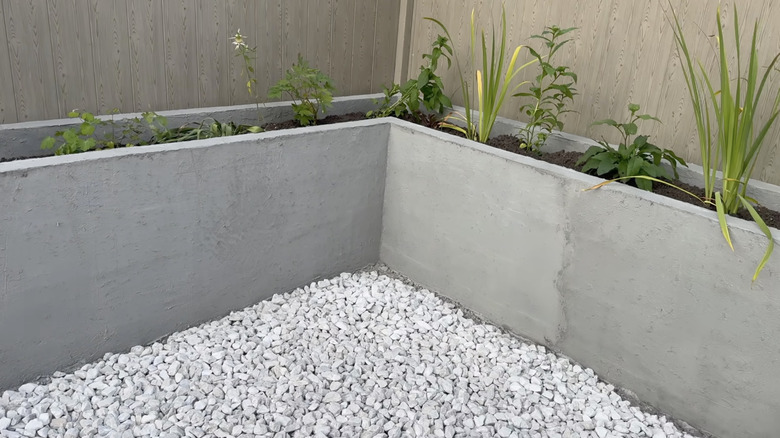
Once the mortar has cured (which can take up to 24 hours), finish the surface of the blocks with SIKA Sikacryl Ready-Mix Stucco Patch or a similar spreadable product, using a plastering trowel. This handy TikToker then added a layer of leftover concrete blocks to the bottom of the flower bed, aiding drainage and stopping burrowing animals like voles in their tracks. She topped the blocks with a layer of stones and logs, which reduces the amount of soil you need to fill the raised bed — something the concrete blocks also help with. The organic material (the logs) will break down over time, adding nutrients to the soil. Woods finished the project with a layer of soil. You can use garden soil, but investing in a high-quality mix designed for raised garden beds, like Espoma Organic Raised Bed Mix, will better serve your plants.
Styling your raised concrete flower bed for a modern backyard oasis
The raised concrete flower beds built by TikToker Melissa Woods (welcome2thewoods) form the backdrop to a modern patio replete with long wooden benches, lounge chairs, a fire pit, and a white gravel floor. To take inspiration from her design, focus on clean lines and natural materials, like stone and wood slats, when shopping for outdoor furniture and fixtures. Or you could create your own unique aesthetic. Use the beds to line a garden pathway or incorporate free-standing metal seating. The beds themselves don't have to be rectangular. Create hexagons, triangles, or custom shapes — the designs for raised garden beds are near-endless. Ultimately, the final look is up to you!
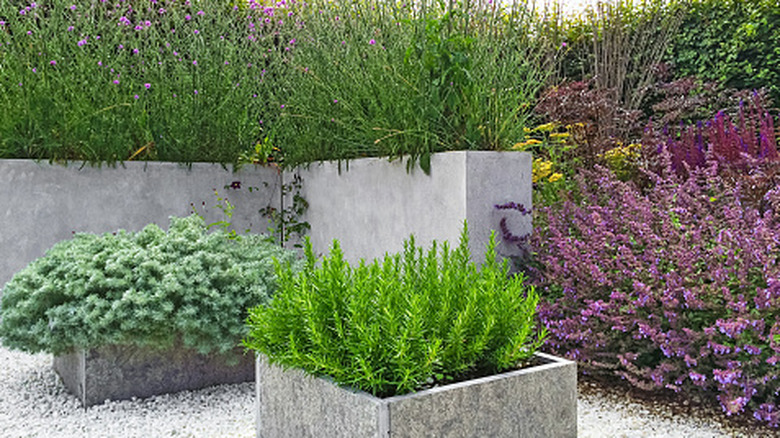
Finally, consider carefully which plants you want to grow in your raised beds. You want a selection that's both aesthetically pleasing and functional. For example, if you choose shrubs with bright flowers, you're likely to attract pollinators from spring through to fall, depending on the plant species. Butterflies and hummingbirds might be welcome in an outdoor living space, but bees, wasps, and flies are not so welcome. Maintenance is another factor to consider. If you don't have much of a green thumb, choose low-maintenance perennials that thrive in raised garden beds instead of annuals that need to be replaced every season. Some good options include hardy sedums (Hylotelephium spp.), the native favorite black-eyed Susan (Rudbeckia hirta), and shade-loving lily of the valley (Convallaria majalis).