

Cover Ugly Vintage Appliances With An Affordable And Easy Solution
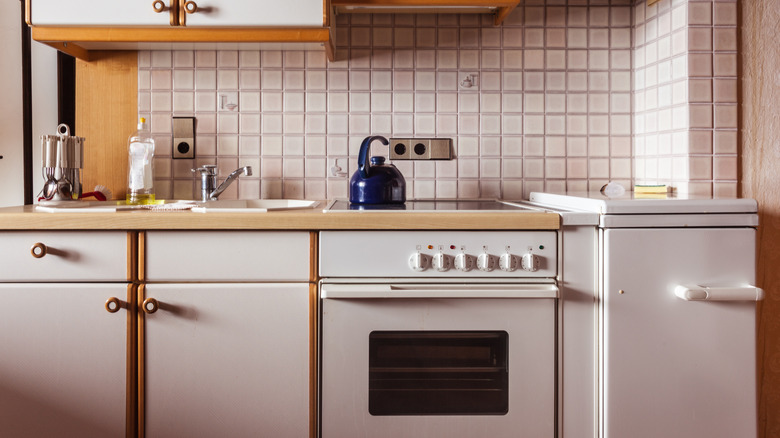
Want to elevate your vintage appliances beyond that outdated white or black? We've got you covered. There's an easy way to upgrade those unappealing eyesores that don't quite fit in with the rest of your kitchen's vibe, and it costs far less than springing for a modern stainless steel replacement. Peel-and-stick wallpaper has been enjoying a moment for a while now. Because it doesn't require the same paste as traditional wallpaper, renters in particular appreciate that it's a low-stakes way to create a feature wall or dress up an otherwise humdrum space. And that same wallpaper can do the same for your ugly or boring-looking appliances. Because temporary wallpaper works best on smooth, clean surfaces, it adheres nicely to the steel, plastic, or aluminum of kitchen appliances.
No matter your preferred design aesthetic, there's a roll of paper that can suit your needs. Unlike the stuffy floral prints of the past, today's temporary wallpaper options include sleek modern prints — stripes, geometrics, color blocking, botanicals — or any shade you can dream up. Nature-inspired designs and rustic-looking wood paneling are among the trendiest picks. But if you try something, and it doesn't quite turn out as you envisioned, the peel-and-stick nature means you can easily swap it out for a design that suits your needs.
How to wallpaper your appliances
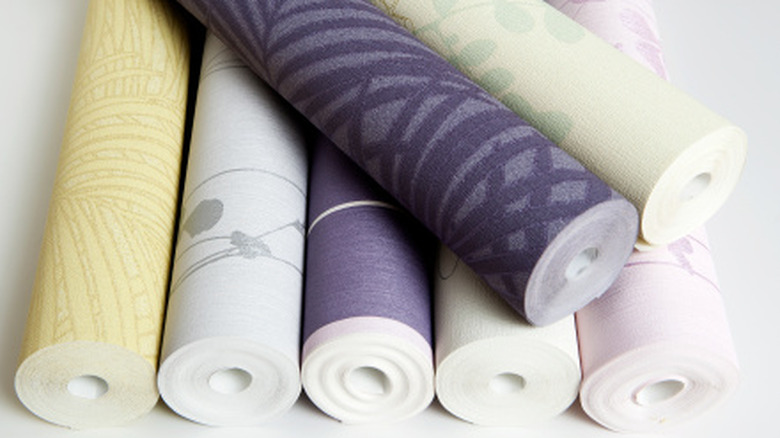
To test out this visual upgrade and bring a pop of personality to your kitchen, you'll want to find the right ingredients. If you have a set of outdated appliances, you can use the same print for all or mix and match. To make it feel cohesive, not chaotic, consider sticking with similar or complementary colors. For patterns, pair a larger print with a smaller one.
Even more crucial, though, is the material. Vinyl is your best bet as it's ultra durable and can be scrubbed clean, an important consideration in a room prone to splatter and grease. High-quality paper should remove easily without leaving residue on your appliances, but it's smart to check reviews first. And keep in mind that covering an oven or other cooking implement can get you in hot water if it's not designed to withstand high temps. Look for something specifically labeled heat-resistant or marketed as an appliance wrap.
Once you've found your design, it's time to get cooking. To prep the surface, clean the area thoroughly, especially if it's a vintage piece that's been through it. Use a sharp utility knife to cut, giving yourself eight inches of excess to work with.
Starting at the top, peel back the paper to expose 12 inches. Since it can be tricky to line up the edge, leave a few inches at the top and sides that you can cut off after. As you adhere the paper, use a wallpaper smoother or squeegee to help iron out any air bubbles. After you've stuck it through, use your utility knife to trim away excess, doing your best to take long, continuous strokes. If you need to apply more than one panel, you'll want to overlap the edges slightly. Most brands will come equipped with guide markers to help you get everything in line.