

Turn An Old Nursery Pot Into A Safe Sanctuary For Ground-Nesting Bees
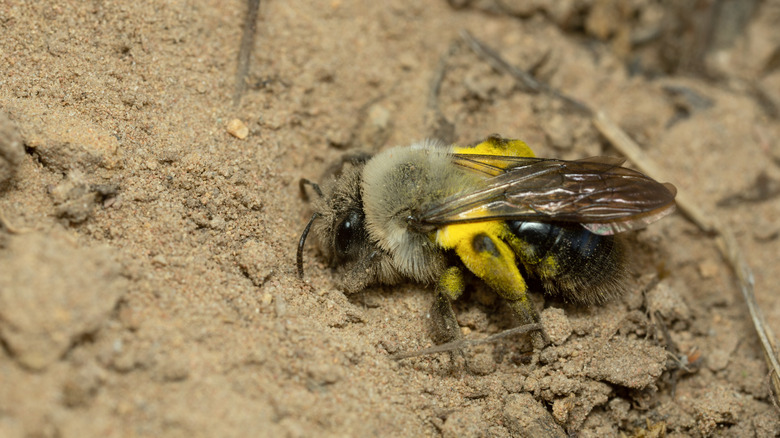
If you have old nursery pots left over after transplanting your spring blooms or repotting your favorite plants, don't toss them. Instead, upcycle them into habitat for the beneficial bees you'll want in your garden. While honey bees might be the ones that come to mind first when you think of the buzzing pollinator, there are over 20,000 known species of bees, including about 5,000 varieties native to the United States alone. Of all those many kinds of bees, approximately 70% prefer to nest in the ground.
So, there's almost guaranteed to be a few ground-nesting bees in your neighborhood who would appreciate a safe, cozy sanctuary in your backyard. The quickest way to create a habitat for these bees is to simply leave some areas of your garden as bare soil. You can do this by designating an area around the base of a tree or in a back corner to be your bare soil area for bees. But if this isn't practical, you can create a safe sanctuary using low cost materials. It'll take a little more work up front, but shouldn't require much maintenance afterward. In a YouTube video posted by People's Trust for Endangered Species, viewers learn to do just that.
How to turn a nursery pot into bee habitat
To create safe habitat for your local ground-nesting bees, you will need at least one old nursery pot, sand, gravel, top soil, a trowel and a clean spray bottle. You will start by layering in each of those materials, starting with sand, then gravel, then topsoil in a ratio of 4:2:1. That is, if you added four scoops of sand with your trowel, you'd then add two scoops of gravel and one scoop of topsoil.
Repeat this layering, mixing well as you go, until the pot is full. Then, fill your clean spray bottle with warm water and mist the soil's surface while using something flat and stiff (like an old tile or the bottom of another pot) to compress the mixture. Keep alternating between spraying and pressing a few times until the soil mixture is very compact. The People's Trust for Endangered Species recommends repeating this last step of compressing the soil over the course of a few days to make sure that it stays compact.
Once it seems well compacted, take a pencil or screwdriver and poke holes into the dirt as deep as the utensil you're using will go, all over the surface (leaving about an inch of space between holes). If the dirt crumbles when you create a hole, it's not compacted enough. Pat it back down and repeat the spraying and pressing step a few more times. Finally, place your nursery pot in your garden, ideally near some flowering plants that you know your local bees already love. If you don't have any flowering plants in your garden yet, now's the time to add some colorful flowers that will bring bees into your yard, so they can enjoy their new home.