

Not Paper Towel Rolls: The Alternative Kitchen Garbage To Add To Your Compost
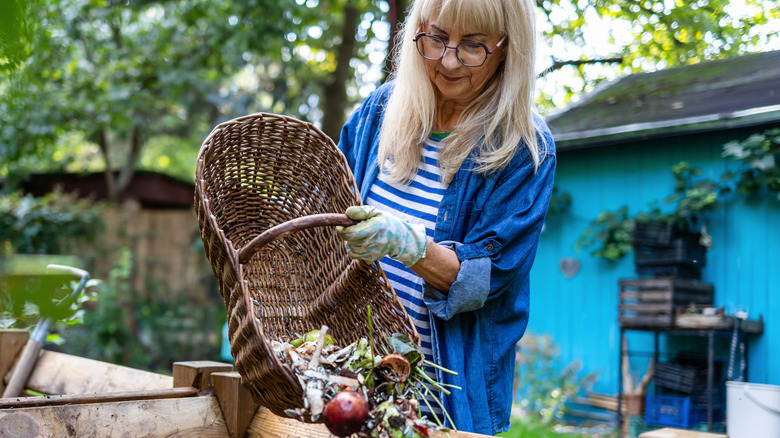
Whether you're a pro at making your own DIY compost or just getting started, there are some surprising materials you probably haven't thought to add. The premise behind composting is simple — allow organic materials to decompose and release the nutrients they contain — but it can be achieved in myriad ways. While it's true that there are plenty of things you should never add to a compost heap, the list of what you can include is even longer. It goes way beyond the traditional food and yard waste that's the default for most composters. For example, disposable wooden utensils and dishware are a great addition to a compost pile.
We're here to tell you that the bamboo cutlery, toothpicks, popsicle sticks, barbecue skewers, wooden chopsticks, and even dishes that fill your trash can during backyard party season can all be composted. It's worth noting that though they're biodegradable, these products will take quite a lot longer to break down than food scraps or raked leaves. About three months to two years is typical, depending on the specific product. You may want to place them in one dedicated corner of your compost pile so they don't get mixed in with faster decomposing materials. However, once the utensils have degraded, you can combine them into the rest of your nutrient-rich compost. Either way, you'll reduce household waste and save money on disposal services and fertilizer.
How to add disposable wooden utensils to your compost
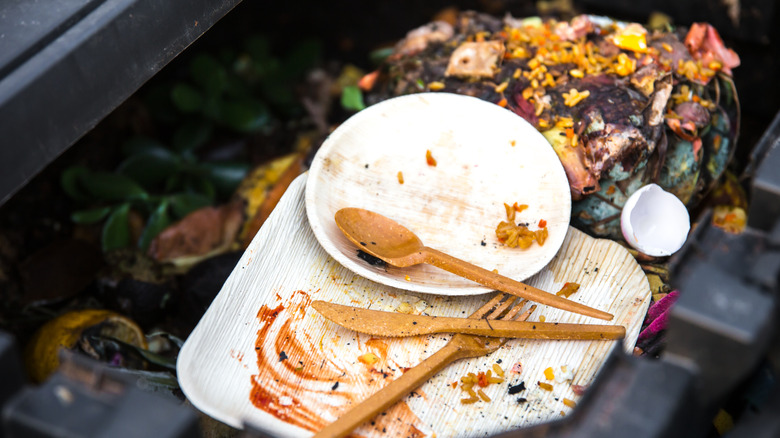
You can't just toss your wooden kitchen garbage into a compost bin. Whether you've got used plates, eating utensils, popsicle sticks, disposable BBQ skewers, or toothpicks, make sure they are made from solid wood or bamboo and are not coated in paint, plastic, or any other artificial finish. They should be disposable, not reusable — the latter is rarely made from untreated wood. If the disposable utensils or dishware have a label or wrapper, remove it before dropping the items onto your compost pile. Similarly, you need to remove any embellishments from the ends of wooden toothpicks — like flags, frills, or tiny dice. If you can't remove these things, the items belong in your trash can rather than your compost bin.
Once you're sure the utensils you have are biodegradable, you need to choose the best composting method for your garden — if you don't have a pile already, of course. In traditional, open-air backyard composting, you need to combine fresh green waste, which is rich in nitrogen, with so-called brown waste. All of your used disposable wooden kitchen utensils and dishware are considered brown compost materials. During decomposition, they will provide your pile with lots of carbon and small amounts of other micronutrients — the exact nutrients will depend on the type of plant matter the items are made from. Later, you can use the resulting compost in your garden to amend your soil.