

Not Paper Towel Rolls: The Other Kitchen Trash You Can Add To Your Compost
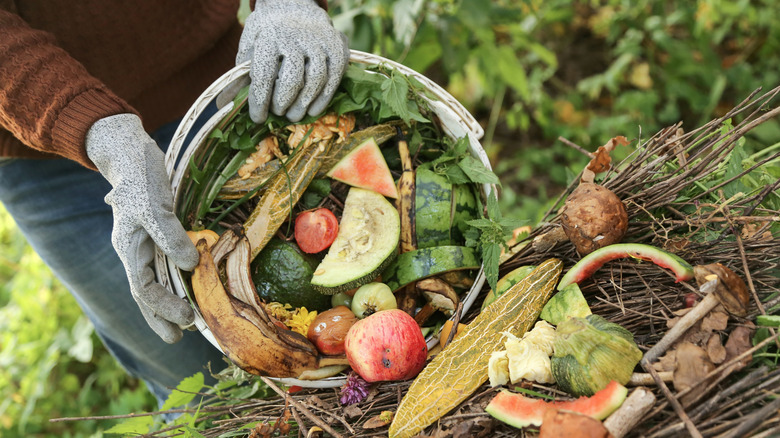
Making your own DIY compost is one of the easiest ways to make the most of waste products and boost the health of your garden. By giving a second life to scraps and natural materials that would otherwise end up in the trash can, you're helping to decrease methane emissions, provide important nutrients for plants, and save money on store-bought soil amendments. The process is incredibly simple at first glance — just pile up your natural waste products and wait — but there are specific steps, ratios, and rules you should keep in mind to guarantee you're left with a usable and balanced final product. In following these rules, you might have determined that pizza boxes aren't fit for composting, but they can actually be a good addition that will give your compost pile a serious carbon boost.
One of the most important things to keep in mind is creating a balance of browns — carbon-rich materials — and greens — nitrogen-rich materials. Food scraps and grass clippings fall into the category of greens, and most of these materials are fair game for adding to your compost pile. Browns can be a bit more complex, but this classification often includes paper, cardboard, wood, and dry leaves. You should have a two to one or three to one ratio of browns to greens, but this can be a challenge to achieve at times, especially if you've been neglecting to add your pizza boxes to the mix.
When can pizza boxes be composted?
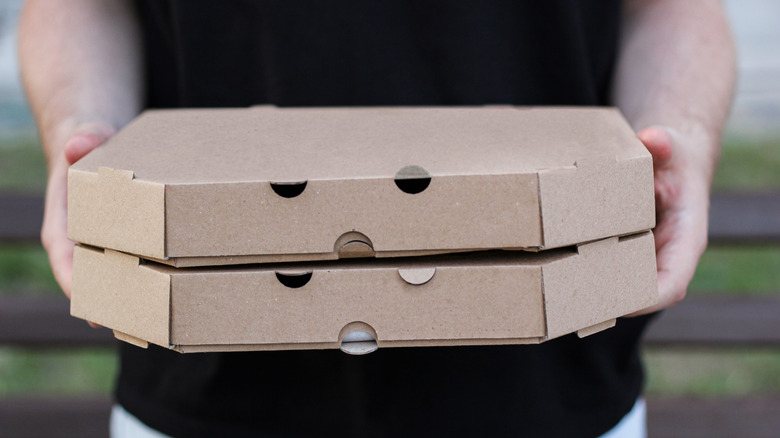
You can't recycle pizza boxes thanks to the fact that grease and oil can cause issues for commercial recycling facilities, but if they're not completely soaked, they can go in the compost pile. While large amounts of grease or fat is usually a no-go, a few dribbles in the box won't hinder decomposition. If you're still concerned or have faced issues with animals sniffing around your scraps, cut out the especially dirty areas and discard them before adding the box to your pile.
While grease is many a composter's primary concern, it's also important to take a look at your specific pizza box to determine if there's anything else that will cause problems. A layer of plastic or a glossy finish on the cardboard instantly excludes it from eligibility. Ink and bleached cardboard can also be a reason for pause, especially if you're attempting to cultivate a completely organic garden, but boxes with these treatments are still generally considered safe to use.
If you've determined that your pizza box is safe, make sure to remove any leftover items or scraps that might still be hanging around inside. From there, rip it up or cut it into smaller pieces before adding it to the pile. Cardboard will break down with time, but large chunks will take much longer.