

11 Modern Kitchen Trends Homeowners Are Already Tired Of In 2026
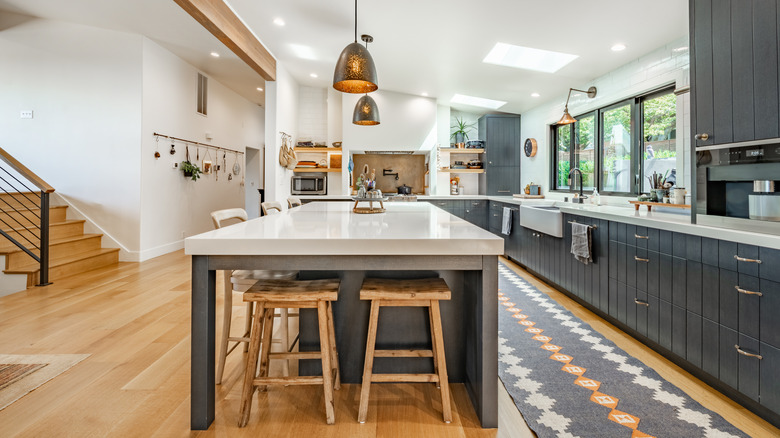
Whether you're re-painting cabinets or renovating the entire space, few rooms require as much careful thought when it comes to design trends like the kitchen. Firstly, as most elements are built-in, the design choices are costly and disruptive to switch out. It's also the heart of the home. It's where families come together over breakfast and dinner, and where friends gather for long-overdue and convivial catch-ups. And since so much time is spent there, the temptation can be overwhelming to copy trends out of your favorite design mag. But should you?
As we'll discover below, there are plenty of recently popular ideas that homeowners now regret adopting. There are also several trends that kitchen designers simply don't want to see making a comeback in 2026. Some are only practical in large kitchens; others are hard to justify regardless of the space you have to play with. A few, while they read well on paper, fail to live up to the expectations that were raised by whoever wrote the product descriptions. And others, while once a mainstay in the world of kitchen design, no longer match up to modern modes of living.
To help you get ahead of the curve and ensure you don't find yourself regretting the way you spent your kitchen budget, we've created this guide. In it, you'll find 11 modern kitchen trends that homeowners are already tired of. From cabinetry colors to luxury kitchen design features that you may not use as much as you think, these trends either have inherent drawbacks, or lack staying power.
Open shelving can accumulate dust and airborne grease
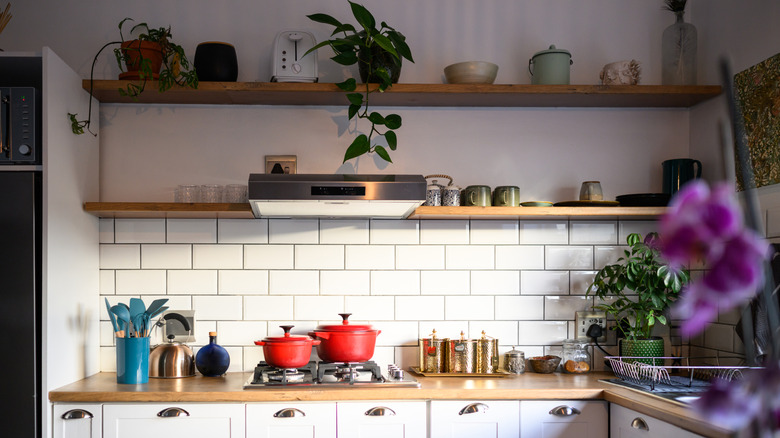
While it admittedly looks nice, open shelving comes with several pros and cons, and in the kitchen, those cons can become a real source of regret. If you use open shelves every day to keep clutter away from your counters, the shelves themselves could also start to look chaotic. On the other hand, if you install them primarily to look pretty, they can quickly feel like a waste of space. And even if you do manage to keep those stacks of aesthetically-pleasing breakfast bowls perfectly neat, there's still the issue of dust. Reddit posts concur that greasy dust buildup can be a significant issue, like this comment: "I hate my open shelves. Everything is dusty, greasy and gross."
If you do want to incorporate some open shelving, locating it away from the stove can help reduce grease buildup. And if easy access to items is the main concern, Chef Julian Martinez tells Sunset that appliance garages are a much more practical means of storage. "These allow you to store items in an easily accessible way, as we do in professional kitchens, while maintaining a clutter-free look in daily living."
Oversized islands often prove more of a hindrance than a help
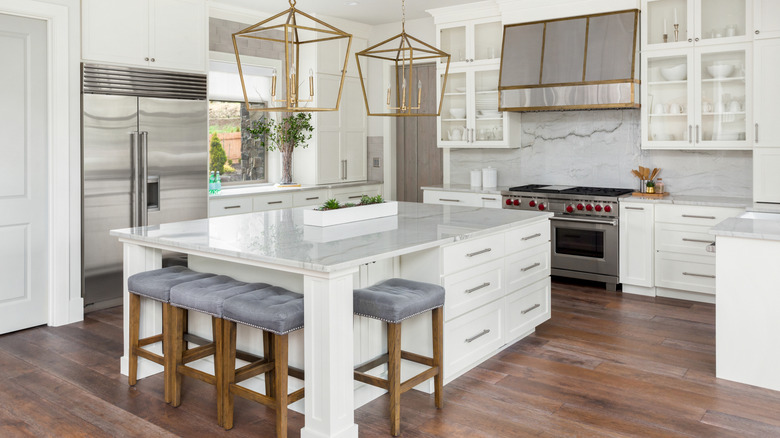
There are several outdated kitchen island trends that homeowners are regretting having bought into. But one of the most potentially frustrating is investing in an oversized island. On the face of things, it seems like a good idea. By having a large island, you give yourself plenty of extra prep space, plus room for kids and guests to sit around and enjoy conversations while you cook. But is it really worth it? According to some homeowners, it would seem that the answer is "no." The reason is that, while they seem to offer lots of benefits, they also soak up lots of space.
Oversized islands can also actually make your kitchen less versatile for different scenarios. For example, what happens when it's your turn to host Thanksgiving? Will everybody fit around your island? If not, will you still have enough floor space to fit a large table in order to seat everyone? Depending on the length of your arms, wiping down a super large kitchen island can be hard. Finally, you might start to feel like that gorgeously upscale, super-sized island is actually just a big obstacle you have to continually skirt to get to the fridge. One homeowner on Reddit put this in a nutshell when sharing how their huge island "creates pinch points when you're trying to move around the kitchen ... you're constantly trying to maneuver around this massive island to get what you need."
Instead trying to squeeze in a too-big island, focus on overall functionality. As Chef David Yoshimura tells Sunset, "Oversized center islands crammed with everything look flashy and interrupt the natural flow of cooking." Instead, he suggests focusing on where you put your appliances, and aiming for "conveyor-belt" style flow.
Over-the-stove microwaves get too greasy and block ventilation
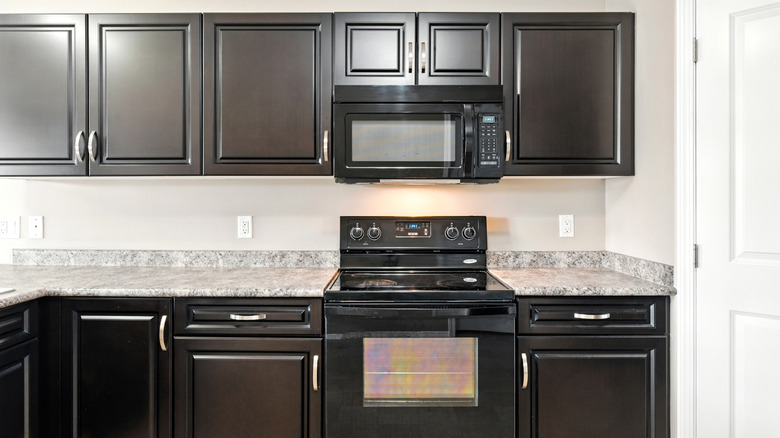
One appliance trend that risks making your kitchen look outdated is the inclusion of an over-the-stove microwave. Like large islands, it can feel like a sensible choice. By fitting it directly above your stove-top, you'll have easy access to all of your cooking appliances, without the need to move around and use up space elsewhere. One issue that people often report is that the microwave is much more likely to get dirty. Which makes sense. Remember how much grease you probably had to scour the last time you were cleaning your kitchen range hood? Additionally, many over-the-range microwaves have a recirculating exhaust system. Yes, some models are designed to externally vent. But if the microwave doesn't provide adequate coverage over the stove, which many don't, then that in-built extraction is unlikely to be effective.
As private chef Nicole Dragon tells Sunset, above the stove may well be the worst place in the kitchen to keep your microwave. "It can be a space saver," she admits, "but ... grease and smoke end up lingering instead of getting pulled out by a proper hood." She also raises safety concerns, for example, lifting red-hot bowls of food from above shoulder height. Unless you really don't have the counter space, finding a quiet corner for your microwave elsewhere is usually best. Alternatively, if you can afford the space, Dragon suggests using a microwave drawer, and reserving the space above your stove for proper extraction.
Motion-sensing faucets sound better than they really are

There has perhaps never been a more exciting time to design a new kitchen. Technology continues to improve, and manufacturers continue to innovate. And it's very hard to argue against a fridge that automatically adds white wine to your grocery list whenever it detects a shortage. But are all tech-based trends worth buying into? According to some homeowners and professionals, and despite the wide choice of touch-free kitchen tools now available, some of the technology simply isn't "there" yet.
Some users have found themselves waving their hand foolishly at a sensor that won't register their movement. Others have found the opposite — that hypersensitivity results in the sudden spewing of water at the worst possible moment, sometimes when nobody is even in the kitchen. Of course, technology is constantly improving, and the issues that some users have is often due to poor installation or sensor calibration. However, even with a perfect installation, it's still another item to maintain and potentially develop a fault. Boring, good old-fashioned knobs and handles aren't only effective, they're also simpler to fix.
All-white kitchens may be better left on Instagram
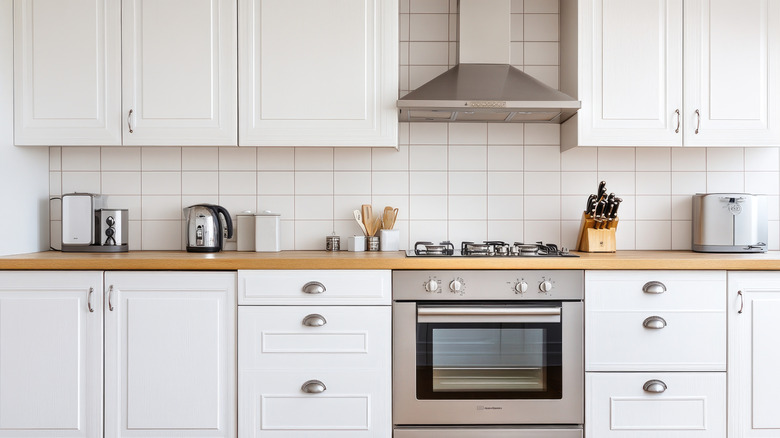
You'll either love or absolutely loathe the thought of a white kitchen. It's a trend that's been popular for years, but has some disadvantages. White is widely associated with purity and cleanliness, the latter of which makes it a natural choice in the kitchen, where food safety and good sanitation are key. The downside of white kitchens is that they're awfully tricky to keep clean. It only takes a drop of whatever's simmering on the stove to sully your pristine surfaces. And while cleaning is always recommended, you may feel like you constantly have to wipe things down to retain your kitchen's crisp appearance.
The other issue is that white kitchens may actually decrease the value of your home. At the very least, they mightn't inspire prospective buyers as much as warmer, earthier tones, like wood, cashmere, and even mushroom. The thing to remember when designing your kitchen is that, whether it's you or your buyer who'll be using it, it's ultimately meant to be cooked in. And cooking is often messy. As, Tom Wicksteed, design firm co-owner, tells Homes & Gardens, "In a kitchen that's used daily, stark white can feel unforgiving and difficult to maintain," adding, "It's increasingly reading as a shortcut rather than a considered choice."
All-singing, all-dancing outdoor kitchens can prove more expensive than they're worth
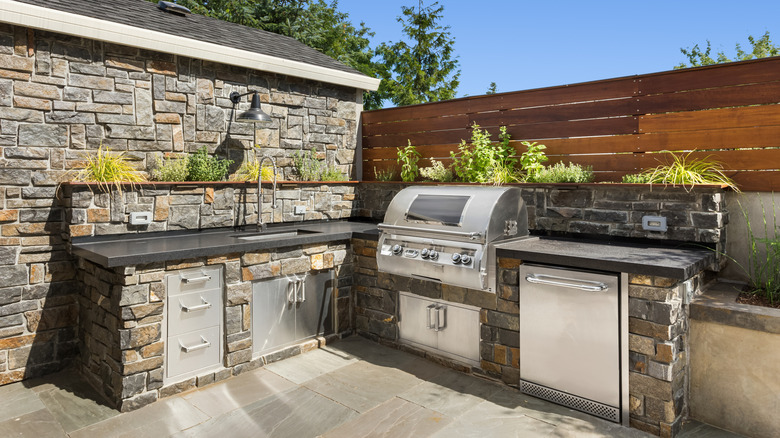
It isn't that people don't want to cook outdoors anymore. Far from it. There are few greater pleasures in life (depending on who you ask) than firing up the grill in your own well-manicured garden. The thing that homeowners are calling into question is the need for a fully-fledged, interior-grade kitchen in the yard. Outdoor kitchens aren't completely disappearing off the face of the kitchen design map. It's just that their viability depends on several factors, each of which should be carefully considered.
For example, if you live in an area with year-round sunshine, you may well get your money's worth out of it. But if you have nine months of poor weather, you probably won't. If your outdoor seating area lies far from your actual kitchen, then it may make sense to have a sink, faucet, and fridge hooked up in your outdoor cooking area. But if it's only separated from your indoor kitchen by a door, then the cost of an outdoor kitchen is might not be that worthwhile.
If outdoor cooking is important to you, you might be better off just investing in a quality grill. Even if you like to entertain, there are plenty of ways to upgrade your patio without breaking the bank. Some comfortable and flexible seating, for example, can make entertaining surprisingly easy. If you plan to host parties after sundown, you can easily fit out your patio with affordable lighting. And don't forget, if keeping beers cold in the summer is of paramount importance, there's absolutely nothing wrong with a good, old-fashioned cool box.
Gray cabinetry is leaving homeowners searching for more color
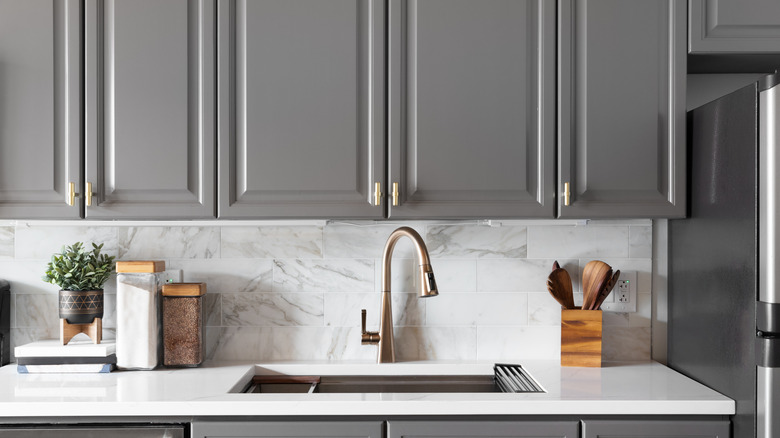
We've talked about white kitchens, and we've covered single-material floors. Another trend that's starting to stifle homeowners' creativity is the use of monochromatic cabinet colors. Interior designer Emily Carlin told Forbes, "We are continuing to evolve from stark white and grey kitchens and continuing to adopt bolder, warmer colors." While this evolution has seen a move towards sages and mushrooms in recent years, Carlin explains that designers and homeowners are increasingly favoring more saturated tones. Terracottas, brick reds, and burgundies are just some of the examples she offers.
Explaining why gray is on the way out in 2026, Tom Wicksteed shared that it tends to work against you, especially in smaller kitchens. "It drains light, reads as clinical rather than calm, and lacks the warmth that makes a kitchen feel genuinely inviting. It's a color that asks very little of a space and, as a result, gives very little back." Instead, he suggests leaning into bolder tones. Like Cooke, he points to a movement away from the sage greens, and instead offers rich, layered greens as a considered alternative. Throw in some natural stone and unlacquered brass, plus lighting that's as functional as it is fabulous, and he says you can enjoy some real "presence" in your kitchen, without being overwhelmed.
Well-trodden design formulas no longer satisfy discerning home designers
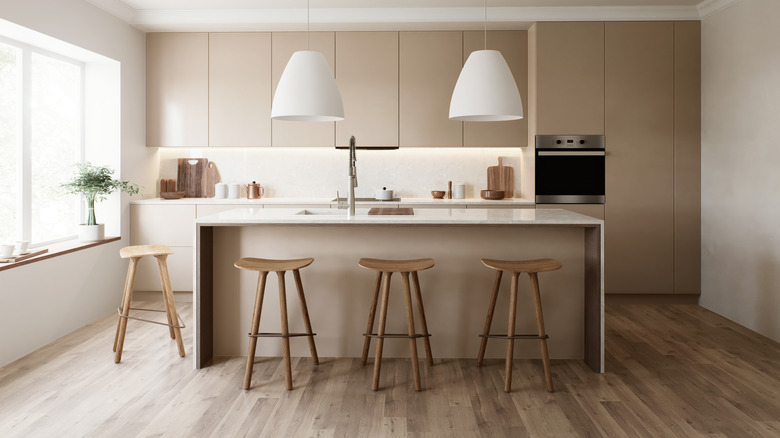
Instead of following the curve, more and more homeowners are seeking to get ahead of it. But what does that mean, exactly? It means "going their own way" in terms of style, instead of following well-trodden design formulas that crop up in countless kitchens around the country. Doing so is a great way to express your own design, color, and layout preferences. More than that, as designer Maya Williams told Forbes, following done-to-death design ideas feels more like a "default setting" than a considered approach to design.
If this sounds a little too nebulous, consider your lifestyle and the demands it places on your kitchen. For example, how much, and what, do you like to cook? What (preferably non-trendy) materials and finishes will work in your space? And what emotions do you want the space to invoke? The key is to nail down the answers to questions like these, and work backwards. By specifying custom kitchen features and design choices that match your way of living, you'll have a much better chance of avoiding the trap of outdated trends.
Homeowners are becoming irritated by the upkeep of marble counters
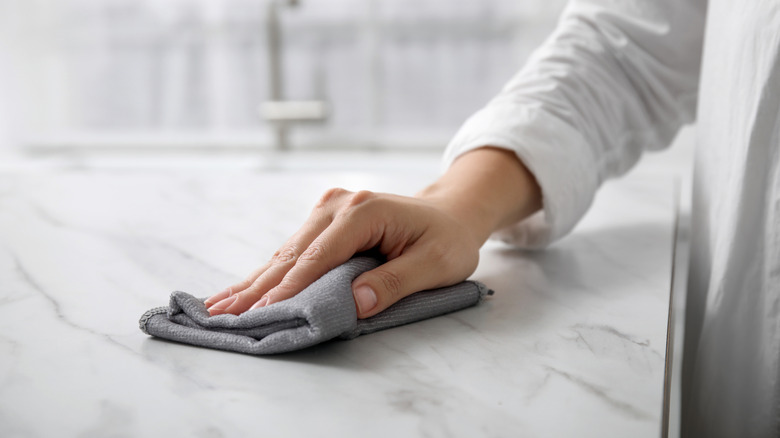
This one may come as a surprise, especially if you've heard that natural stone worktops are the pièce de résistance of kitchen counters. The issue is that, while all of them are naturally beautiful, not all types of stone worktops are born equal. We headed over to Reddit to find out more about people's experience with marble, and while there are those who remain strongly in favor of it, there are plenty of others who don't.
First, we'll start with the pros. One Reddit thread commenter, who concedes that marble tends to become etched and even chipped, nevertheless says, "Nothing compares to real marble. It has a depth that's so beautiful." This about sums up why marble has continued to trend so strongly in recent times across North America. Unfortunately, there are others in the comments for whom etching, staining, and chipping makes marble a non-starter. "I will likely never have marble in my home," says one — a professional cleaner. "Everything shows, it's very easy to stain, and anything oily is going to bleed through it as well." Another, who says that marble is great if you're very clean and careful, admits, "It does stain, etch, and scratch easily."
So, what if stone is a deal breaker for you? If you can't guarantee that you won't guard your marble with your life, then granite is a sensible second choice. Despite its "speckled" appearance, as opposed to the often-clean appearance of marble, granite is indeed hardier. It's more resistant to heat (important in a kitchen) and less prone to scratches (ditto). It also retains its natural sheen longer than marble, which requires periodic polishing.
A pot-filler faucet may be more luxury than necessity
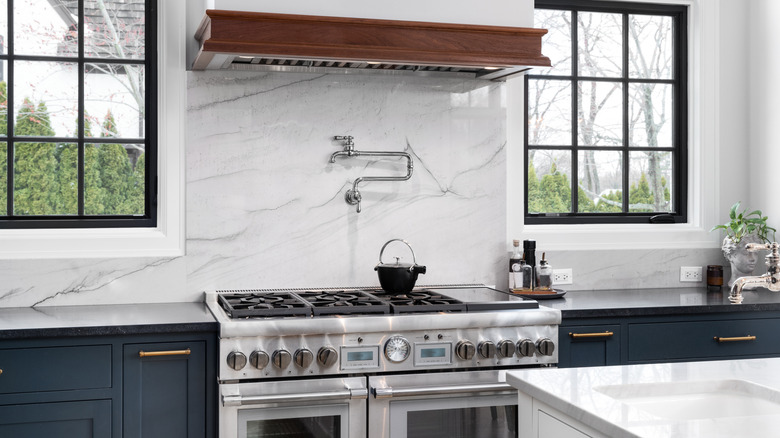
It's true that pot-filler faucets have their place in larger kitchens, where there's a huge degree of separation between the sink and stove. But even then, there are homeowners who question the need for them. Some say that the water stagnates in the pipes between uses, especially if you don't use it regularly. This, in turn, could mean you need to flush the water into a pan and then carry that to the sink anyway! There are other users who've had several O-rings melt in their faucet — a direct result of it being above the stove.
These are just two of the potential problems you could run into. Several Redditors say that they would avoid a pot-filler faucet because it's just another item that could leak. Others say that, despite having had them in different homes, they've never found a use for them. "I hated mine so hard," says one user, adding, "if you're not strong enough to fill it at the sink and carry it to the stove, you're definitely not strong enough to carry it full of boiling water back to the sink."
If you're in the throes of designing your dream kitchen and are starting to wonder if a pot filler is really worth the cost — here's another option: If you have space, consider adding a prep sink to your kitchen instead. This could give you a handy water source closer to your cooking area than your regular sink. As one Redditor put it, "Pot filler, no. But a small prep sink a foot or two from the stove that will never be full of dishes when I want to drain the pasta? Yes."