

Ditch Concrete Pavers: The Alternative That Reduces Runoff & Has A Historic Look
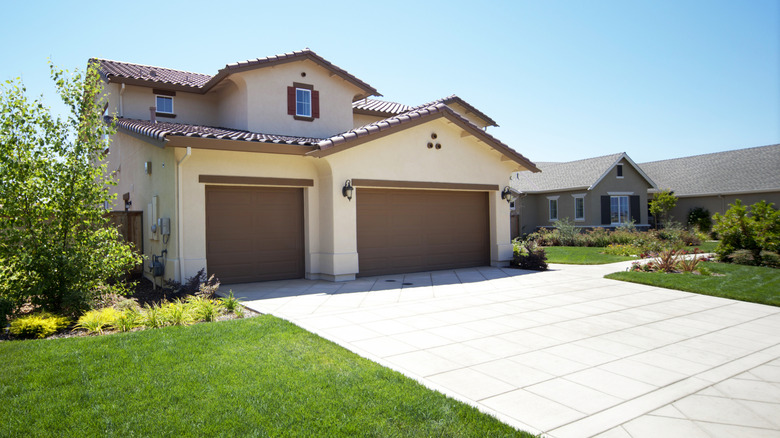
Although the price varies depending on size and type, concrete pavers are invariably the most affordable driveway surface option. They are also tough and easy to look after. However, they do have their downsides. For one, concrete production is really bad for the environment. According to Fair Planet, the process generates higher CO2 emissions each year than most countries; it also has a larger carbon footprint than the entire worldwide air travel industry. On a practical level, because concrete pavers are usually installed to minimize seams, they can cause problems with rainwater run-off. There is a low-maintenance alternative that dramatically reduces the problem and gives the driveway an upscale, historic look: cobblestones.
To be precise, we're talking about using cobblestones to create permeable paving. Cobblestones are made from a natural material — typically limestone, granite, or basalt. Quarries in the U.S. have to follow sustainability guidelines, so cobblestones are also an eco-friendly solution. If you check out the average lifespan of a cobblestone driveway, you'll see that durability is another major plus. Then there's the aesthetic versatility. A wide range of sizes, colors, and shapes allows them to be paired with virtually any property style.
Surface variations mean cobblestone driveways are naturally permeable, so water can drain away instead of pooling on the surface or running off. Other visual options include deliberately leaving larger joints and filling them with aggregates like gravel or ground glass. You might also plant grass, and there are a variety of plants you can walk on if you also want to use cobblestones for permeable patio paving ideas or poolside.
Key considerations before opting for permeable cobblestone paving
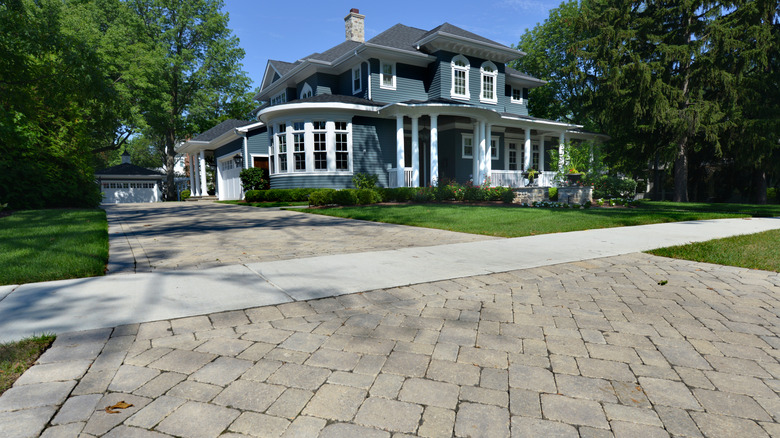
Cobblestone pavers can be significantly more expensive than their concrete counterparts. And while they can be used to create driveway layouts sure to boost curb appeal, labor costs could also have an impact. It is technically possible to DIY a cobblestone driveway, but there's a great deal of work involved, so it's not uncommon for people to call in the pros.
While the random shape of cobblestones is one of their strengths, it does mean the finished surface will always be a little uneven. You'll almost certainly notice that when you drive or walk across it, and it won't be ideal for those with mobility needs. Cobblestones also make it challenging to remove snow and ice in the winter: Plows will tend to leave a lot behind.
Even so, nothing quite matches the historic look of cobblestone pavers, and their permeability means driveway runoff problems can be a thing of the past. They can last for decades in all weather and are an eco-friendlier choice than concrete. There can be quite a difference in cost, but it's an investment in something that has practical benefits, tremendous visual appeal, and is better for the planet.