

Not Egg Shells Or Coffee Grounds: The Overlooked Scrap To Add To Compost
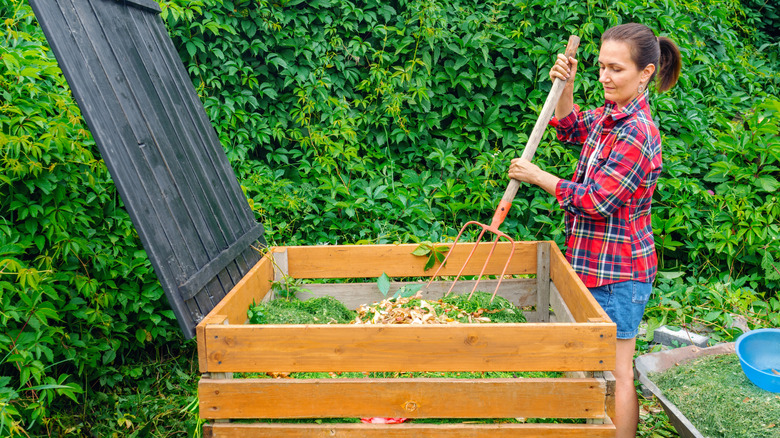
As helpful as those bags of rich, earthy compost are in the garden, it's much less expensive, and kinder to the environment, to make your own DIY compost. Materials you can use include the parts of produce that you don't eat, and an excellent choice is to use corn husks and corn cobs. Unlike many other types of fruit cores and vegetable parings, corn waste adds carbon-rich, or "brown" layers to the compost pile; most other brown compost comes from outdoor materials like dried leaves. Since you'll typically need about three parts of brown materials to one part "green" (nitrogen-rich) materials, the bulk of corn husks and cobs is especially useful.
In other words, stop tossing corn husks after you shuck them! Corn husks are rich in carbon, and if you happen to grow your own corn, you can also use the stalks of the corn plant. Both of these parts of the plant contribute carbon to the compost pile, as well as considerable bulk. And don't forget those pesky corn silks! For all the trouble they are to remove from the ears, you might as well get some use from them in the compost pile.
Cobs are also a good source of carbon, and can also provide aeration, thanks to their bulkiness. Those extra air pockets allow the compost pile to warm up more quickly, increasing the speed at which the other materials in the pile break down and turn into rich, fertile compost.
Your compost will appreciate all the corn debris you can give it
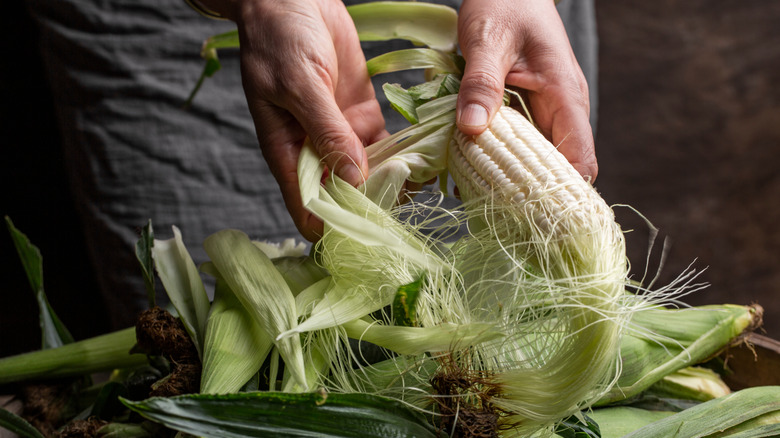
Although shucked corn tends to yield bagfuls of husks and cobs, don't be shy about adding the entire amount to the compost pile, to give your compost pile a serious carbon boost. Remember, you need about three times more of these brown materials than the green ones, like grass, manure, and produce scraps. That ratio is by volume rather than weight, making it easier to "eyeball" the layers of carbon and nitrogen as you build your pile.
Both cobs and husks are slow to break down, as opposed to quicker compost materials like coffee grounds, fruit peels, and mowed grass, and this can be helpful when composting. Having a variety of textures and decomposition rates is healthier for the pile, and encourages the kind of higher heat that leads to a faster turnover rate. That said, if you need to get things moving for the coming season, shred and chop up your cobs and husks. The smaller the pieces, the more quickly they'll decompose.
What about leftover corn? In general, small amounts of cooked vegetables are fine to add to compost. The tricky part is that additions like butter, cheese, sour cream, or oils will go rancid in a compost pile, tending to draw pests. So only toss in leftover cooked kernels if they're not swimming in fats or dairy. As with most things in life — when in doubt, leave it out!