

Not Shelves: The Home Office Feature That Can Increase Value

Remote and hybrid work have fundamentally changed the way we look at home offices. They are no longer viewed as simply "nice-to-have" spaces but can be an important part of a modern home. The challenge lies in our ability to select the most useful and durable furniture for these workspaces. You might think that a simple shelf cabinet and a desk are enough. They are affordable, easily movable, and customizable. However, if you are looking for something that adds elegance and value to your home, built-in cabinets are the better option.
Built-ins are one of the things that every organized home office needs. Unlike standard shelves or freestanding furniture, custom built-ins are designed specifically to blend seamlessly with your home's decor. Custom-built-ins in home offices can often recoup roughly 80% of costs, depending on market conditions and project scope. This is partly due to the fact that more and more people are shifting to a work-from-home routine, and built-ins provide the comfort and ample storage they need. Having a built-in office unit also keeps your workspace clutter-free, which can increase productivity and improve focus. Even when they don't offer a direct monetary value, they can make your home design seem more intentional and, hence, more attractive to buyers.
One downside is the price, as custom units can easily cost thousands of dollars depending on materials and size. Even though a home office built-in can require a significant investment, the cost may be worth it since many built-ins are designed for long-term durability.
Ideas for home office built-ins that add value
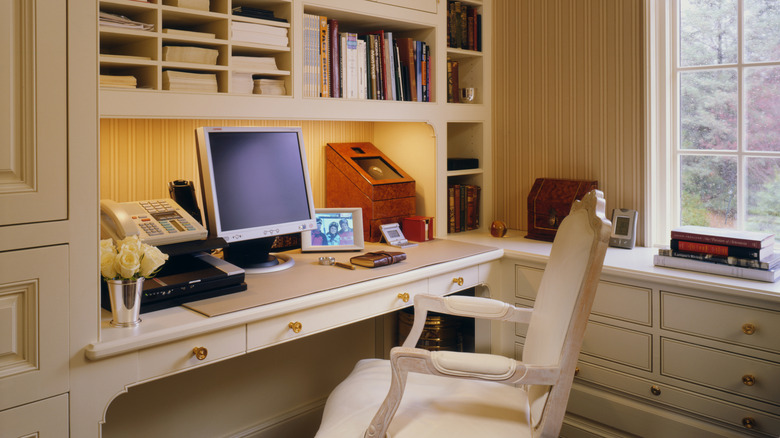
There are many creative ideas to go about creating your custom office built-ins. One of the most popular options is the wall-to-wall workstation. These built-ins often include a long desk surface, overhead cabinets, open shelving, and hidden storage, creating a clean, clutter-free workspace. You can also execute the same idea but on a smaller scale by installing an F-shaped desk, cabinet, and drawer area. This can work especially well in smaller spaces.
Another idea for small spaces is creating a "cloffice," which is simply converting your closet space into a built-in desk unit with shelves. The best part is that you can repurpose any closet into a cloffice. You can also have a corner desk if you have a tight space between two structural beams or between a beam and a wall.
When you're creating your built-in, consider including mood lights, light strips, or built-in light spots to boost the lighting on your work area. It's also a great idea to consider the view you're going to be facing while using these built-in structures. If you don't have a window nearby with interesting scenery, try adding some wallpaper with geometric patterns or a creative design in the empty spaces of your built-in.
Common mistakes with office built-ins that lower property value
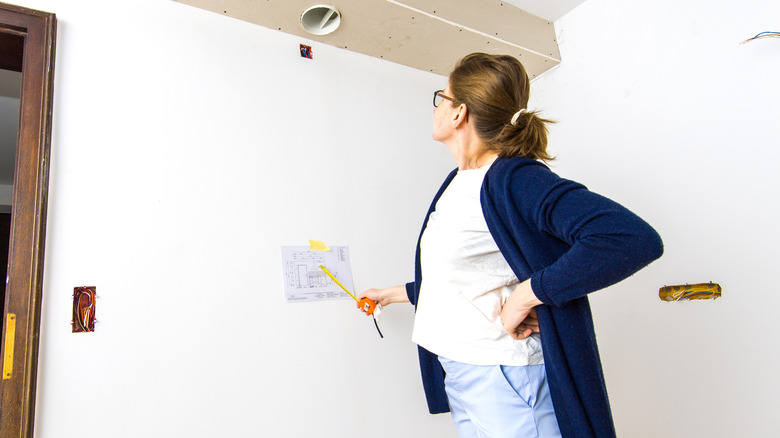
Although built-ins can improve a home office and potentially add value, poor design choices can have the opposite effect. One of the most common mistakes is prioritizing appearance over functionality. A beautiful setup may look impressive in photos, but if there isn't enough workspace, storage, or proper lighting, the office quickly becomes frustrating to use, which makes it less attractive to buyers. When you're creating a built-in structure, always maximize the use of the corners, alcoves, and walls. The biggest difference between having a built-in and a simple desk is how you can utilize the area you have perfectly, so that no space goes unused.
You also want to make your place feel like it's truly yours, and, luckily, there are many unique home office setups that will inspire your creativity. However, built-ins that are too specific to one homeowner's taste may limit appeal to future buyers. Extremely bold colors, unusual layouts, or highly specialized storage solutions can make the office feel less versatile. The most valuable built-ins tend to balance personality with functionality.
On a similar note, ignoring flexibility is another common mistake. Some homeowners install built-ins that dominate the entire room, making it difficult to rearrange furniture or adapt the space for another purpose later. You should also consider electrical outlets, cable management, and ventilation for electronics when planning your built-in design.