

Not Banana Peels Or Coffee Grounds: Reach Into Your Freezer For The Perfect Compost Addition
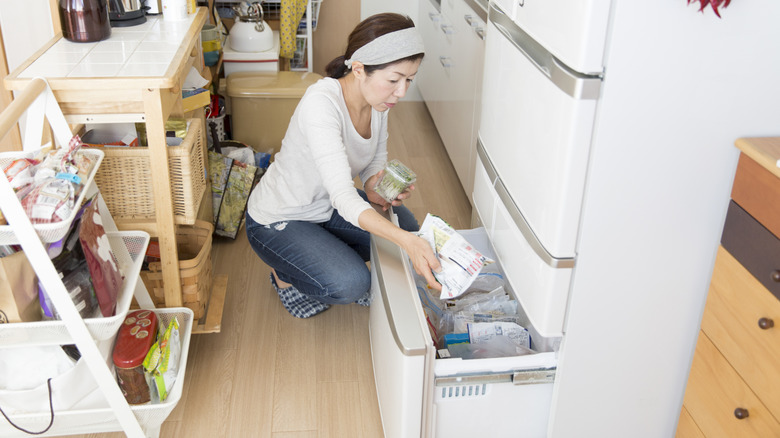
Ever grab vegetables out of the freezer and find them dry, shrunken, or wrinkled, and covered with ice crystals? These veggies are almost certainly freezer burned. You're probably not going to want to eat them, but you don't have to waste them. There are plenty of things you should never add to a compost heap – but freezer-burned vegetables are not among forbidden compost ingredients. These damaged veggies could even offer some extra benefits in your compost.
Freezer burn occurs when when ice transitions to vapor — but skips the liquid phase — through a process called sublimation, which has a dehydrating effect on food. Ice and frost forming in your freezer is a sign that your stored food could be freezer burned. This condition occurs when food items are insufficiently packaged for freezing or stored too long. Fluctuating temperatures, such as from frequent opening of the freezer or power outages, can also result in freezer burn.
Just as freezer-burned vegetables are safe (though not pleasant) to eat, they can also be safely added to compost. From a food safety standpoint, freezer burn does not introduce or encourage harmful bacteria.
How to add freezer-burned veggies to your compost
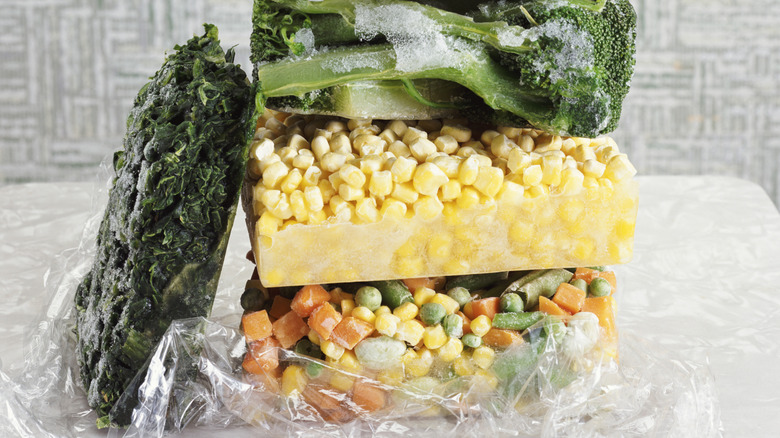
Freezer-burned vegetable are a benefit to compost piles. The freezing process causes cell walls to rupture. In composting, plant cell walls are a significant barrier to the microbes that consume the plants. Thus, when cell walls are already broken in freezer-burned veggies, processing by microbes may occur faster. The dehydration that occurs during the sublimation introduces a higher porosity in the veggies that boosts microbial activity in compost. Further, vegetables with high-water content can upset the moisture balance in compost, but freezer-burned vegetables are already dehydrated, so that's not a concern.
As you make your own DIY compost and add freezer-burned veggies, you'll of course want to remove any packaging. You can choose to chop the vegetables into smaller pieces to speed up decomposition. If you are hot composting, be sure to maintain the ratio of 25% nitrogen-rich "green" items (which your freezer-burned vegetables fit into) to 75% carbon-rich "brown" materials that keeps your compost hot.