

Don't Fall For Its Beauty: The Yellow Flowering Ground Cover You Don't Want In Your Yard
When you're looking for a ground cover to fill an area in your garden, you usually want something that grows relatively quickly and maybe even forms mats so the bare space looks lush and beautiful with little effort on your part. For that reason, it may be tempting to allow Wedelia (Sphagneticola trilobata) to serve that purpose for you. Also known as creeping oxeye, the low-growing ground cover boasts pretty little daisy-like yellow flowers all summer long.
However, this showy member of the daisy family shouldn't be welcomed into your yard if you don't live within its native range throughout Mexico, Central America, and South America. If you've already spotted some in your yard and are wondering whether you should allow it to spread, this is your sign that you should rip it out immediately before it becomes established. If you don't have any in your yard, but have been considering adding it because of its pretty flowers and low maintenance, this ground cover plant is not worth putting in your yard.
For gardeners in warmer climates, this perennial is unlikely to stay contained to the areas where you want it, and keeping it under control can become a constant battle. For those further north, the plant may not be as hardy as you wanted it to be. Fortunately, there are easy-to-grow alternatives that are less likely to become a nuisance in your garden. You just need to think about what type of ground cover you're looking for and what will be best suited to your climate.
Why you shouldn't keep Wedelia in your yard
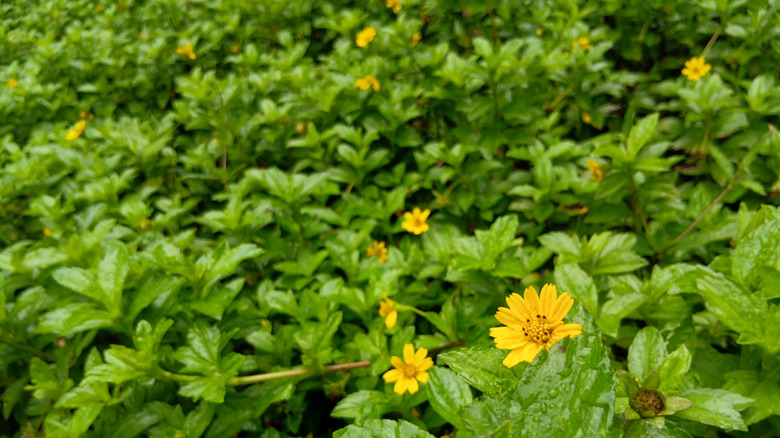
The reasons you should avoid planting Wedelia in your garden if you live outside of its native range depend on where exactly you live. For gardeners in the southern United States, the problem is that your climate is likely similar enough to the warm, tropical environment it calls home. While the instant results might be welcome at first, it'll quickly outcompete other plants in your garden and become a fast-spreading invasive ground cover to steer clear of.
It's so aggressive, in fact, that states like Florida have listed it as a Category II invasive species. That means you not only shouldn't plant it intentionally, but you should actively rip it out if you see it pop up in your yard. That's because a single plant can spread six feet or more in diameter. It does this by sending out stems that will put down roots wherever they touch the soil.
In colder climates, gardeners face the opposite problem. Thriving in USDA hardiness zones 9 and above, Wedelia has very little frost tolerance. The tropical species also prefers nutrient-rich soil and lots of moisture. So, if your winters are cold or your warm season is dry, you might not see the kind of fast-spreading growth you were hoping for. In colder climates, you'll likely have to replant it every year because it may die back during winter. That may prevent it from becoming invasive, but it definitely isn't the low-maintenance plant you may have been hoping for.
Better ground cover alternatives to plant instead of Wedelia
If you like the look of Wedelia or you just want a low-maintenance ground cover that is capable of taking over a bare patch in your garden, there are plenty of species you can opt for instead of the invasive plant. The easiest way to find an appropriate alternative that will thrive in your garden without taking over is to look for something native to your region. Then think about the light and soil conditions where you want to plant it.
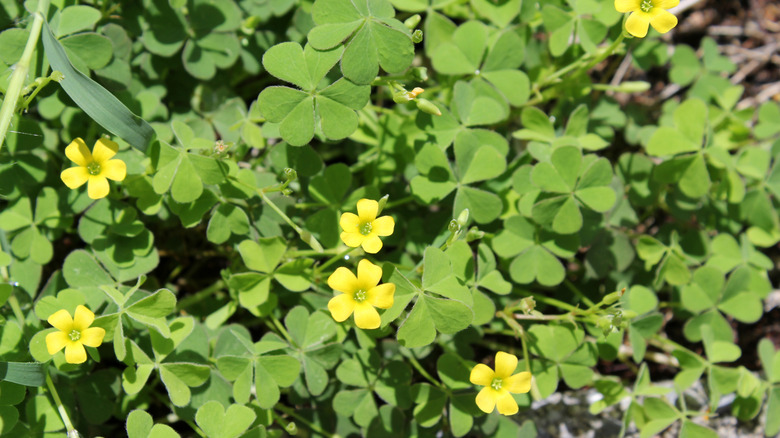
If you're filling an area with full sun and the kind of moist, loamy soil that Wedelia loves, for example, try creeping woodsorrel (Oxalis corniculata). It spreads easily and tolerates a variety of light and soil conditions while offering a display of small yellow flowers when it blooms. Other flowering native ground covers you can try in the southeastern United States include Herb-of-grace (Bacopa monnieri) and Browne's savory (Clinopodium brownei).
If you're further north, you'll probably do better with a flowering ground cover that's more cold-hardy. Eastern teaberry (Gaultheria procumbens), for example, is a creeping evergreen ground cover with bell-shaped white flowers and bright red berries later in the season. You can also try Canada windflower (Anemone canadensis) or Virginia creeper (Parthenocissus quinquefolia) if you need something fast-growing, but native. Note that both of these are known to be a little hard to control in the right conditions. But if you need to fill a large area or you're interplanting them with taller natives, they can both be low-maintenance, showy additions to your garden.