

Repel Slugs From The Garden With A Textured Plant They Can't Stand

If there's one thing that gardeners and slugs can agree on, it's a fondness for shady spots outdoors. While we try to escape the sun under trees, slugs are drawn to the dark, damp, cool conditions under low-growing plants — which, unfortunately, they also love to devour. These habits make planting in low-light areas especially challenging. While you may already know which slug-attracting plants you might not want to grow in your garden, it's harder to find ones that repel these pesky land mollusks. That's why fuzzy-leaved, highly ornamental lady's mantle (Alchemilla mollis) is popular with gardeners plagued by slugs.
Lady's mantle is a perennial border plant or ground cover that slugs and snails tend to avoid. While different plants repel slugs for different reasons, the primary defense of lady's mantle lies in the rough texture of its large, scalloped-edged leaves. Slugs — and their close cousins, snails — simply don't like chowing down on thick, tough, hairy foliage, instead preferring young, tender leaves for dinner. The fuzz can also make it hard for the slugs to grip the greenery, limiting their access to an area.
Lady's mantle grows into a neat mound about 12 to 18 inches high and 18 to 30 inches wide in Zones 3 to 8. In June, the plant produces clusters of tiny, yellow-green flowers. It's those slug-repelling leaves, which are velvety on top and rough underneath, that really steal the show. The foliage looks extra magical when covered in perfectly round droplets of morning dew or following a rain shower or a spray from the garden hose.
Lady's mantle is an easy-care perennial that shrugs off slug attacks
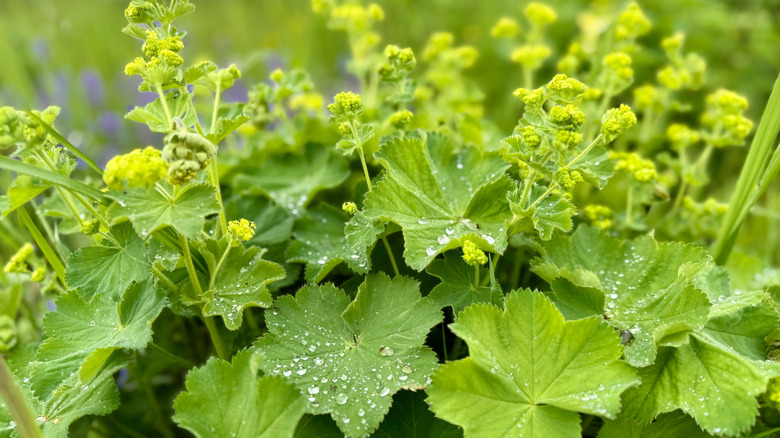
Lady's mantle is one of those rare plants that can handle a range of lighting conditions, from deep shade to full sun. In warmer climates, some afternoon shade is a must. Because they do well in partial to full shade, you can plant lady's mantle in the dark places slugs tend to congregate to deter them. Just make sure the area has moderately rich, well-draining soil that leans slightly acidic over neutral or alkaline.
Whether you're growing lady's mantle in a group or as a perennial companion plant that thrives next to hostas and other shade-loving greenery, give this tough perennial plenty of elbow room. Space new plants 1 to 3 feet apart, depending on the cultivar, and water regularly to keep the soil moist but not boggy. As lady's mantle grows ever-more foliage, it will have less and less need for mulching, though a light, cooling layer in summer is appreciated. In early spring, remove last year's dead leaves so that new ones have room to emerge from the crown of the plant.
Along with a lack of slug infestations, lady's mantle is not much bothered by other insect pests or even by common plant diseases. The only thing that might cause gardeners a few headaches is the plant's tendency to self-seed with abandon. Deadheading the yellow flowers as they fade will help hamper that spread, if needed. Plus, forgetting to divide these perennial plants in spring is a mistake you don't want to make.