

Ditch The Concrete: The '60s Yard Trend That's Making A Comeback
The 1950s and '60s were a time when many homeowners increasingly treated their backyards as spaces for leisure and everyday living. Patios and gardens created an outdoor extension of the home, with stone walls, walkways, driveways, and other hardscaped features in the spotlight. During this period, unique, irregular stone patterns — also known as "crazy paving" – were popular to create less formal, more natural-looking patio surfaces and walkways. Even home exteriors were decked out with simulated stone. Rather than separating the home from the yard with rigid paved concrete, the varied shapes and textures helped the patio transition indoors to the surrounding landscape. This midcentury design is making a comeback in modern-day gardens, and we are here for it!
There are seemingly endless design ideas for your concrete patio, but none of them can compare to practical, durable, and timeless natural stone. The technique of using irregularly shaped stone to create roads and paths actually dates back to Roman times. With examples still found today, using this type of material is a testament to the durability of this design. If your outdoor space feels a little too plain or disconnected from the rest of the yard, this retro-inspired patio trend might be worth considering.
Why stone surfaces are replacing concrete for some homeowners
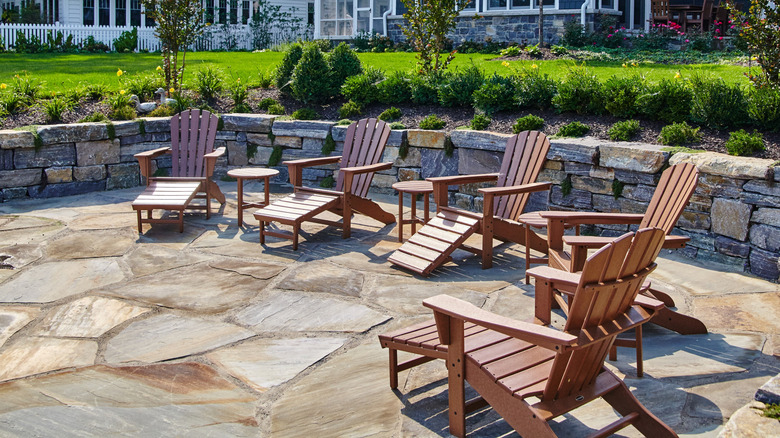
The comeback is more about shifting away from overly uniform outdoor spaces and toward patios that feel warmer, textured, and more in tune with the garden. With growing interest in sourcing local materials, sustainable gardening practices, and the return of midcentury design as a whole, it makes sense that natural stone surfaces and even crazy paving would start to show up again. Just like they were in the '60s, people today have been seeking to spend more time in nature and bring more peaceful, earthy design styles to their own yards. Some experts say midcentury modern design will never go out of style, but this seems especially true when you're working with natural materials in their natural environment.
The sustainability of natural stone hardscaping is another likely reason why its been resurrected from the '60s. Natural stone doesn't just look more earthy than concrete; it's more planet-friendly when it's responsibly sourced. Concrete takes a significant amount of energy to produce, and the industry contributes carbon dioxide emissions. While concrete eventually cracks and crumbles, stone structures have been known to hold up for centuries, and the stones can even be repurposed long after the mortar fails.
How to incorporate more '60s-inspired stone in your yard
If your goal is a patio with more movement, texture, and character, natural stone is a stylish way to borrow from the past without making your yard feel dated. But don't be fooled by its random look; creating a crazy-paved patio might take a lot more effort than it would seem. Cost is one of the biggest considerations. Flagstone costs roughly $2 to $6 per square foot for the stone itself, and an additional $13 to $16 for labor.
To avoid looking too gimmicky and potentially save a dime, choose materials that make sense for your home's environment. Consider locally sourced stone or even reclaimed stone from old midcentury paths. If a full stone patio is too expensive or too big a project, start with a smaller update. A flagstone seating nook, stepping-stone path, stone border, or gravel-and-stone corner are small backyard ideas that will transform your space and add the same natural texture without requiring a full backyard renovation.
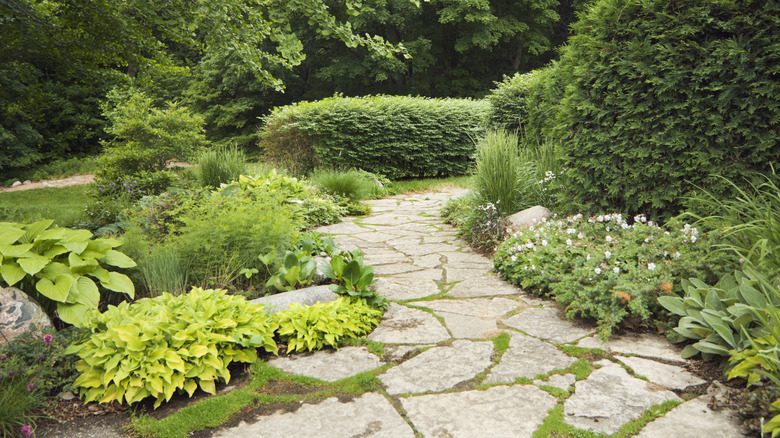
Flagstone pieces should puzzle together nicely, but it's okay — and on-trend — to have varying gap widths between each slab. That natural variation creates a sense of organic flow. To fully embrace the trend, use flagstone to create patios and pathways that blend into the garden, rather than sit apart from it. Creeping thyme and other walkable ground covers can soften the edges, while wood furniture, large planters, and warm outdoor lighting can beautify your backyard space.