

What To Do If Your Find Tire Marks On Your Driveway
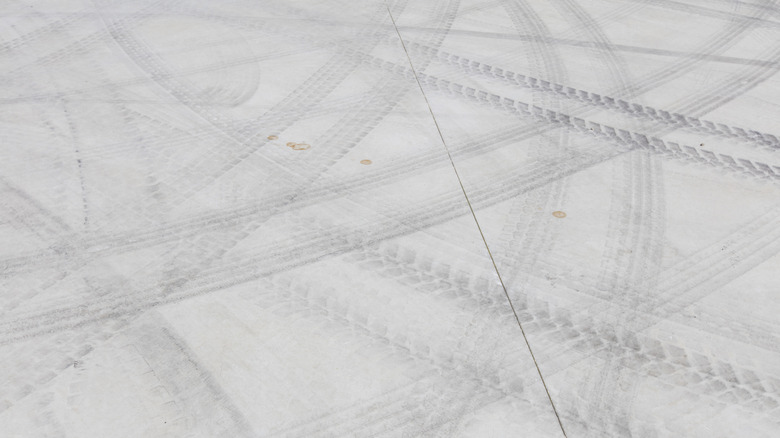
Many different types of concrete driveway designs exist, letting you choose the perfect style for a beautiful entry path to your home. However, even the most beautiful design can suffer issues with grime, dirt, and unwanted marks. If you have tire marks on your concrete driveway, it can create a frustrating eyesore.
Fortunately, such marks aren't necessarily permanent. You have some options for cleaning them, but if they've been in place a long time or are thick, it will be tougher to remove them. Start by sweeping away any dry debris with a broom, which allows you to clearly see the marks. You can also judge the severity of the marks based on the color. Light-colored marks indicate no penetration into the concrete, while darker marks may be deeper and older.
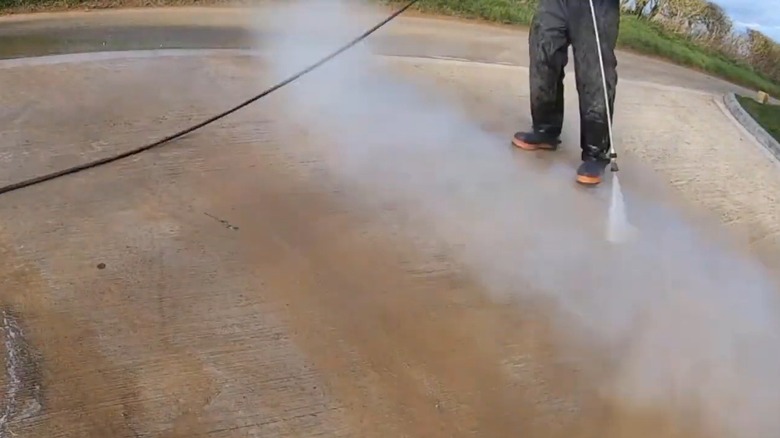
You can then apply a cleaning product. Protect your grass or nearby plants with plastic tarps. Apply a commercial degreasing product, let it sit for several minutes, and use a scrub brush over the stains. Rinse the driveway with a garden hose, and then repeat the process as often as is necessary. Some people prefer a combination of baking soda and water (formed into a paste) because it's an option that is friendlier for the environment than most commercial products. Place the paste on the marks for a few hours before scrubbing it with a brush. As an additional option, WD-40 can remove residual rust stains from concrete, and it sometimes also works on tire marks. Spray it on, wipe and scrub it, and then wash the area with dish soap to remove any oily residue.
Why do tire marks appear on driveways?
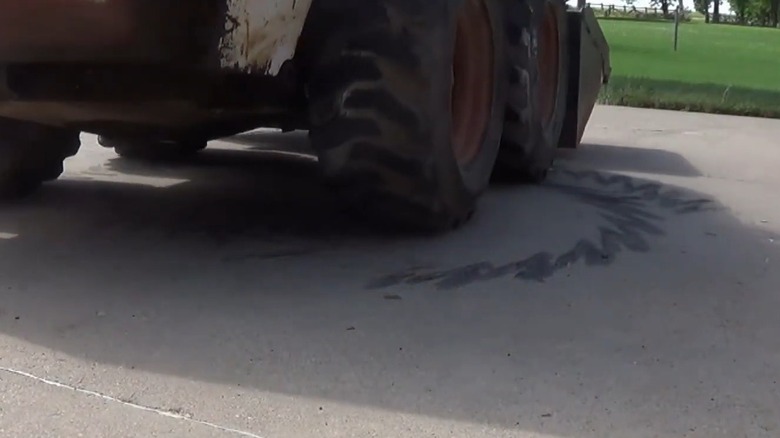
As you might suspect, the black marks left on concrete driveways are often the result of residue coming off black tires from a vehicle. The rubber softens as it heats up, causing some of it to stick to the concrete as it passes over the surface. Some tires leave plasticizers behind, which are chemicals that help maximize traction from the tire. Heated plasticizers will stick to the concrete, causing staining. Almost any kind of rubber tire can leave marks behind. If your lawn mower or a kids' bicycle has warm tires or if the concrete is hot, these devices can mark up the driveway, just like a motor vehicle or a skid steer.
Larger vehicles and those that make quick, aggressive turns , like zero-turn mowers, may leave darker marks. If you're mowing your lawn, try to make turns on the grass instead of on concrete driveways. If you're using a skid steer or a similar type of machinery, placing heavy-duty mats over the concrete will prevent the tires from marking up the driveway. Sharp stops with your motor vehicle are a common cause of tire marks on the driveway, as sudden braking creates extra friction that can leave tire residue behind. When they're riding bicycles, asking the kids to avoid braking hard and making the tires skid and slide can help, too (but they might not always listen).
Ways to protect concrete and reduce the chance of marks
Sealing a driveway may help make it easier to clean off tire marks, but beware that certain types of sealant can also make it more likely that vehicles will leave marks. Instead, it's best to follow some simple tips. If you recently returned home after a long drive on a hot day, avoid parking on the driveway until the tires have had a chance to cool. Try to park the car under a home carport or in another shady location to reduce the temperature of the tires on sunny days. Keeping your tires at the proper pressure should reduce the chance of leaving black marks. Tires with excessive pressure generate more friction as they pass over the sun-heated concrete.
Consider purchasing a type of tire that uses firmer rubber in the manufacturing process to lessen the risk of leaving black marks behind. You can also reduce the appearance of black marks on concrete driveways when the concrete has a textured finish on it, as this design naturally hides these kinds of flaws. Adding a darker color to the concrete can diminish the appearance of black tire marks, too.