

What To Do If You Find An Animal Trapped In Concrete
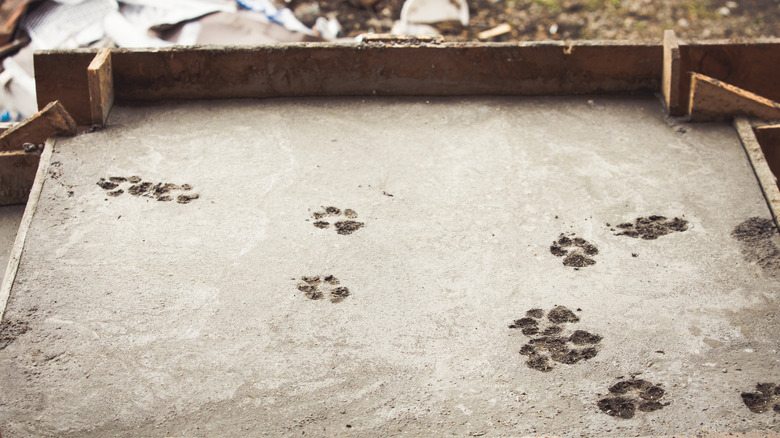
Finding animal tracks in your yard is one thing, but can you imagine following those tracks to discover a live animal stuck in wet concrete? Situations like these are rare, but not unheard of. In October of 2025, a great horned owl was discovered inside a concrete mixer, trapped by hardened concrete. It took several days, but wildlife rehabilitators were able to free the young owl and remove the concrete from his body. He was released in the spring of 2026.
This might be more likely to happen in a city, where construction projects are never-ending and human civilization frequently butts heads with nature, but it could also occur if you pour a fresh pathway or paved driveway outside your home. If you find yourself the impending hero in some unlucky creature's story, it's important to free the animal, remove the concrete, and get it back to its natural habitat — but that's not something you should necessarily do on your own. The specifics of how you handle the situation depend on the animal, its condition, and the state of the concrete.
Before doing anything, you need to assess how you'll stay safe during the rescue mission. An animal in distress could injure you, especially if it has sharp teeth, claws, or talons. There's also a risk of encountering disease any time you handle a wild animal. It's best to call animal control or a wildlife rescue service before attempting to free the critter, especially if you're concerned for your own well-being.
Rescuing an animal stuck in wet concrete
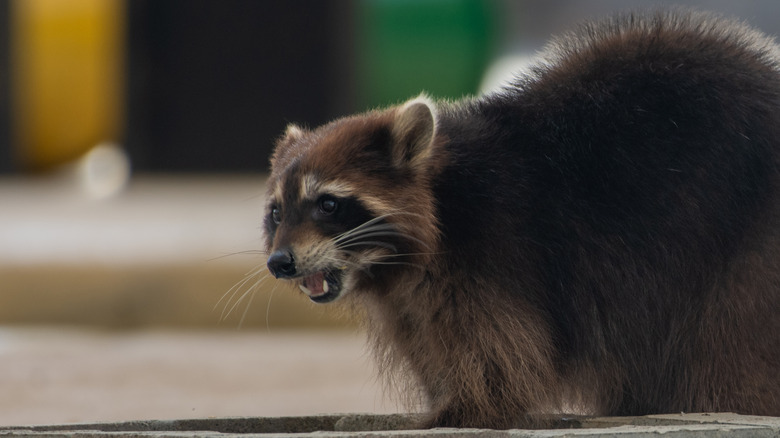
If you encounter a domestic species trapped in wet concrete, you should call animal control. For a wild one, contact a local wildlife removal company. They'll help you identify the creature, ensure you're not dealing with a rabid animal on your property, and connect you with appropriate resources. Calling a professional is also a wise idea if you're worried the animal might run away once freed — or it already has. Handling and transporting some species could be unsafe or even illegal in some states, so leave the foxes, badgers, raccoons, opossums, and other feisty beings to the pros.
Small animals such as songbirds and amphibians present less risk of injury to humans. Concrete, however, is highly alkaline and can cause skin damage, so if you do take matters into your own hands, put on gloves before intervening. A trowel, rake, or other tool might help you scoop small animals out of the mixture. Larger animals, like a kitten, can be gently wiggled free, but pulling too hard may cause more injury or distress. If you can safely do so — as with a frog, for example — rinse the animal with plain, cold water to wash the corrosive concrete from its body.
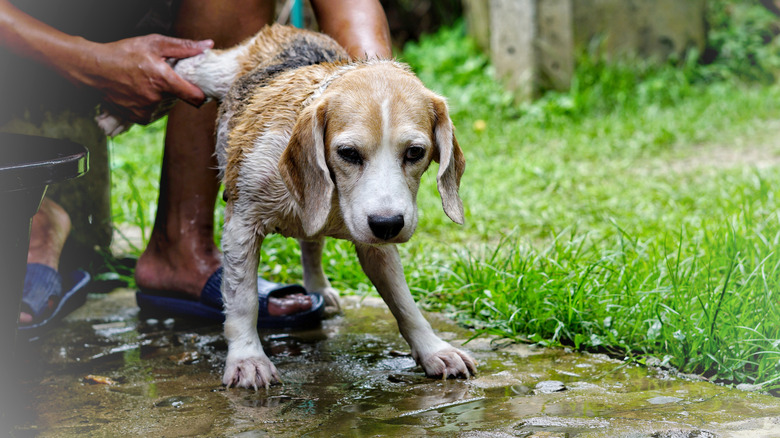
A domestic animal, like a cat or dog, may tolerate a more thorough bath. You can soak their fur in warm, soapy water and gently scrub away the concrete (do this outdoors to avoid clogging your plumbing). Dish soap, toothbrushes, vegetable oil, and olive oil can help loosen any dried concrete chunks. It may take several sessions to clean up completely. For tough cases, you may need to consult a veterinarian.
How to handle an animal trapped in set concrete
To a little animal, concrete's smooth surface might appear like any other solid ground, but as soon as they waddle or pounce over it, their feet sink into the mix. Much like quicksand, concrete is dense, and as the animal struggles, the pit can get stickier and deeper. In order to get truly stuck in concrete, the creature would have to stumble into the project rather quickly — most likely within the first hour or so after pouring. If it remains stuck there, the concrete will begin to reach its "initial set" stage within hours. After 24 hours, it's firm enough to walk on — and too firm to escape from.
If you find an animal stuck in stiff concrete, this can significantly complicate your rescue efforts. Professional intervention will be needed to carefully chisel the animal free and give it the care it needs to recover. Dried concrete can be extremely difficult to remove with bathing alone, so a veterinarian or wildlife rehabilitator may need to sedate and shave the animal to help it heal.
Once you've saved a creature from certain doom, you can pat yourself on the back and think about fixing the ruined concrete. If you have more outdoor projects planned, monitoring concrete as it cures can prevent animals from getting stuck to begin with. Or, you could say goodbye to concrete and choose a resin bound alternative — though animals should steer clear from this surface too, until it dries.