

Skip Pyrex: There's Another Highly Sought-After Dishware Brand You'd Be Thrilled To Find Thrifting

Retro kitchenware has never been so popular. Whether you're on the hunt for valuable vintage Pyrex pieces at the thrift store or scouring the booths at your local antique mall for mid-century modern glass items, vintage lovers and smart shoppers everywhere are beginning to understand the true value of some of these decades-old items. While this increased level of knowledge is certainly a net positive, it can lead to issues for some collectors. Now that the general public is aware of the potential resale prices of recognizable brands like Pyrex, these products are starting to get snatched up the second they hit shelves. Want the same level of value without all the competition? It's time to start looking for more niche brands.
Royal Copenhagen began producing porcelain products in 1775, and the aristocratic name wasn't just clever branding. Originally called the Danish Porcelain Factory, this company was founded with funding from Denmark's royal family in an attempt to boost the country's economy and increase its exports. In the late 1860s, the company was privatized, and nowadays, it continues to produce luxurious, hand-painted dishware. The prices of these pieces vary dramatically on the resale market depending on their condition, rarity, pattern, and numbers, but you can expect to see items selling for anywhere between $20 and $1,800 online, with most pieces falling into the $30 to $100 range. Even if you're not looking to profit from your thrift trip, this brand's long history of quality and beautiful design makes it worth keeping an eye out for.
How to identify Royal Copenhagen pieces
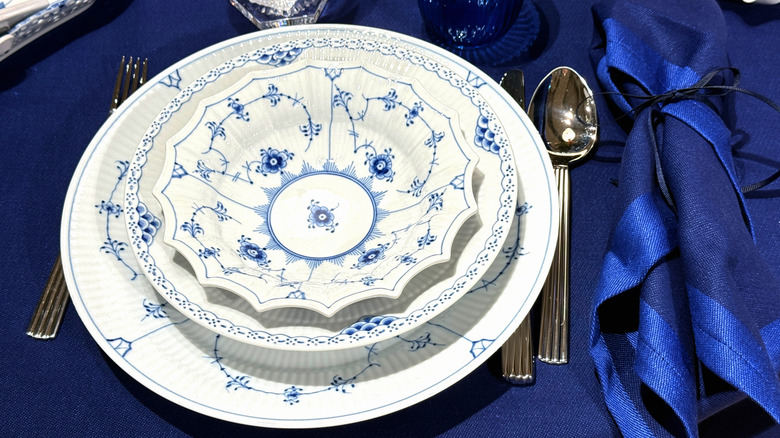
While the Royal Copenhagen brand did see a brief dip into more modern styles in the 1950s through the 1970s, its most recognizable designs feature ornate, blue florals that contrast beautifully against a white background. The color scheme is reminiscent of valuable pottery from China, but the designs found on Royal Copenhagen pieces are typically more minimal and open. The pattern and color scheme is the easiest way to recognize this brand from afar, but you'll have to check the back of the crockery to confirm whether or not your suspicions are correct.
Thankfully, Royal Copenhagen pieces have easy-to-find maker's marks. On the bottom of the item, check for a logo that says "Royal Copenhagen Denmark," a small crown, three waves, or a combination of these identifiers. Because this company has such a long history, its logo has seen plenty of changes over the years. While this might make identification slightly more difficult at first glance, it's a gift for those who want to learn more about their pieces — by looking into the logo, you can more precisely date the item. Later logos will also feature a dot near specific letters, which can help you narrow down production to the exact year.
While just about every Royal Copenhagen piece is valuable thanks to its quality, some command more attention than others. Items with the "Flora Danica" print can go for thousands of dollars, teapots are often more pricey than dishes, and complete, undamaged sets can sell for hundreds. To get an exact price tag, consider looking up similar items online if you happen upon a Royal Copenhagen piece in the wild.