

Not Toilet Paper Tubes: The Bathroom Staple You Should Be Adding To Your Compost
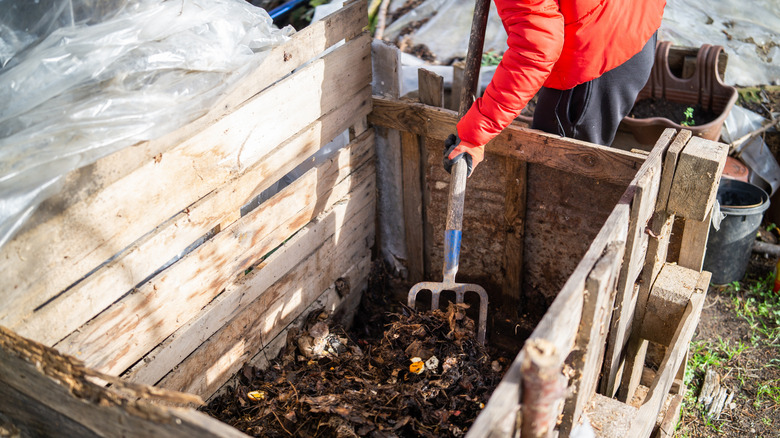
Even if you're brand new to making your own DIY compost, you've undoubtedly heard that you can compost toilet paper tubes. They're made from cardboard, biodegradable, easy to tear up, and they're an obvious way to be a bit greener, because you add them to the compost pile instead of the recycling bin. However, toilet roll tubes are not the only bathroom staple that you can easily compost. Cotton balls, if they are actually 100% cotton, are fantastic additions to your compost heap.
I've been specializing in permaculture for over twenty years, and that includes making endless amounts of my own compost. Plus, I hate waste, so I'm always looking for ways to reduce what ends up in the trash. The more organic matter I can cycle back into the soil the better as far as I'm concerned. While my household isn't actually zero waste, I do compost as much as I can. Pure cotton is a natural, cellulose-based fiber that composting microorganisms can use as a direct food source. They break it down in the same way they process dried leaves, shredded cardboard, and straw. This means that cotton balls can be considered a brown — or carbon-rich — material for your compost pile.
How to compost cotton balls
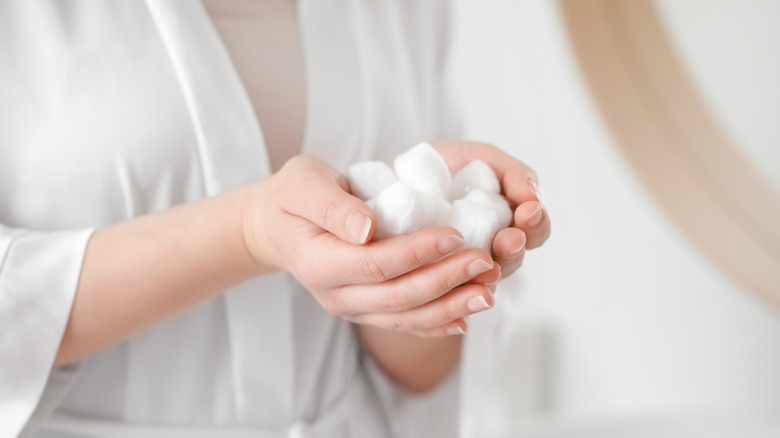
Before you throw your cotton balls into the compost pile, tear them apart a little. Yes they will eventually break down if you leave them whole and compacted, but they will break down much faster and be of more use to your compost if you loosen them and increase their surface area. Microbial activity happens at the surface of composting materials first, not deep inside them. Therefore, a compressed cotton ball is a dense little sphere of cellulose that's comparatively difficult for microbes to penetrate. If you pull it into loose airy pieces, you open up far more surface area for the decomposers to get stuck into.
Only add cotton balls in modest amounts and distribute them throughout the pile rather than dumping a large quantity in one spot. They pack down easily if concentrated in one area and can become a compact mess if a clump of them gets wet, and they can form a mat that resists breaking down. Instead of storing them up as you might do with toilet roll tubes, I prefer to add mine as I go, tearing them apart and working them in with whatever batch of greens I'm adding. Treat cotton balls how you treat a thick layer of dry leaves. Mix them with wetter nitrogen-rich material, like vegetable scraps, coffee grounds, or a handful of grass clippings. They need to be balanced with nitrogen-rich green matter to give your decomposing microbes the right balance to stay productive, keeping the pile active and healthy.
When cotton balls don't belong in compost
Before you even consider adding your cotton balls to your compost pile, the first thing you need to do is check that your cotton balls are actually made of 100% cotton. Even though they may be called cotton balls, not all brands use pure cotton. To reduce costs or alter the texture of the product, many use cotton blends that include polyester or other synthetic fibers. If they contain any synthetic materials, they are not safe to compost. Polyester, for example, is a petroleum-derived plastic that is not biodegradable in compost and is a substance that sheds micro-plastic, which is one of the things you should never compost. The product label should say if it's 100% cotton. If the package doesn't describe the composition or the components are vague, play it safe and leave it out of your compost.
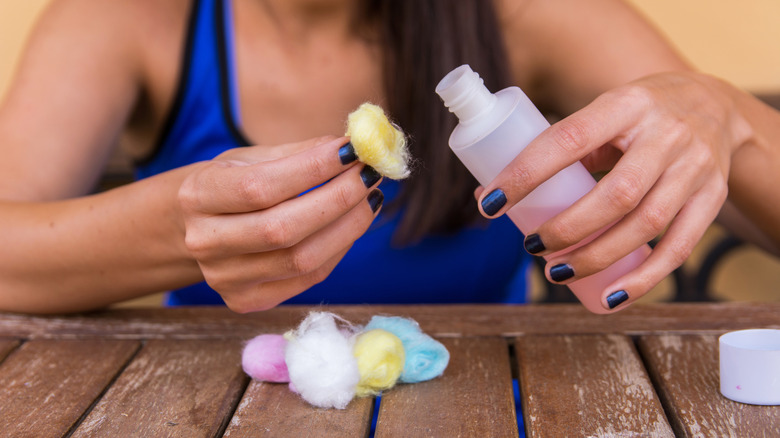
The other very common issue is chemical contamination. The cotton itself might be perfectly compostable, but what you used it for might not be. Cotton balls that end up saturated with nail polish remover and nail polish residue, for example, should not be added to compost, as it's a concentrated solvent that could kill off the microbes and fungi that your compost pile needs to function. Many skincare products, such as toners, serums, and facial products, also contain antimicrobial preservatives, like parabens, or other chemical substances that you do not want in your soil, especially if you grow food. In the case of products that contain antimicrobials and preservatives, a cotton ball soaked in these substances will carry those same properties into your compost and will damage or inhibit the decomposers that are hard at work, breaking down your scraps into lovely rich compost.