

How Often Do I Need To Replace Soil In Raised Beds?
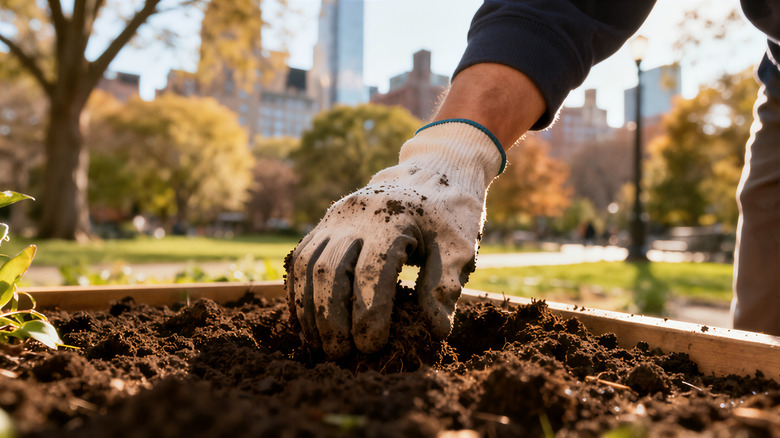
When was the last time you completely replaced the soil in your raised garden beds? If this question gives you cold sweats as you try to remember when you last went to the garden store, don't worry. In fact, you've got it covered! For once, "uh... I don't remember" is the right answer to a gardening question. As long as the soil is in good condition, there's no need to empty out your garden beds and refill them.
Of course, is a legitimate question. After a full season of planting and growing, it's natural to wonder whether the soil in your raised garden bed is done for. Whether it's full of roots, dead plants, or bugs, so much has the opportunity to accumulate. It's tempting to throw it all out and start fresh, filling raised garden beds with soil from the garden center. But if the soil is healthy, you can leave it in your garden beds — no need to empty them out.
Still, some soil always needs to be "replaced" periodically. Every few years, you might start to notice that the levels decrease without you dumping it out. At the same time, thinner dirt particles might disappear, leaving behind thick and pebble-like soil material. That's all because of erosion, the process by which soil might disappear from your garden beds because of wind or water. This is one of the cases when you should top up the garden beds. When doing this, use organic matter, like compost, in addition to soil mix. Erosion doesn't go that fast, so you'll probably just need a few inches at a time.
How to refill garden beds
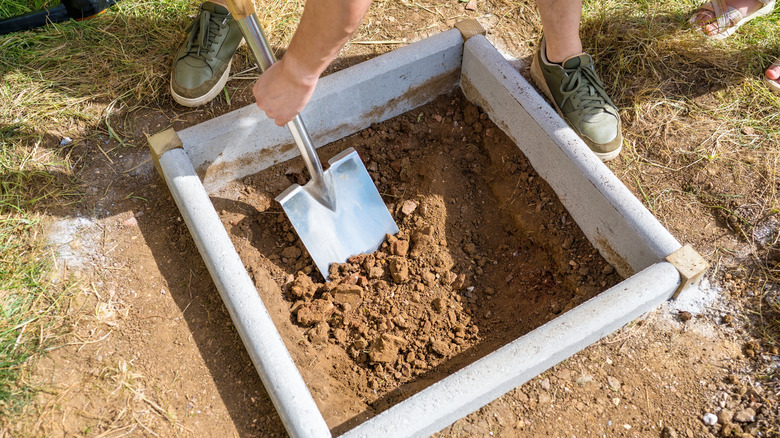
Topping up garden beds is also a chance to freshen up the soil below and make it extra healthy and aerated for the next season. To do this, use your hands or a hand rake to loosely fluff the soil. When that's done, top up the garden bed with a few inches of compost and fresh soil. You can also mix a bit of slow-release fertilizer (organic is always best) into the compost and soil mix, giving your garden beds a head start for the growing season.
Even if your garden beds haven't eroded, adding a thin layer of compost on top of it every spring is a smart idea. Just 3 inches is enough to help feed the soil with tons of nutrients. When doing this, you can place the compost on top of the soil and leave it be, or use a hand rake to mix the organic matter with the garden bed's top layer. If you make your own DIY compost, this is a great place to use it. Otherwise, buy it at your local garden store.
Another time when you might consider a partial refill is if your plants catch any soil-born diseases that's caused by various viruses, fungi, or bacteria. You'll know by looking at your plants that something isn't right: root rot, discolored leaves and stems, stunted growth, or wilting. Here, diseases and spores might stick in soil for a while, meaning you should thoroughly clean it of any plants or roots, sometimes replacing it partially or fully, depending on the severity of the infection.