

11 Landscaping Mistakes That Every New Homeowner Makes
Buying and moving into your very first home is one of life's most exciting experiences. You have bedrooms to decorate, potentially a kitchen to renovate, and of course, you now have your very own gardens to grow. The nursery down the road is teeming with plants that you can't wait to buy and bed into your borders. Your Pinterest board is brimming with ideas with to revamp your patio, and your summer housewarming guest list is quickly starting to fill up. We get it. Like we said, it's an exciting time! But before you get too carried away, it's worth heeding the advice of those who've trodden the hallowed ground of home ownership already. Why? Because by doing so, you may just be able to avoid falling afoul of landscaping mistakes that almost every new homeowner makes.
Some are quite obvious, like filling your cart with more plants than your space can realistically contain. Others are less so, like being aware of your local authority's property boundary rules. Some will help to keep neighborly relationships running smoothly, while others will ensure your budget isn't wasted.
Planting without a long-term plan
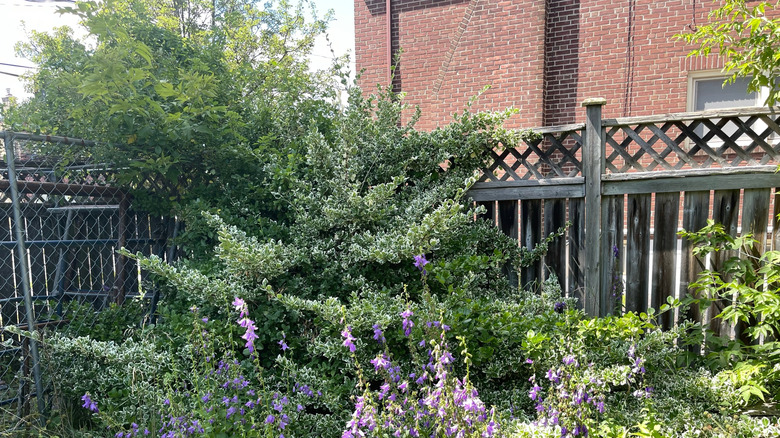
There are several things to know before diving into a DIY landscaping project. One is understanding how planting choices will grow and settle themselves into your yard. New homeowners, in their excitement to have their own garden "canvas," often fall into the trap of buying plants impulsively because of how they look at the local nursery. Years then pass, and those trees start blocking windows. Shrubs begin to encroach on walkways and patio space, borders become crowded, and before long, the yard feels manic, not manicured.
Instead, it's important to really think about how you want to use your space — both now, and in the future. Are you planning to start a family, or will you have pets in the future? If so, are those plants that you're buying child- or pet-safe? Do you hope to be the go-to gathering spot for friends and family? Do you think your gardening and DIY tool collection is likely to outgrow the modest-sized shed that's currently in your yard? Answering questions like this will help you to plan your landscape properly, and ensure it's future-proof. And by thinking carefully about how plants will grow and expand, you can achieve a much more intentional, landscaped look, instead of one that smacks of first-time homeowner!
Not considering the maintenance requirements of your landscape
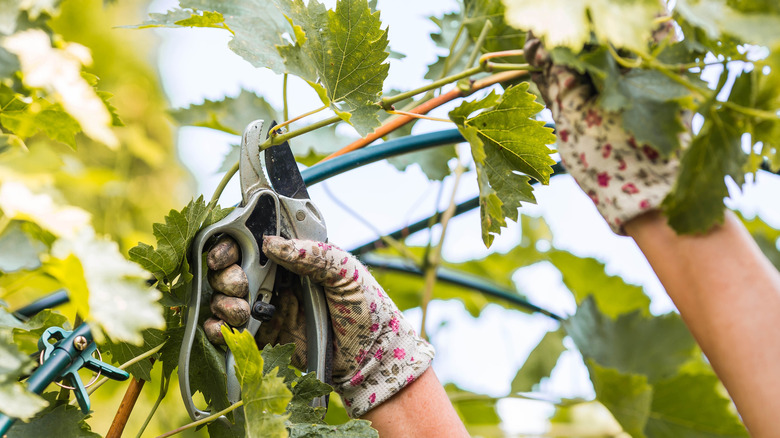
Without previous home ownership experience, a lot of first-time buyers forget to consider maintenance requirements for the various parts of their landscape. Lawns need cutting, dethatching, aerating, and occasionally overseeding. Certain shrubs fare better if hard-pruned versus allowing them to do their thing. Others, if left to grow wild, will do precisely that. In other words, as soon as your new landscaping additions mature and your lawn becomes established, maintenance is almost inevitable.
As one Redditor advises, "One thing I wish I knew before landscaping was to consider maintenance. Pick plants that won't drive you crazy with upkeep." You should also think about the time that you'll have to manage your chosen plants. If an exciting new promotion has finally allowed you to afford your own home, then will those extra responsibilities afford you the downtime required to keep your yard looking healthy? There are various garden landscaping ideas that people later regret, and the thing they often have in common is that the homeowners didn't factor in the upkeep that those ideas would entail.
Not identifying issues with drainage
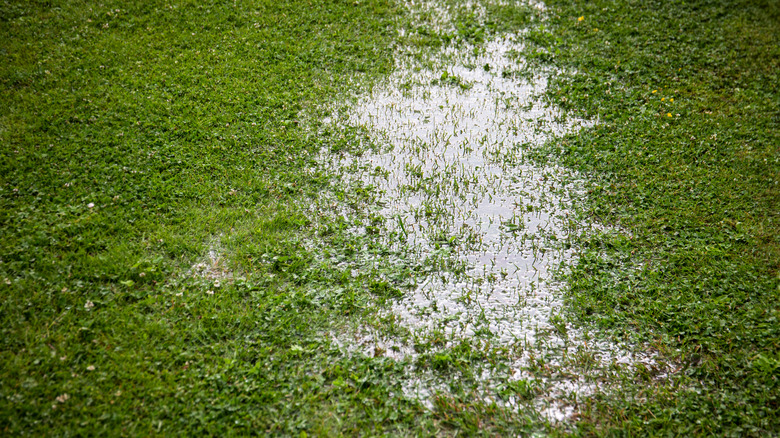
If you viewed and bought your house in the summer, did you remember to ask the previous owners about garden drainage? In the summer, when everything's dry and rain hasn't appeared in the forecast for weeks, drainage issues likely wouldn't have shown themselves during your viewing. And if you go ahead and make lots of landscape changes without correcting those potential problems, you could be in for a world of horticultural hurt. Plants in flood-prone areas are unlikely to survive, and any hardscape elements will be much harder to enjoy if surrounded by floodwater.
Back to Reddit, and one homeowner summarized this problem perfectly. In their own words, "I wish I'd know that we were going to have issues with flooding and lack of drainage. If I had taken the time to look at how and where the water moved (and why), I could have come up with a better plan for the whole property." Instead, they made multiple changes to the landscape prior to fixing the underlying drainage issues, which led to even further issues down the road. To avoid this mistake with your new home, all you need to do is wait and observe — see how your yard behaves in the wet winter weather or the deluges of spring. If you notice areas starting to pool, make a note and work to correct them the following season.
Not accounting for sunshine
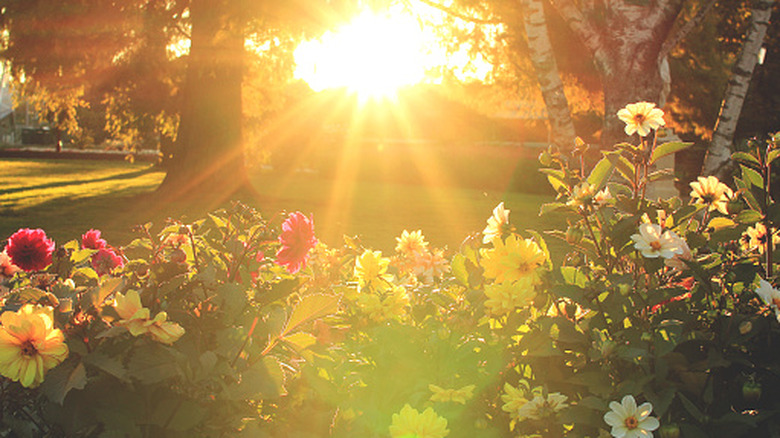
If you ask about the things professional landscapers wish you knew about, we'd be willing to bet that they'd stress the importance of sunshine. Most of us know that plants need some degree of sunlight to thrive. But what many new home owners fail to consider — especially those without previous ownership experience — is the way the sun affects gardens at different times of the year. As its arc deepens and shallows with the seasons, areas in your garden are naturally exposed to more or less sunlight.
For this reason, many homeowners suggest that taking time to observe how the sun affects your yard is key, before you make any landscaping decisions. Exemplifying this problem perfectly, one Reddit user said, "In early spring, I planted a "shade garden" on the north side of my house ... However, in midsummer, the blazing sun peeps around the house in the afternoon/evening to scorch the area for 4+ hours." To avoid this from happening to you, take your time and assess how the sun affects your garden. Watch how the yard changes throughout the year, and build your planting scheme around those changes. As one Redditor put it, "Be patient. You'll be there for years."
Rushing to fill the landscape before checking and amending soil
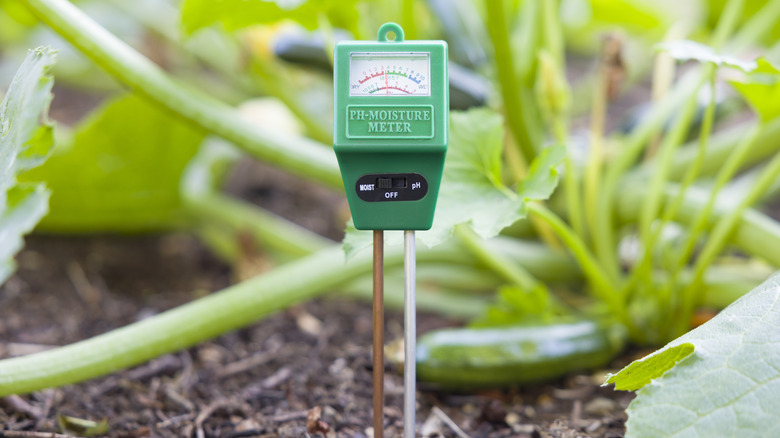
Experienced homeowning gardeners will know the importance of good soil. Again, different plants have differing needs. Some prefer their soil slightly acidic, while others favor a more neutral environment. Some thrive in poor-quality, nutrient-depleted soil, while others need consistently available nutrients. And while some plants like moisture-retentive soil, others will not take kindly to your landscape if the soil doesn't drain freely.
So, get to know your soil. Instead of rushing to the garden store and buying loads of different plants, take the time to assess how well your soil drains. If you're hoping to master the art of growing tomatoes, then ensure you fold plenty of nutrients into the substrate. Whatever you're growing, you should also measure your soil's pH, and check that it matches your plants' requirements. If it doesn't, there are various ways you can amend your soil to suit your needs, like acidifying it with sulfur. Alternatively, you can look for plants that are better suited to the conditions already present in your landscape. Either way, by taking the time to understand your soil and how it matches the requirements of your plants, your final selections from the nursery will stand a much better chance of survival.
Rushing to change the landscape instead of getting to know it
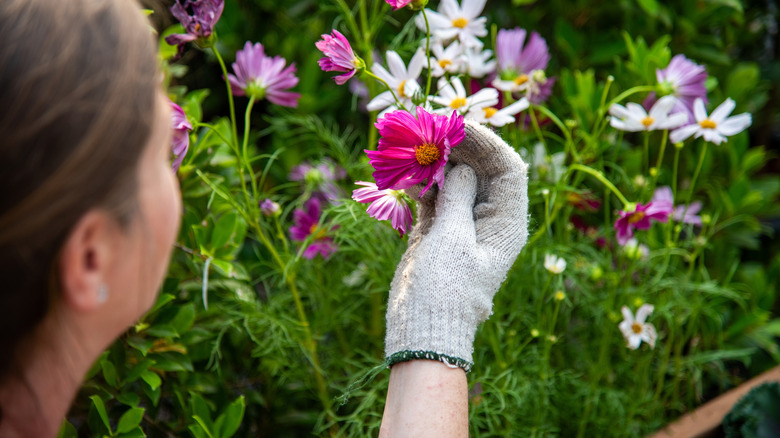
Another reason not to rush into landscaping decisions is that it can cause you to miss your yard's hidden, or dormant, quirks and qualities. For example, if you dig out your flower beds and find a trove of mysterious bulbs beneath the soil, you may just be doing away with a radiant display of spring daffodils. You may also not realize that certain, apparently-boring plants actually spring into colorful bloom later in the year. For this reason, many experienced homeowners recommend taking your time and giving yourself a year to see how your garden behaves.
As one Redditor put it, the "Best advice I got when we moved into a new home was to take a chill pill with landscape decisions. Live there a year, see what grows and what you like." Other contributors mirrored this sentiment by suggesting new homeowners simply maintain their new space to see what grows each season before making major changes.
Reflexively removing large, mature trees
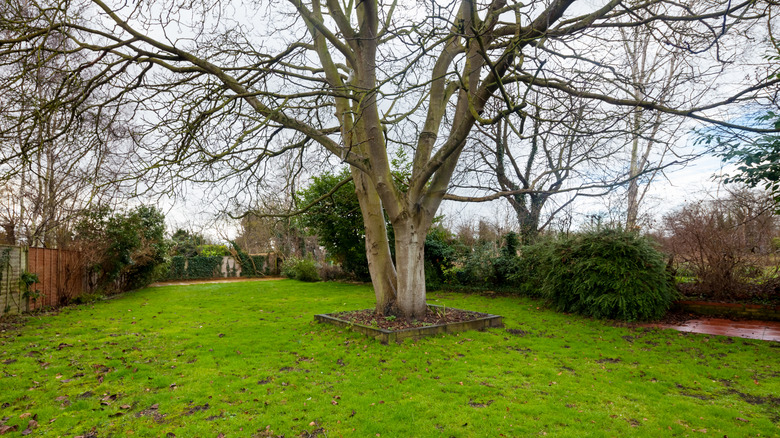
If a tree is casting shade on your new home's patio, it can be tempting to chop it down and let the sun shine. But be warned: If you do, then you may well come to miss the privacy that tree was providing. What's more, in the height of summer, you might wish you had that additional source of shade, especially during a heatwave. It's also worth bearing in mind that trees, especially mature ones, often add value to a home. In other words, by chopping it down, you may actually be throwing away some of what you paid to buy the house in the first place.
With all of that being said, there are some signs that a tree removal is the right move for your yard. For example, if it's leaning precariously (like after a severe storm), then it may be too dangerous to keep in situ. A dead tree, even a safe one, may also be worth removing, especially if it's getting in the way of other features you'd like to install. Then again, there are some who would argue that it's worth leaving dead trees in situ, provided that it's safe to do so. For starters, dead trees, especially those with hollows, are excellent habitats for certain birds, like woodpeckers. They can also be used to your advantage, as one Redditor suggests, "as an anchor for something like a projection screen ... or a hammock."
Not understanding, or overlooking, setbacks, and easements
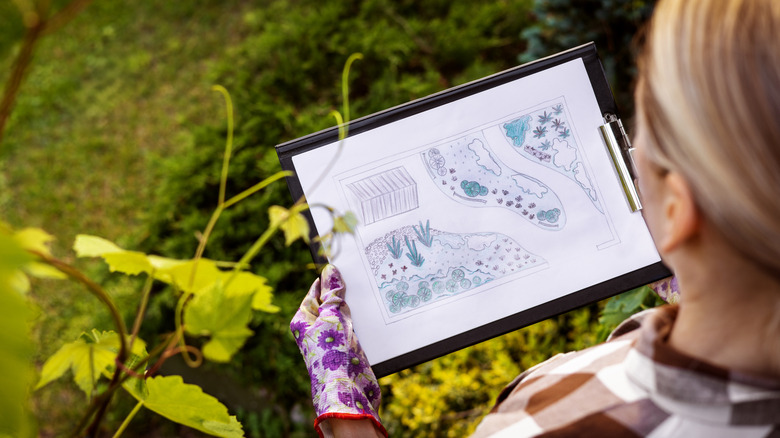
Those new to home ownership are often unfamiliar with setbacks and easements. And yet, the law behind these covenants is one of the most important things to understand before building on your property. Starting with setbacks, these are the legal minimum distances that any new building or structure must be kept from your property's boundaries and from any public thoroughfares, like sidewalks and roads. Easements are similar, and are protected in order to allow local authorities and utility providers important access to service lines. Some homeowners may have multiple easements within the boundaries of their property; others may have none.
The issues that new homeowners run into with these is accidentally encroaching them with new structures. If that happens, you can easily run into legal disputes with your local authorities. You may face expensive fines, and you'll probably be asked to remove any structures that violate these important covenants. Not only is this frustrating, but it can also be a real money-waster — especially if, for example, you paid to have a patio, pathway, or raised bed built on those areas, only to later have them demolished and removed. The key to avoiding problems like this is getting completely familiar with the setbacks and easements around your property from the start. If you're unsure where to look, your local planning department should be able to help.
Landscaping for a lifestyle you won't actually lead
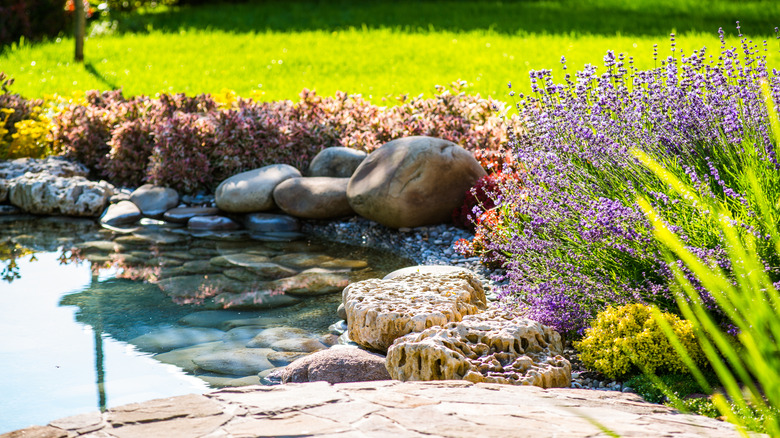
Scrolling on platforms like Pinterest and TikTok is a fantastic way to find inspiration when it comes to home and garden design. But as a new homeowner, it's important not to get carried away with what you find online. While the landscapes we see on our screens are undeniably beautiful, they are tailored to somebody else's lifestyle. It could be a flower bed full of high-maintenance (albeit beautiful) flowers, like roses and dahlias, or the inclusion of a water feature.
We're not saying that you don't know how to help those radiant roses thrive, or that you won't enjoy the sound of running water. All we're saying is that these kinds of projects come with a price. Sometimes, that price is financial, especially for landscape-altering projects that require lots of materials, tools, and possibly a contractor. In some cases, you'll pay for certain projects with your own time, whether that's tending to your roses or periodically cleaning your pond. Unless you're absolutely certain that you'll maintain those flower beds and keep that pond clean, you might be better off saving your money (and time) for other projects. At the very least, hold off for a while to get a better feel for your yard and how you use it. Give yourself a year or two to live with your landscape and work out the things you actually wish you had. If you find that your lifestyle doesn't give you much time to manage your yard, then you'll be glad you held off on higher-maintenance landscaping additions.
Investing too heavily in added value
If this is your first home, and you plan to one day upgrade to something bigger, then you may be tempted to focus on projects that are likely to achieve the highest return on your investment. The problem with this is manifold. Firstly, just because you sink several thousand dollars into your landscape, that doesn't necessarily mean that you'll get them back from your prospective buyers. This is because, depending on where you live, things that seem like "dead cert" profit turners can end up yielding measly returns. More than that, there are some backyard design choices that can actually make selling your home harder.
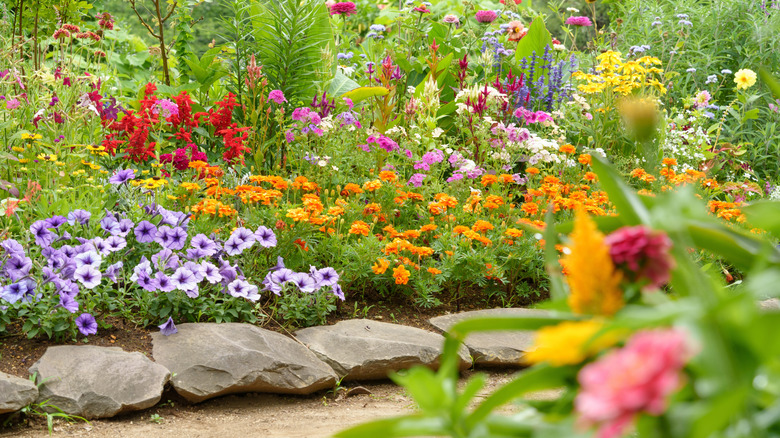
In the context of your landscape, overdoing it with lots of expensive plants is one "improvement" that can actually work against you. Firstly, the initial outlay is likely to be expensive — both financially, and in terms of the time it takes you to nurture your plantings. Secondly, just because you love the plants that you've incorporated, that doesn't mean that future buyers will. And don't forget, not everybody has time or the desire to spend hours in the garden maintaining their flower beds. Prospective buyers may simply view your complicated planting scheme as another annoying thing to maintain.
Finally, investing in what you think your future buyers might like risks compromising your own enjoyment of the landscape. Buying and improving your first home should be exciting. It's your chance, finally, to have your own space and make it your own. Yes, depending on your landscaping choices, there's a chance that you'll add value to your house. But if you plan to stay there a while, and those choices don't appeal to you, then you could easily regret them in the long run.
Not considering your neighbors when embarking on a landscaping project

Experienced homeowners know the importance of maintaining convivial relationships with the family across the fence. Not only does it make things easier during the morning rush when you spot each other on the drive. But it can also make life easier when, for example, you're on vacation and need somebody to pop in and feed Mr. Biggles. When it comes to landscaping, there are several things that can compromise your relationship with your neighbors.
For example, not fully understanding your property boundaries and accidentally encroaching on their land is sure to lead to disputes. It could be a new tree that ends up partially rooting itself on their land, or it could be a whole new fence. It's always best to review your property deeds and make doubly sure that you're sticking to your side of the boundary. If you don't, not only are you likely to experience conflict with your neighbors, but they may also file legal action. Any work that you undertake will likely require removal, which, as well as any legal fees, could quickly become expensive.
Even if you remain within your property lines (and remember to review any setbacks and easements), you could still irritate your neighbors with your landscaping. For example, if you decide to add a climbing plant to your fence to make things more private, and it starts encroaching on their side, this is likely to annoy them. At the very least, it's worth checking in before you make additions in and around your garden — especially those that are near the boundary line. If you're willing, reaching a compromise that satisfies both sides can help to keep things sweet for as long as you share a fence.