

The Native Flower That Brings Beautiful Color To Your Pollinator Garden
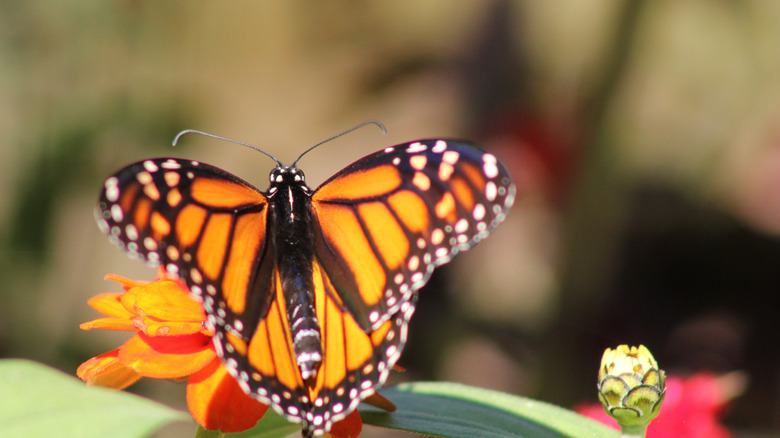
If your garden has been missing that jolt of color that brings in pollinators, consider adding button flower (Gomphrena haageana) to your beds. This native member of the globe amaranth family is also known as Rio Grande globe amaranth — a tip of the hat to its Texan roots. Even if you don't live in a climate warm enough to grow it as a perennial, it will happily flourish as a low-maintenance, butterfly-attracting annual in your pollinator garden.
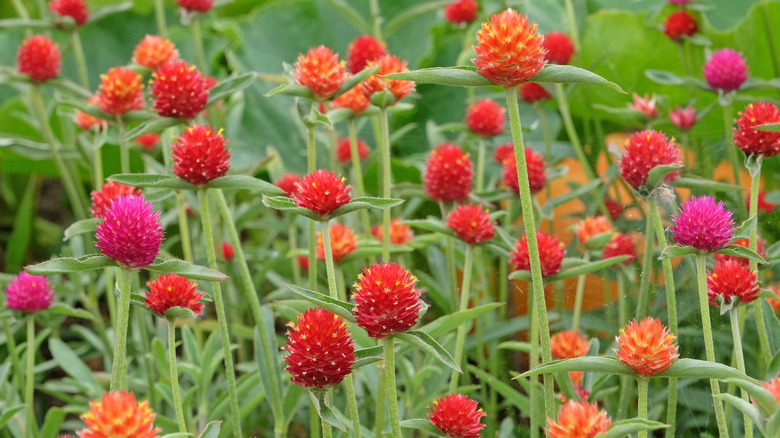
One of the vibrant types of red flowers that will look perfect in your flower garden, button flower is a long-blooming tender perennial, lasting from June to the first frosts. Although technically the blooms consist of yellow flowers covered with red or orange bracts, the overall impression is that of a cheerful red or orange flower with flashes of yellow. In fact, the most common cultivar of the plant is "Strawberry Fields," because the color and the texture provided by the bracts is reminiscent of the luscious fruit. It and related purple cultivars bring bright colors that attract butterflies and additional insect pollinators to your garden.
Perennial in USDA Hardiness Zones 9 to 11, button flower can be grown as an annual in cooler climates. Several blooms appear on each plant, which grows up to 2 ½ feet tall and 1 ½ feet wide. Florists and home growers alike also prize it as a cut flower. It has lasting power in fresh bouquets, and also retains color when you dry and style this floral favorite.
Button flowers are cheerfully low-maintence, but appreciate staking
Like many garden plants, success with growing button flower depends on how and when you direct sow seeds into the garden. When planting this native amaranth from seed, be generous when broadcasting. Their germination rate is on the low side. Sow them after the last frost date in your region. To get a jump on the season, start them six to eight weeks before the frost date, then transplant the seedlings into your garden beds. As with its close cousin, the globe amaranth (Gomphrena globosa), G. haageana can sometimes be found at garden centers and planted directly into the garden.
Set button flowers where they can get full sun. As the plants grow, pinch off the tops to help them get as bushy as possible. Because these Gomphrena are taller than other family members, you may find that staking the flowers helps keep them erect. Although these native amaranths are drought tolerant, they appreciate regular watering.
In addition to the common "Strawberry Fields" cultivar, you can find color options in shades of lavender and purple. Along with being low-maintenance in terms of resisting most pests and diseases, button flowers are also versatile. Set them in annual beds, perennial beds, or in a cutting garden. Their wild but whimsical looks make them equally at home in a butterfly garden, rock garden, border, or a large container.