

How Often Do I Need To Fertilize Soil In Outdoor Potted Planters?
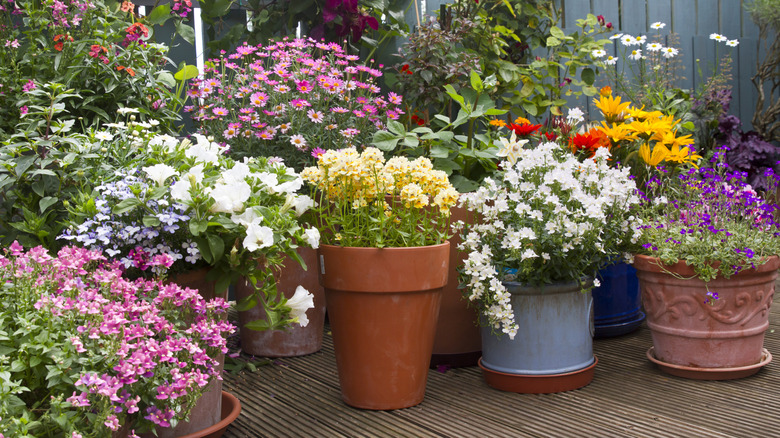
Growing plants in outdoor planters gives you the freedom to move them around whenever the mood strikes. Whether you're filling pots with flowers, herbs, or small shrubs, potted plants offer lots of flexibility and an easy way to bring color to your patio, porch, or balcony. But unlike in-ground plants, potted plants rely solely on you for the nutrients they need to grow into their best selves. While there are plenty of potting mixes to pick from, soil alone usually isn't enough. Container plants generally need fertilizer more often than indoor houseplants, usually every 1 to 3 weeks during the growing season, depending on the plant and the type of fertilizer you're using.
Outdoor potted plants benefit from a regular fertilizing schedule, and in return, they'll repay your efforts with months of healthy growth and pretty blooms. The best type of fertilizer to keep your container plants as happy and healthy as possible is an all-purpose fertilizer. It has important nutrients that give your plant the best start in life. If you have a blooming container plant, look for bloom-boosting fertilizers that have higher levels of phosphorus or potassium, while slow-release fertilizers are a great option for smaller, slower-growing plants. Compost is another top pick, thanks to its organic matter, including leaves and kitchen scraps. The best time of day to fertilize is when temperatures are coolest, like early mornings and late evenings during summer.
Regardless of which type you pick, the most important thing is to fertilize consistently without going overboard.
Create a fertilizing schedule for your outdoor potted plants
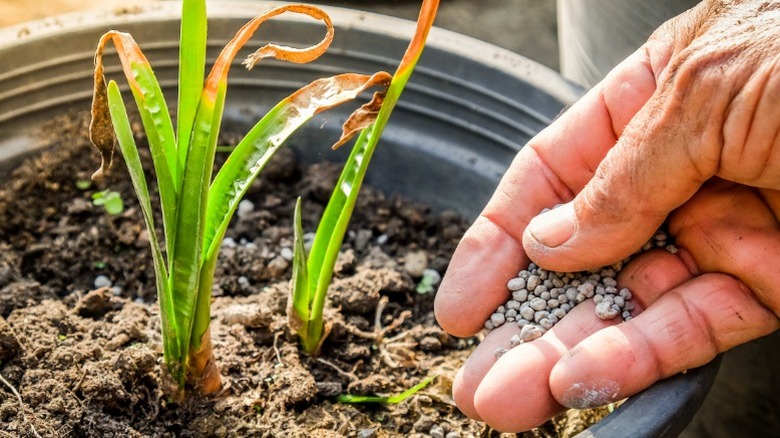
The best schedule for adding fertilizer depends on what kind of plant you're growing, the type of container it's in, and how often you water. Once you know how often to replace the soil in potted planters, which is super important for healthy plants, it's relatively easy to come up with a fertilizing schedule, starting 2 to 6 weeks later. Since nutrients are gradually lost through watering, container plants often need more regular feeding throughout their growing season. Then, follow the instructions for the fertilizer you picked. We discovered a great app for keeping track of our plants' fertilizing and watering schedules. PictureThis helps you set up a schedule based on where you live and your container size.
Before you buy a pricey fertilizer, you may have an unexpected item hiding in your pantry for a DIY fertilizer. Then, to get fast-growing annuals popping with bright blooms throughout the season, it's important to understand where they will thrive around your space. Annuals that require a full dose of sunshine should be fertilized about once a week, while the schedule for shade-loving annuals can be stretched to as much as 2 weeks. They also benefit from a slow-release fertilizer during their growing season. However, slow-release fertilizers are also great for plants growing in permanent containers, like perennials. Both annuals and perennials growing in your container garden do well with diluted liquid fertilizer for an instant boost, but it's best to space it out to every 2 to 3 weeks, depending on how often you're watering them.