

More Than Compost Or Mulch: This Overlooked Scrap Makes A Powerful Natural Cleaner
Some snacks simply produce more waste than others. Banana peels, orange rinds, and edamame pods, for example, are common leftovers after breakfast or a midday pick-me-up, but if you make your own DIY compost, you have an excellent opportunity to give these less-than-edible byproducts a second life in your garden. The same is true for pistachio shells, but for many, these small, hard coverings seem a bit out of place alongside all of the other scraps that more easily decompose. Whether you already have enough brown materials to give your compost a serious carbon boost, you're worried about the salt residue in your pile, or you simply don't want to wait the expected 8 to 12 months for this material to fully break down, there's another way that you can repurpose pistachio shells in your home: as an ingredient in a cleaning solution.
According to a 2025 review of sustainable uses for pistachio waste published in Cleaner Waste Systems, these little shells actually have antibacterial properties. While their main job in a cleaning solution is to act as an abrasive agent that helps to cut through gunk and grime without as much scrubbing, this boost of germ-fighting power certainly isn't a drawback. When combined with a few other simple ingredients that you likely already have at home, pistachio shells can become an unexpected star in a DIY natural cleaning solution that will leave your space sparkling.
How to use pistachio shells as an abrasive agent
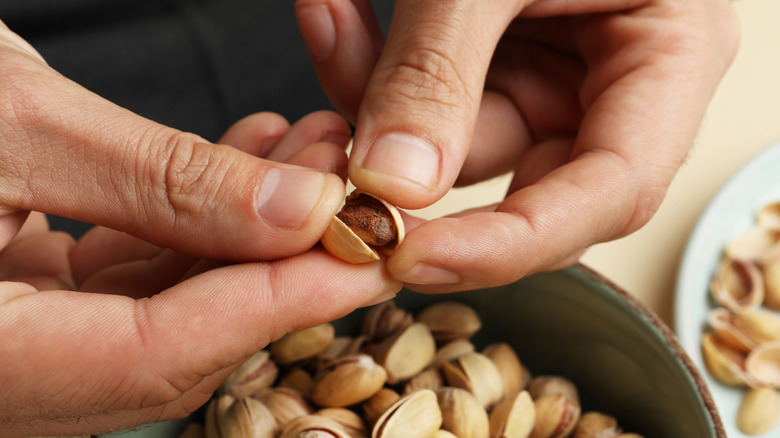
The first step in this DIY cleaner process is to sit down and enjoy a delicious snack. Peel your pistachios as you enjoy them, and reserve the shells on the side. If they end up broken or cracked, even better. You won't have to wash your shells if your pistachios are unseasoned or simply salted — salt is often used as a cleaning agent in and of itself, after all — but you might want to give them a quick rinse if you've been enjoying a variety that's been tossed in a more complex blend of spices. Allow the shells to dry in the sun, or in the oven for about 30 minutes on a low setting, then crush them up. This can be accomplished with a food processor, but if you don't have one on hand, you can also place them in a bag and hit them with a mallet until you're left with a coarse texture.
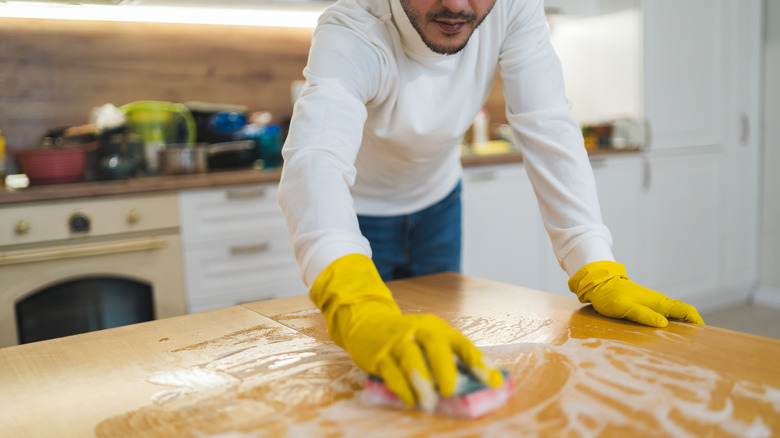
From there, all that's left to do is to mix your shells with a bit of soapy water. If you're going for a paste-like consistency, use more soap and shells and only add enough water to get things foamy. This cleaner can be used just about anywhere you'd feel comfortable using a soapy water mix — countertops, cabinets, bathtubs — though you should exercise caution if the surface you're cleaning is delicate or painted. While the chemical mix of this cleaner isn't as corrosive as, say, bleach or Fabuloso, the physical abrasiveness of the shells could cause scratches or damage in certain cases.