

Not Cotton Balls: The Alternative Bathroom Staple To Add To Compost

While kitchen scraps may be the most obvious items to include when making a DIY compost at home, certain bathroom items are just as suitable for the same purpose — and one such item that you may be overlooking is cotton swabs. Composting is all about collecting organic waste that can biologically break down into a natural fertilizer, so cotton swabs with 100% cotton tips and stems made of cardboard, paper, wood, or bamboo are viable options. Because they are entirely biodegradable, these swabs can break down along with other composting ingredients, like food scraps and leaves.
If you've just started composting and are still figuring out what should and should not be added to your compost, however, it's important to pay attention to which cotton swabs you toss into your compost pile. While unused biodegradable cotton swabs can go directly into your compost bin, when it comes to used buds, it's crucial that you consider how they were used before you add them. Those used to remove dust from keyboard keys and for routine cleaning of the ears can be composted without issue. However, those used to apply nail astringent, nail polish remover, solvents, and other harsh chemicals should be thrown away instead, as these substances can contaminate the compost, potentially affecting the decomposition process and the quality of the resulting fertilizer.
How to compost cotton swabs
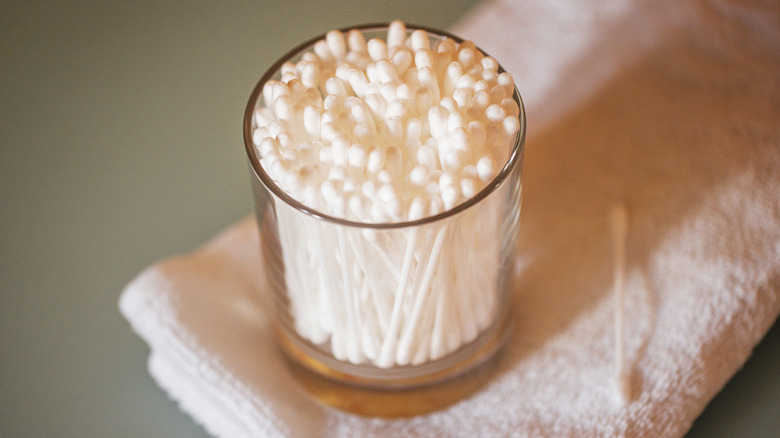
There are many things you should never add to a compost heap, but cotton swabs are not among them. Even though such disposable cleaning tools may seem insignificant compared to larger compostable items because of their size, the amount you're keeping out of a landfill adds up over time. However, the art of composting is not just about collecting food scraps and organic waste in a bin. To create a nutritious soil amendment, you must stick to the perfect blend of green (nitrogen-rich) and brown (carbon-rich) compost materials.
Cotton swabs are classified as brown compost materials because the cotton tips and paper or wooden stems can contribute carbon to the composting pile. If you already have an existing composting heap, however, there's no need to be particular with where you add the swabs. Just toss them into the mixture of green and brown ingredients. Feel free to add them whole or break them into smaller pieces to hasten decomposition.
Meanwhile, if you are still in the process of setting up your compost, mix the cotton buds with the rest of the brown ingredients first. Then, when building your compost pile, always follow the 2:1 ratio of browns to greens. Layer the materials accordingly, dampen them, and keep the pile aerated to encourage microbial activity. For standard composting bins, turn the contents periodically using a shovel or pitchfork. For tumbling composters, rotate the container from time to time to facilitate airflow and mixing.