

12 Herbs That Sprout From Seed In Just A Handful Of Weeks
We may receive a commission on purchases made from links.
I'm both a master gardener and master herbalist, so my gardens are full of all kinds of herbs. Generally speaking, when I grow herbs, I usually buy starts or take cuttings of existing plants, especially for woody species. With many herbs, trying to grow them from seed is an exercise in frustration and futility. They are notoriously and infuriatingly unpredictable, and even if you do everything right, germination can be sporadic.
Parsley, for example, seems to take weeks just to acknowledge that the soil exists, then may or may not decide to germinate. Lavender is notorious for not wanting to germinate, no matter what you do — as is rosemary. Which is why I have a jar of water with some new rosemary cuttings currently sitting on my kitchen windowsill, instead of a tray full of seeds in the greenhouse.
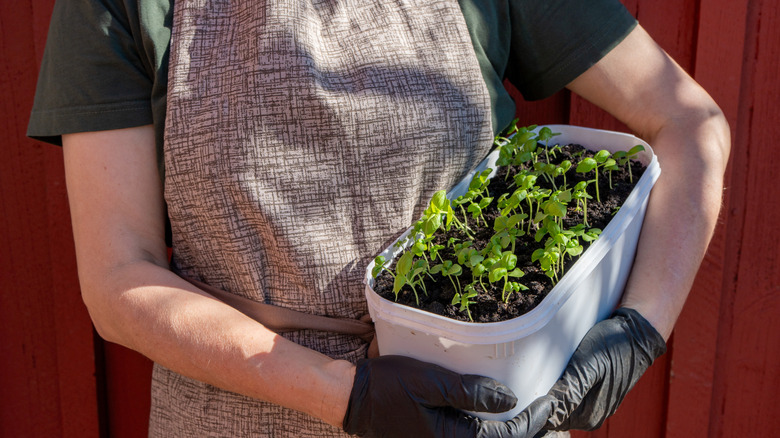
There are certain herbs, however, that germinate more reliably and also reasonably quickly. Plants like chives and chamomile pop up in around 10 days and, assuming that you give them the right growing conditions, germinate consistently. Some, like garden cress, are also rapid growers that are ready to harvest in just a few weeks. If you want to try your hand at growing herbs from seed, these 12 types are the ones to start with. Give them adequate warmth, even moisture, plenty of light, and a high-quality seed starting mix, and you should have little herb seedlings appearing within 14 days.
Basil
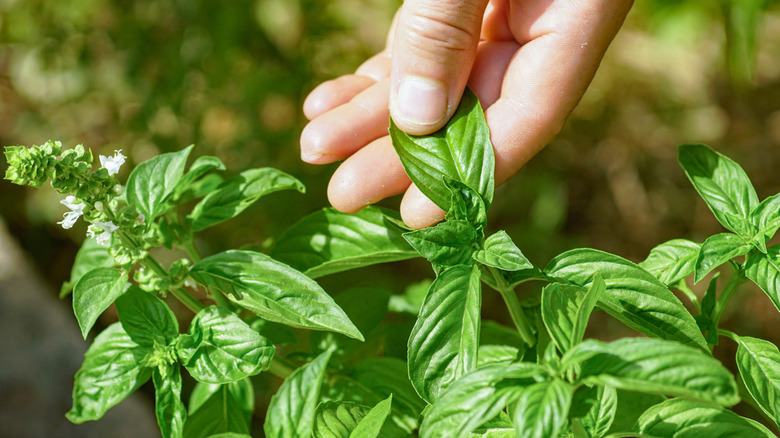
Fresh basil is an essential component of my homemade pesto, but beyond its use as a delicious culinary herb, it's also a fantastic companion plant. Tomatoes especially benefit from being grown alongside basil, as it deters tomato hornworms and improves the flavor of the fruit. Basil repels a variety of irritating plant pests, including asparagus beetle, whitefly, mosquitoes, and thrips. The strong scent of the aromatic oils in basil deters these pests and also masks the scent of the plants you are trying to protect, which further confuses hungry pests looking for a snack.
Basil is pretty easy to grow as long as you keep soil temperatures between 75 and 85 degrees Fahrenheit. If you get the growing conditions right, you can expect basil to germinate reliably within 14 days, but you do need the heat. If your kitchen or greenhouse doesn't reach those temperatures, you might want to invest in a heated seed mat, like Vivosun's 20.75-inch waterproof heated seedling mat.
Sow the seeds shallowly, give them a very light covering with fine compost, and, as soon as they germinate, move the seedlings under bright light because basil is notorious for its etiolation. That's just a fancy word for stretching and going pale, weak, and extremely leggy. Once the plants are established, you can keep them bushy and productive by regularly pinching out the tips and preventing flowering.
Cilantro
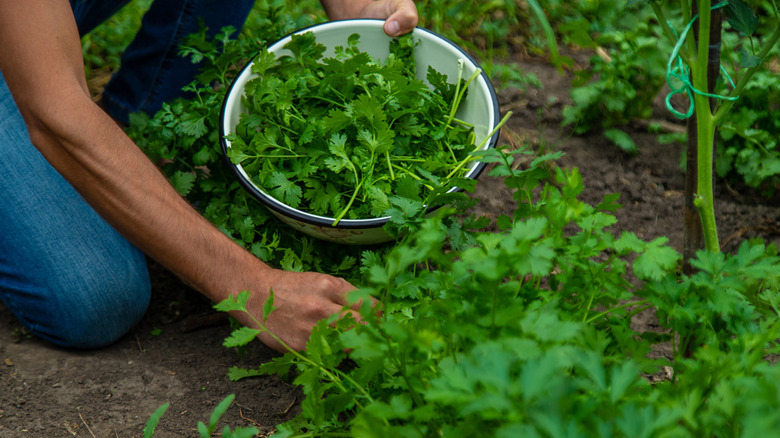
Cilantro is interesting because it's a two-in-one. You can harvest the young leaves for cilantro and then let the plant run to seed and get coriander. Both are wildly different in terms of flavor and you use them differently in the kitchen.
Sow cilantro into its final position, and it will pop up within a couple of weeks. If you sowed thickly, you can thin the seedlings — and don't feel like you have to waste the thinnings. You can eat those tiny leaves just as you would with larger cilantro plants. Cilantro doesn't do well if you sow it in seed trays and then transplant, however. Cilantro has a tap root that does not like being moved. When that tap root is disturbed, it triggers bolting, so transplanted cilantro very quickly runs to flower before you've had even one good harvest.
When sowing cilantro, it's a good idea to soak the seeds in warm water for a few hours before sowing. This softens the outer hull and makes germination more reliable. Because cilantro will almost certainly bolt, this herb is best sown successionally, like spinach: Sow a short row every two or three weeks throughout spring. Leave yourself a gap during the hottest part of the year as the plants will basically just bolt too fast, and resume sowing in fall once the temperatures drop below 85 degrees. Don't worry about too much bolting, as it is inevitable to some level. Let the plant bolt, then harvest and dry the seeds when they turn tan to get coriander seed.
Dill
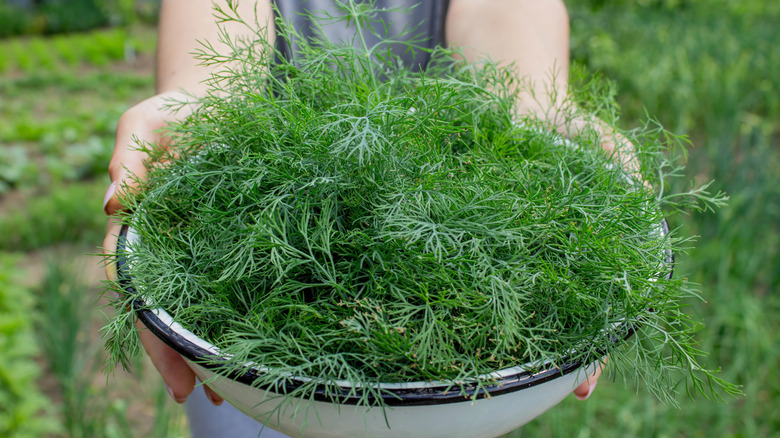
I love the look of the soft, feathery, and intensely blue-green fronds of dill growing in the garden. It's a beautiful plant that releases its clean, distinctive anise-like scent with even the lightest of brushes. Dill seeds germinate in 7 to 21 days if you keep the soil temperature between 65 and 70 degrees Fahrenheit, and it's harvestable at around six or eight weeks, making it a fairly quick cropping herb. Like cilantro, dill needs to be direct-sown as its taproot doesn't like being disturbed, and you want to sow successionally every few weeks for a continued supply of fresh dill.
Make sure you keep dill away from fennel in the garden, as they may cross-pollinate if grown too close together, and you'll end up with hybrid seed that produces plants with muddled, compromised flavor, if they germinate at all. Dill also attracts swallowtail butterfly caterpillars, which are quite spectacular, and I'm happy to share some of my dill with them. You want to pick the dill fronds for drying before the flower heads start to open, as this is when the essential oil content is at its highest. After flowering the flavor diminishes, but you can still wait for the seed heads to form and turn tan, and then harvest those, too.
Fenugreek
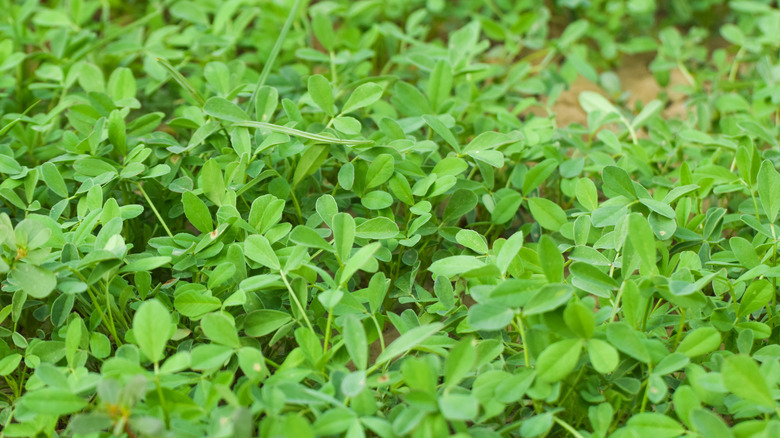
The scent of freshly cut fenugreek is both green and bitter and also maple-like and caramel-like. This ancient herb has been in cultivation for thousands of years, and the seeds are highly prized as digestives as well as being used widely in the kitchen. They take around 5 to 10 days to germinate at approximately 65 degrees Fahrenheit, and you can start harvesting within 30 days. You can cut fenugreek back to about 4 inches above the soil, and it will regrow for a second harvest. If you're really lucky, you'll get a third harvest if you cut it back a second time before the plant eventually runs out of momentum.
Although most people are familiar with the seeds, you can also use the leaves in the kitchen. They work well in slow-cooked dishes like methi chicken or paneer. They can also be shredded and used in flatbreads and dals. Once the plant makes seeds, you can harvest and easily dry them. Fenugreek is also a legume, so it's a nitrogen fixer, which makes it useful in the kitchen garden as a soil-improving green manure as well as a tasty crop.
Chives
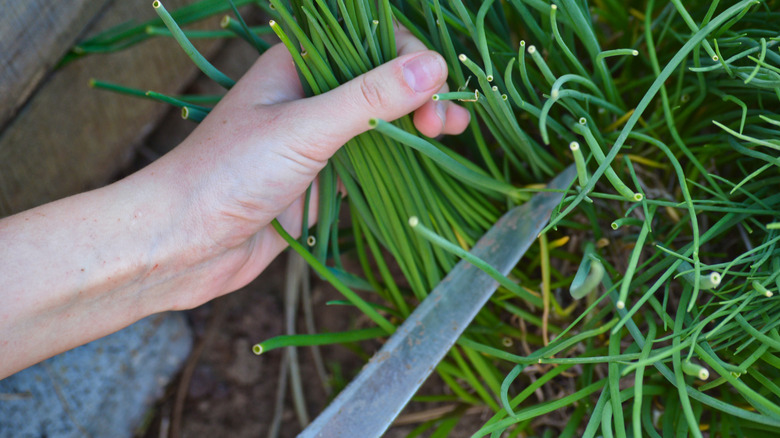
There are chives growing all over my garden beds. They are ridiculously easy to start from seed. Chives require very little attention once they get going, and they are useful as a culinary herb and as a companion plant. I use both regular chives and garlic chives in salads and in any number of cooked dishes. What most people don't realise is that you can also use the flowers. Those beautiful little round pom-poms that can range from white to a vivid pinkish-purple are delicious and edible, with a slightly milder flavor than the leaves. Just scatter them over salads and egg dishes or, for something more interesting, steep them in white wine or apple cider vinegar for two to four weeks to make some chive blossom vinegar (it turns a startling shade of pink and is excellent on pretty much everything).
Chives take 7-14 days to germinate and once they're up, can withstand a wide range of conditions. They'll even keep producing happily in a pot on the kitchen windowsill through winter. Most people just let their chives grow as they will. Overcrowded chive seedlings produce thin, weak blades because they are competing too hard for water, root space, and nutrients, so they're never able to bulk up properly. Thin them out while they're little, and you'll notice the remainder significantly bulks up within a couple of weeks. If they're not crowded, you can divide clumps in the spring of their second or third growing season. Chives are useful as companion plants, as they can deter pests, including aphids. I tend to plant chives along the edges of any beds where I plan to grow carrots or brassicas, and they're also a commonly chosen companion for roses.
Chamomile
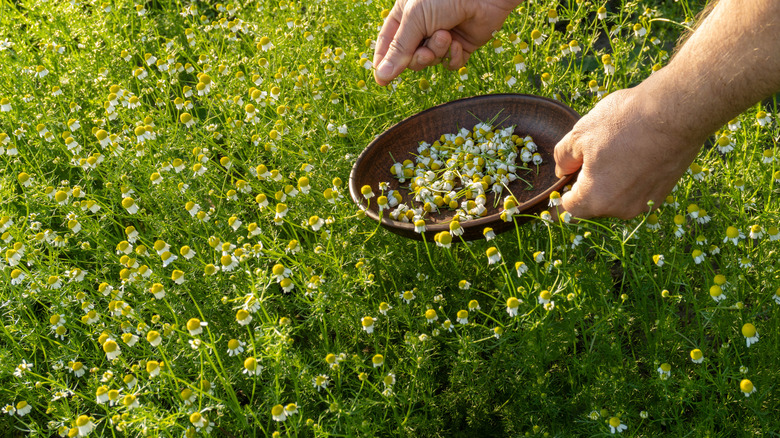
The scent of chamomile is sweet and faintly fruity, and it's one of those smells that's almost universally comforting. I grow a lot of chamomile because I use it in my herbal teas, particularly in comfort, digestive, and sleepy blends. Chamomile tea is useful in the garden, too. German chamomile is the annual type, and the better choice if you want a fast first harvest. Roman chamomile is a perennial, so it will come back year after year, but it has a slower growth habit and won't give you very much to harvest in the first year or two. With German chamomile, because it self-seeds very readily once it gets established in your garden, you will likely never need to sow it again. It's an enthusiastic self-seeder and by the second year, seedlings tend to appear in every corner of the bed without any input from you. If you don't want too much chamomile around, you'll need to keep on top of removing seedlings that pop up or removing the flower heads before the seeds are released.
Chamomile seeds need light to germinate so you shouldn't cover them. Just press them gently into the surface of a high-quality, moist growing medium. Put the tray somewhere bright and you should start to see seedlings pop up in 7-12 days. Don't be tempted to cover the seeds, as even a thin dusting of compost over the top will substantially reduce their germination rate. Those lovely bright daisy-like flowers are an excellent choice if you're growing a pollinator-friendly garden, as bees and many other useful insects love them. If you're growing chamomile for tea, harvest the flowers in the morning just as the petals are fully open, as that's when the essential oil content is the highest. I dry mine in single layers on mesh trays in my dehydrator on a very low setting, but I also love picking the flowers and making tea with them right away, as the fresh flowers are noticeably more fragrant than even the most gently dried flowers.
Fennel
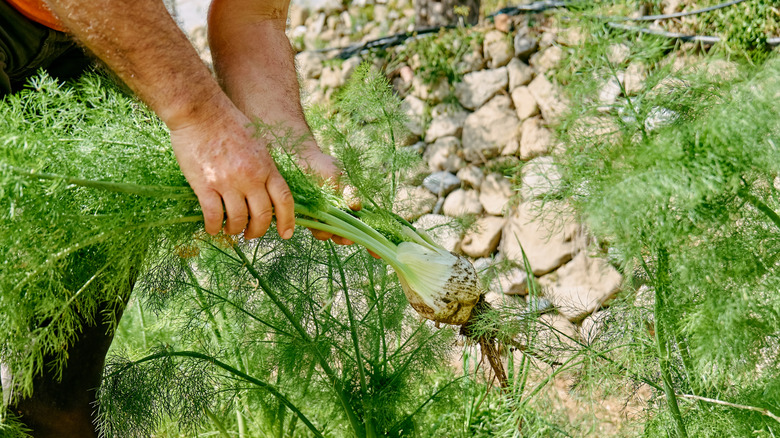
Did you know that every part of fennel is edible? The fresh fronds are useful as a culinary herb and the seeds act as a spice. Plus, of course, the swollen base of Florence fennel types can be eaten as vegetables. You'll also find fennel flowers attract all manner of beneficial insects. Swallowtail butterflies also use it as a host plant, which I consider a bonus. Pre-soak the seeds for 24 hours before sowing to speed up germination time and reliability. Direct sow into its permanent spot, as the tap root does not like being moved. You should see seedlings appear in 7 to 14 days.
Before you plant fennel, be aware that it is allelopathic. Fennel produces compounds in the roots that can suppress the germination and growth of a range of other plants, including many common vegetables. In short, fennel is not a good neighbor for the vast majority of other plants. It belongs in its own dedicated spot and should only be grown alongside species that are immune to, or unaffected by, the allelopathic compounds that fennel produces (such as brassicas and established perennials). Just because fennel is allelopathic doesn't mean you shouldn't include it in the garden: It's a genuinely beautiful plant that looks a little like dill. It's so pretty, in fact, that fennel can be a striking alternative to growing ornamental grasses. Bronze fennel is especially lovely and dramatic to look at, with deep smoky purple-brown foliage.
Sorrel
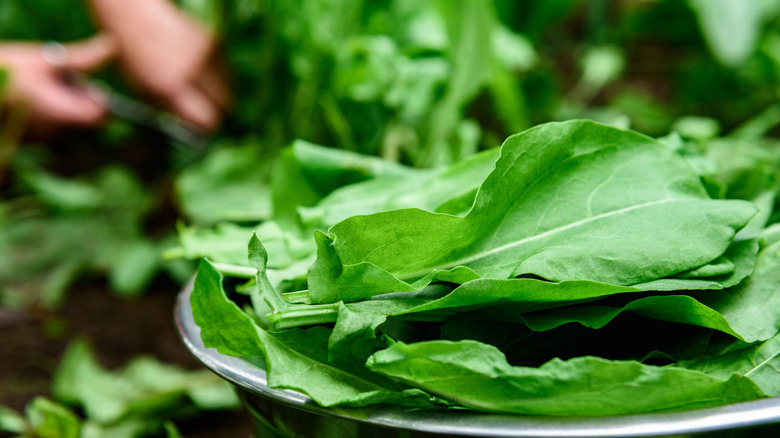
Sorrel (Rumex acetosa) is one of the first things that pushes up in the kitchen garden after winter. You will see growth appear while the ground is still cold and most of the other beds are still dormant. This is a perennial that comes back year after year, so it's a little surprising that it germinates so easily in just a week or two — and, it's harvestable from around six weeks after sowing. As long as you don't go too mad and over-harvest while the plant is young, one good sorrel plant in a suitable growing location will keep producing large amounts for many years.
Sorrel has a sharp, clean, acidic, lemony flavor. The vivid, intensely sour tang of cooked sorrel works well in a soup base or even run lightly through scrambled eggs. You can also try your hand at French sorrel soup, which is a simple affair of sorrel, potato, and stock. Sorrel is a useful herb, as it will grow happily in light shade, so you can plant it in the shade of an apple tree, for example, when not much else will grow. Do note that sorrel contains oxalic acid, which is what gives it its sharp flavor.
Garden cress
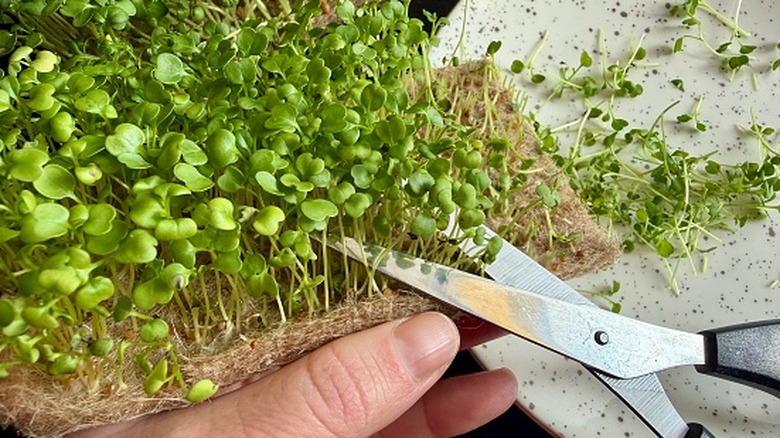
What's not to love about garden cress? It grows so easily and is often one of the first things we teach children to grow because it germinates so rapidly and is ready to harvest in just a few weeks. All you need to do is scatter the seeds on a piece of damp kitchen paper or cotton wool in a shallow tray, pop it in a bright spot, and keep it moist. You'll have tiny seedlings in 5 to 7 days, and you can start harvesting in 10 to 14 days. It's one of the fastest crops that I know of that produces something genuinely worth eating.
You can grow cress year-round on your kitchen windowsill, even in the heart of winter and get something fresh and homegrown for your salads or sandwiches. I really enjoy the bright, peppery, mustard-adjacent flavor of garden cress, and I top scrambled eggs with it and add it to sandwiches and salads whenever I can. Cress requires very little care and attention, the main task is to keep the soil moist. It's a great project for kids because you don't need much patience to be rewarded with delicious, edible cress seedlings.
Lemon balm
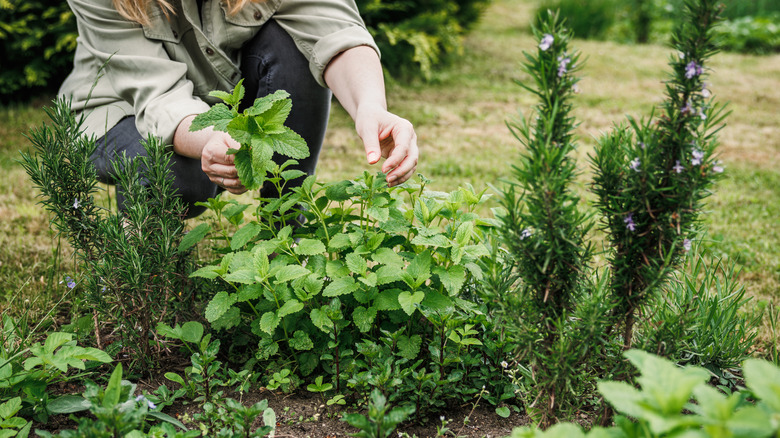
Much like most other members of the mint family, lemon balm grows fairly aggressively. I adore lemon balm and use it in lots of herbal tea blends, but you do need to contain it, either in a container or planted among other strong plants that aren't easily swamped. Lemon balm self-seeds very easily, plus it sends out rhizomes (underground runners) prolifically — so it can really become a nuisance. It is useful however if you have a bare spot that needs filling quickly. And, when sown from seed, it can germinate rapidly, often within 1-2 weeks.
This bright lemony herb has, a sharp clean citrus flavor, perfect for a calming herbal tea. Lemon balm is also a herb pollinators adore. When in flower, bees flock to it. If you want to start a pollinator-friendly garden – and can let lemon balm just do its thing in an otherwise neglected corner where you don't need to worry about containing it so much — it will bring all kinds of pollinators to your yard.
For the most reliable, fastest germination rate, lemon balm requires about a week of cold stratification. To achieve this, take the seeds and pop them on a damp paper towel on a saucer or in a tray and put them in the fridge for roughly seven days. After the week is up, sow the seeds on the soil surface. Lemon balm needs light to germinate so don't bury the seeds.
Greek oregano
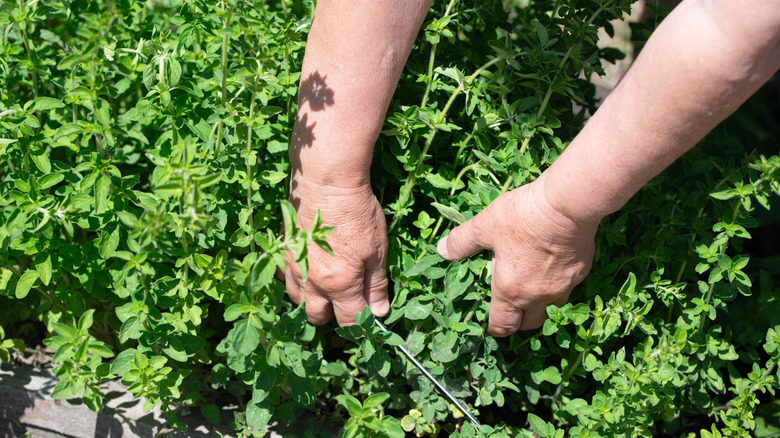
I recommend you grow Greek oregano instead of common oregano because the Greek variety is intensely aromatic and is much more flavorful than the common type. Plus, Greek oregano handles stress better than common oregano and in fact, poor conditions such as lean, thin, sandy soil and minimal water actually increase the aromatic oil content of the Greek variety, making it more intensely flavorful. You'll get more leaves from rich, well-watered soil, but a blander flavor.
The seeds of oregano, like many others on this list, need light to germinate so just press them lightly onto the soil surface but don't cover them. Germination takes 17 to 21 days if you keep the temperature at or above 72 degrees Fahrenheit. It's a good idea to start oregano indoors about 6 to 8 weeks before you plan on transplanting them outdoors, as this plant grows slowly even though it sprouts relatively quickly, and can easily get swamped by weeds while young.
Sweet marjoram
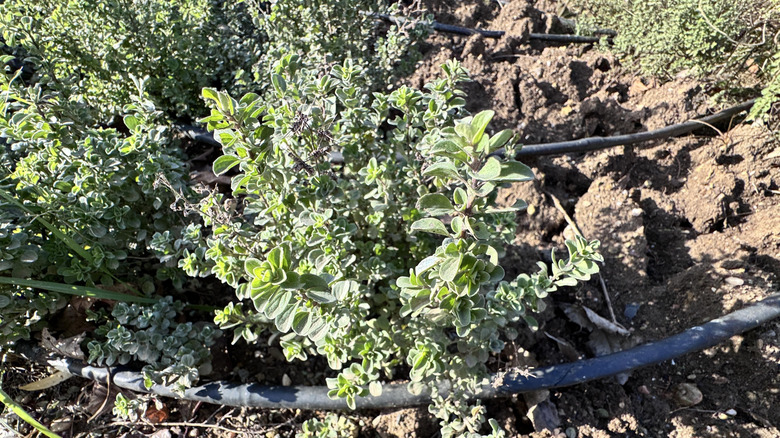
Sweet marjoram is a little like oregano in terms of flavor, but it's sweeter and more floral and has a gentler warmth and lacks oregano's strong, resinous notes. Sweet marjoram is one of many wildly underrated herbs, yet it's ranks among the classics of French cooking, sitting alongside tarragon, chervil, and chives as a delicate herb that enhances dishes without overwhelming them. It's particularly good for the chicken, eggs, and root vegetables.
This is yet another herb that requires light to sprout, so again, press the seeds onto the surface of the growing medium. Keep it moist and you'll start seeing seedlings from around 7 days. Although sweet marjoram is technically a tender perennial, most people grow it as an annual as it rarely survives a cold winter. Because the seeds grow so easily, it's not really a hardship to start fresh plantings each spring. Once sprouted, you can transplant sweet marjoram into the garden in a spot that receives full sun and you'll be harvesting fragrant leaves from mid-summer through to the first frost.