

Not Brick, Not Concrete: The Retaining Wall Material That Looks Good & Is Long-Lasting
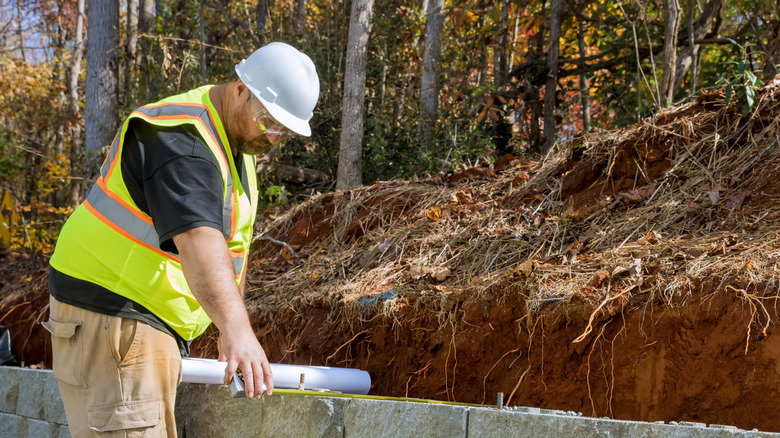
Homeowners faced with replacing or installing a retaining wall often find the process to be overwhelming. It's often not a low-dollar or DIY project, there are a lot of do's and don't when building a retaining wall, and the pros and cons of each material option vary. But if longevity and aesthetic value are what you're after, a granite retaining wall is guaranteed to deliver. Just ask the locals of historic areas, like New England, where granite structures have stood for nearly two centuries.
Granite's resilience is likely why it's the material of choice for people who can afford it. An igneous rock, granite is one of the hardest stones found in nature. Its qualities make it a good option no matter where you live. For example, it has an extremely low porosity, so it won't be affected by areas with a lot of rain or snowfall, unlike other materials that are susceptible to complications from freezing, thawing, and rotting. Then there's the beauty factor. As attractive as concrete and brick walls can be thanks to modern techniques, there's simply nothing like using natural materials in an outdoor space. Granite retaining walls blend right into their surroundings no matter what they are, so although it'll be obvious that it didn't occur naturally, your retaining wall won't stick out like a sore thumb.
Cost and other considerations of granite retaining walls
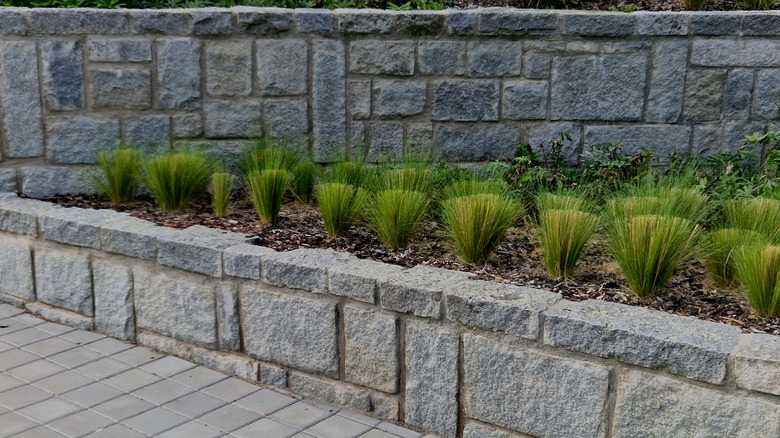
The most prohibitive aspect of using granite for a retaining wall is probably its cost. However, it's important to make sure that the quality of any retaining wall is high, otherwise it won't hold the earth in place, risking erosion or drainage problems. Opting for the cheapest, fastest build is often a mistake that could cause a retaining wall to collapse.
Material and installation costs vary depending on where you live. For standard, unfinished granite blocks themselves, you can expect to pay about $6 to $28 per block. But the cost of delivering those granite blocks can be hundreds, not to mention the labor fees involved in hiring an experienced stonemason — roughly $40 to $90 per hour. In total, a 50-to-60-foot granite retaining wall could cost anywhere from $3,000 to well over $6,000. That said, other materials can have pretty major drawbacks. You might choose to protect your landscape with a concrete retaining wall to save money upfront, but it will eventually crack. Wood walls, on the other hand, are susceptible to insect damage, wood rot, and general breakdown after only a decade or so. Even brick is more at risk of damage due to moisture. By contrast, granite retaining walls can last a century or longer.
Another factor in favor of granite is that it's easy to maintain. Occasionally, moist weather conditions and shade might cause lichen, moss, algae or even mold to form on stone. These can usually be handled with a mild cleaner and a gentle scrub brush. While most people don't find it necessary to treat outdoor granite the same way, there are some cleaners that will damage granite countertops, so you may want to avoid using them on your retaining wall.