

Not Grass Clippings: The Unexpected Yard Scrap You Should Add To Compost
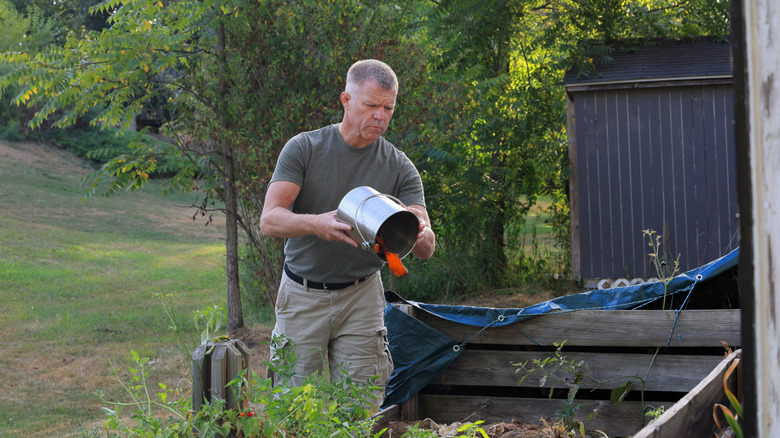
When making your own compost in your backyard, it can sometimes be easy to overlook things that are perfectly fine to throw into it. More often, the most forgotten-about yet extremely useful compost additives are the result of yard work. We're not talking about grass clippings — although those can, of course, be added. Rather, the substance in question is tree bark. It's a brown material that gives your compost pile a serious carbon boost — brown in color and brown in compost terminology. Fallen branches are often too thick and bulky to be practical for a compost pile because they take too long to decompose. However, the bark that litters the ground when you've done some hard pruning or that old tree in your backyard finally falls down is perfectly fine to add.
If you've just started composting, knowing what you should and should not add to your compost can be challenging. At the most basic level, compost materials fall into two categories: green (nitrogen-heavy) or brown (carbon-heavy). To make the best compost, you need to mix 25% to 50% green materials, like grass clippings, with about 50% to 75% of brown materials. Adding sufficient brown material feeds the microbes that break down all the materials, reduces rot, improves airflow, and dispels bad odors. Alternatively, if you're new to composting, you could implement the easy one-third method, where you add one-third each of brown material, green material, and garden soil. In either case, you can use tree bark as your source of carbon or brown material. Bulky tree bark is particularly good for creating air pockets in a compost that's low in oxygen.
The best way to add tree bark to your compost
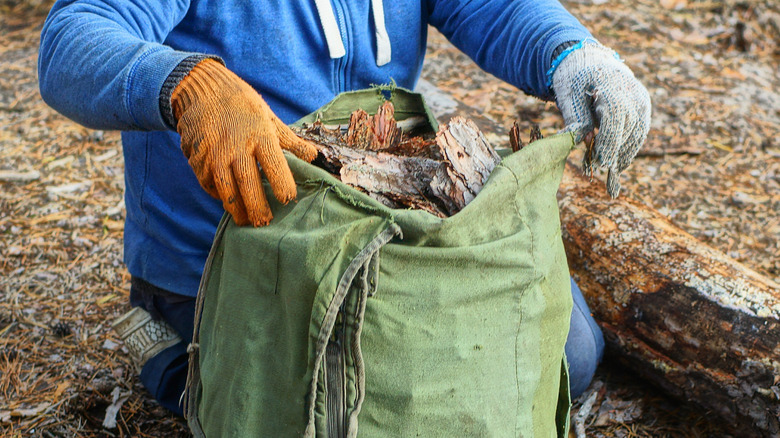
Once you've collected all the bark from your yard, break it down into smaller pieces, which decompose faster than large chunks. You could use your gloved hands, but if you have a garden shredder, throw all your bark into this. You'll end up with chips that will degrade readily. Otherwise, you can lay the bark out in the sun until it's dry and then crush it with a mallet or hammer. You could also dampen the mulched bark before adding it to your compost pile. A little moisture — though not a lot — aids decomposition.
If you've collected a lot of bark, don't add it to your compost pile all at once — unless you turn your pile regularly with a shovel or have a compost tumbler. Instead, mix the bark in with green materials, such as lawn clippings, kitchen scraps, and faster decomposing browns, like dead leaves. This will ensure a compost with a balanced carbon-to-nitrogen ratio.
By taking these simple steps, you may not have to sift your compost at all before adding it to your garden beds. However, if you prefer to pass your compost through a large-mesh sieve or notice any big chunks of bark in the mix, remove them and set them aside. You can add them back onto the pile to continue decomposing. The short of it is that if you were ever in doubt of tree bark's usefulness for your garden, you can now take the material off your list of things you should never add to a compost heap.