

Not Potato Or Banana Peels: The Kitchen Scrap You Didn't Know You Could Add To Compost
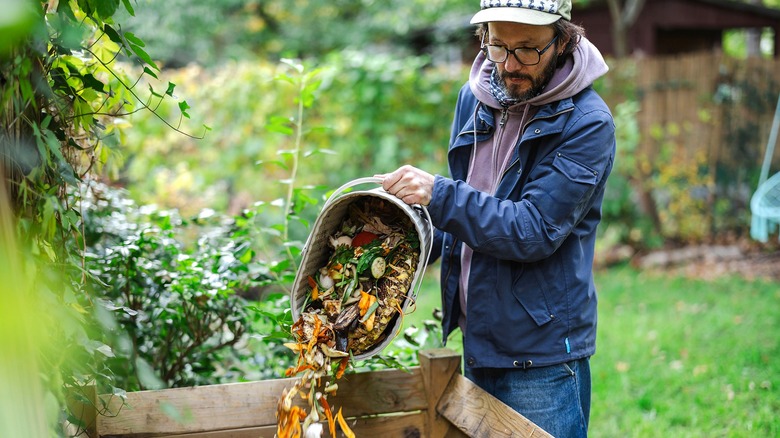
Common kitchen scraps like potato and banana peels are go-to staples for building a healthy, nutrient-dense compost pile. But there's another lesser-known scrap you're probably tossing in the trash that also makes a fantastic addition: tomato stems.
While most of us eagerly slice up juicy tomatoes for things such as salads, sandwiches, and pasta sauces, we typically discard the tough, green stems into the trash. However, those stems are teeming with beneficial nutrients. By diverting these fruit bits from the landfill and adding them to the DIY compost pile you made instead, you help create a richer and more balanced environment for your future garden plants.
Before you toss the tomato stems into your compost bin, though, take a minute to chop them into smaller pieces. Why? Because they're thick, fibrous, and woody; reducing their surface area will speed up their decomposition process. Once chopped, add the stem pieces in with your usual green matter (such as grass clippings, fruit and vegetable peels, and coffee grounds) and mix them in well with the pile. (See green materials that'll give your compost pile a serious nitrogen boost.)
What makes tomato stems a great compost addition?
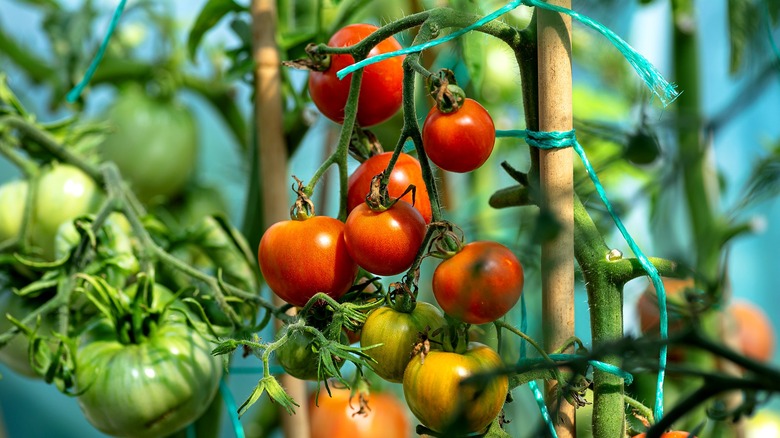
When you're trying to create a healthy, vibrant garden, you need a compost pile that offers a big range of nutrients. Adding in tomato stems adds to the nitrogen-rich side of compost, an element vital for leafy green development and overall plant vigor.
Plus, having chunky stem bits in your compost can help create little air pockets that boost airflow for the heap. Without enough oxygen, a new compost pile can turn into a smelly mess. By including tomato plant parts, like tomato stems, you help boost the structure of your compost, which in turn helps it to stay healthy.
Further, when you consistently add these small green scraps to your compost heap, you're actively creating a DIY soil amendment that can reduce your reliance on pricey store-bought soil add-ins and synthetic fertilizers. How? As the tomato stem pieces and other vegetation in the pile decompose, a rich organic matter called humus forms. And the presence of humus can make your soil better at retaining moisture – something that's especially welcome during the hottest months of the year.
So, it turns out tomato stems aren't among the things you should never add to your compost heap; rather, they're a kitchen scrap you can turn into a powerful garden fuel. A final reminder: Just make sure you balance those fresh stems (green content) with carbon-heavy brown additions, like dried leaves and sticks, for a proper carbon/nitrogen ratio. (For food scraps, an ideal ratio is 15:1.)