

The Useful Feature In Early 1900s Homes & Apartments That Would Be A Major Red Flag Today

Older homes have plenty of quirks — from weird diagonal windows to low ceilings and uneven floors. But, there's one feature you may find in old buildings that is no longer useful or desirable. In the early 1900s, a dumbwaiter was the ultimate luxury and convenience feature in multi-story homes and brownstone apartments. It saved servants or homeowners from hauling heavy blocks of ice, coal, laundry, and multi-course meals up and down steep, narrow staircases. Today, however, if a home inspector or savvy buyer spots an unsealed, original 1900s dumbwaiter shaft, it's a massive red flag.
While pop culture and horror movies love to focus on the creepy factor — or the classic trope of a child getting stuck inside one — the real-world reasons they are dangerous come down to physics, fire safety, and home health. Before celebrating this unique discovery during a renovation, consider the potential dangers and the effort to bring the vertical shaft up to code for modern safety. Depending on whether you choose to completely seal the shaft or fully restore it to working order, you can expect a project cost ranging from a few hundred dollars for a basic decommissioning to upwards of $12,000 for a modern, motorized upgrade.
Why dumbwaiters are a modern-day problem
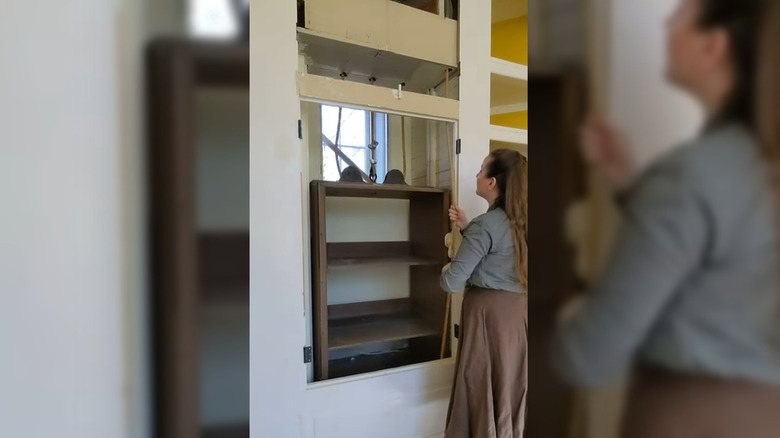
A dumbwaiter is a bizarre feature you might find in old homes, and it often comes with hidden, costly structural surprises. The primary driver behind those high code-compliance costs is the physics of the shaft itself. Because these old systems act as a natural chimney, a single kitchen or basement fire can bypass every drywall barrier in your house, sucking smoke and flames straight up into the bedrooms within minutes.
The mechanical components of a dumbwaiter were built to last, but over a hundred years later, neglect takes its toll. These systems relied on a simple but heavy setup of guide rails, large cast-iron pulley wheels, thick ropes, and massive iron counterweights. A century of abandonment often leaves the dumbwaiter's mechanical parts completely decayed. If a previous homeowner simply painted over the old hatch door or left the box sitting idle, the original hemp ropes rot, and the iron pulleys rust. There is a very real risk of a heavy, unbraked iron counterweight or the wooden cab itself crashing down inside the wall — a true code (and safety) hazard for anyone in its path.
Even if you ignore the direct safety risks, your wallet and your health might take a hit. Beyond the structural and fire risks, an unsealed vertical shaft is an open invitation for pest issues. Rodents, insects, and raccoons love old dumbwaiter shafts, especially if they have any food residue or nesting materials. It gives them a private, unbothered highway to travel from the damp basement straight up into the walls of every bedroom and kitchen in the house. Not only this, but your air quality could be compromised. Because these shafts connect the unconditioned air of a basement or cellar to the rest of the home, they constantly dump musty, humid, or mold-spore-laden air into the living spaces via stack effect.
The red-flag fix
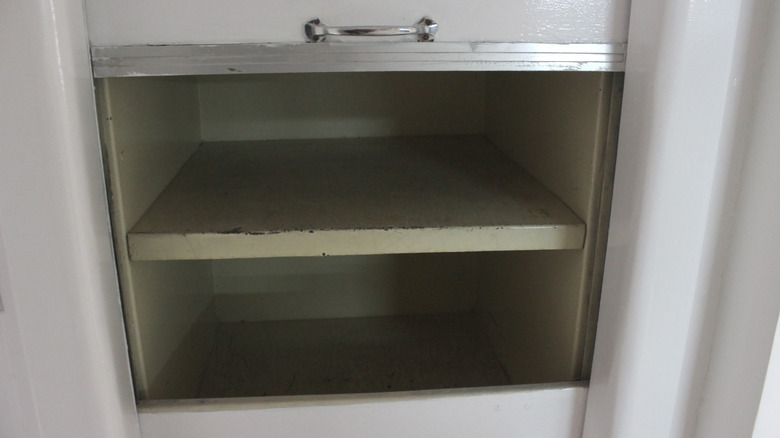
Ultimately, since vintage dumbwaiters violate modern building regulations regarding fire containment and structural safety, you'll need to bring them up to code. The good news is, ripping out the entire structure is rarely necessary. Instead, remediation typically follows one of two paths: decommissioning and fire-blocking, or modern restoration. Decommissioning requires opening up the drywall at every single floor level to install solid wood or fire-rated sheetrock blocking the shaft. The vintage hatch doors are then permanently sealed shut and lined with a fire-rated barrier on the inside, preserving the exterior historic charm while completely cutting off air, pests, and fire paths.
If you want to keep the dumbwaiter functional, it generally requires stripping the old rope-and-pulley system and retrofitting the shaft with a modern, motorized unit. This setup includes automatic interlocking safety doors, fire-rated shaft liners, and emergency brake systems. This type of home renovation requires permits before starting, so it's imperative that you hire a professional for this project. If you are not interested in bringing an old dumbwaiter up to code, you may want to avoid a home that has one that hasn't been safely restored or decommissioned.