

Everyone Had It In The '80s — Now It's The Furniture That Makes Small Spaces Appear Larger
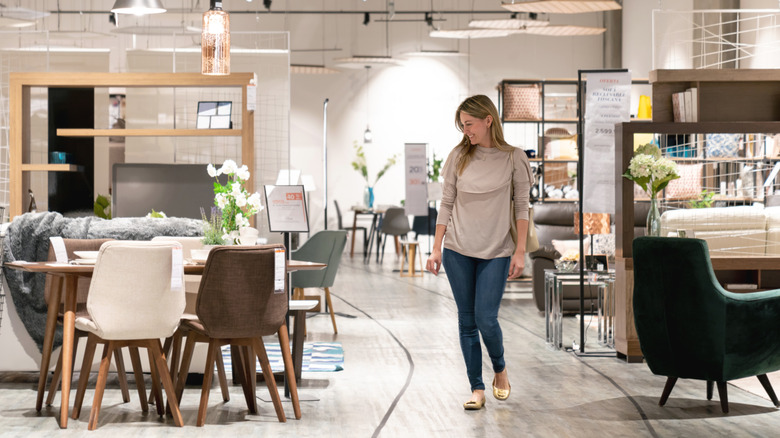
If you have small rooms or a small home in general, it's sometimes necessary to get creative with your decor. Whether it's paint and lighting tricks, ultra-functional convertible furniture, savvy storage solutions, or pieces that serve many purposes, you've probably tried at least one of these tricks to make your space look bigger. Glass tables are another smart means of faking more room in your home, but this clever strategy is nothing new.
Back in the '80s, glass tables were wildly popular and embodied the decade's unique style in lots of ways. Sleek and modern, slightly futuristic, and undoubtedly chic, they classed up lots of homes. Over 40 years later, glass tables are still able to give your dining or living room an instant upgrade. Although we might still associate glass tables with this period that's passed, they have a timeless appeal, especially for their handy visual effects.
Glass tables — especially untinted ones — almost disappear into their surroundings. But another eye-fooling factor is how the surface reflects light, both making a room feel both brighter and more spacious. Even a tinted or frosted glass table will help to accomplish this task while also tackling a few everyday maintenance concerns with this material.
Getting around the cons of a glass table
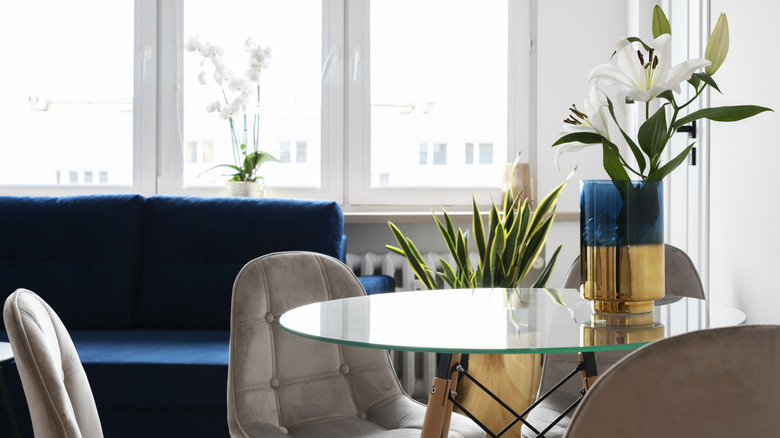
While the appearance of space gain is certainly a big plus, glass tables have some drawbacks, too. Before you start shopping for a new or vintage glass table, consider your lifestyle; glass tables are notoriously good at showing smudges, fingerprints, and grime. If you value tidiness over the illusion of openness, you may want to reconsider investing in this material. However, you can bring the '80s retro aesthetic into your home with a smoky glass-topped table; you'll get the light reflection you want along with a surface that's a bit more forgiving than clear glass.
Scratches are another ongoing concern with glass tables. New glass tables are often advertised as having scratch-resistant surfaces that are made of tempered glass. Additionally, some feature coatings that protect surfaces against water marks and finger prints. It can be hard to impossible to know if a vintage glass tabletop is tempered, but there are protective films you can adhere to the surface similar to the film we put on our phone screens.
Despite its special treatment, tempered glass is subject to scratches, too. Taking preventive measures is best. Use a tablecloth or placemats under dishes, and clean the glass with a microfiber cloth rather than paper towel. While it should be protected during mealtimes, leave the table uncovered when you're not using it to take advantage of its reflective and illusory qualities — materials on the surface can disrupt the look and minimize its impact.