

5 Best Lawn Solutions For Curb Appeal That Aren't Grass
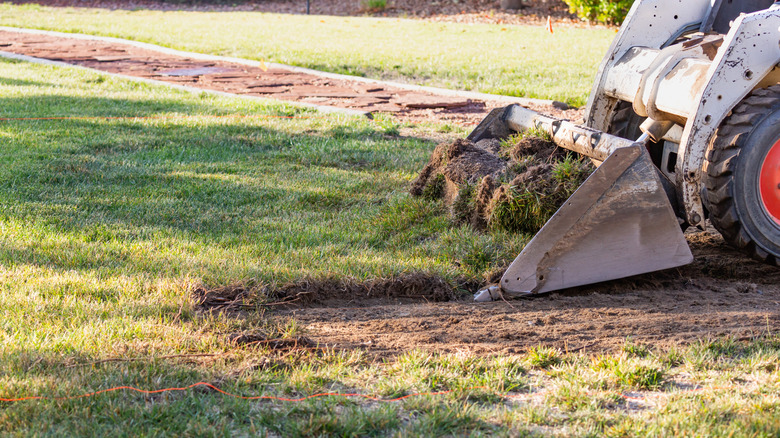
When we think of lawns, we think of grass, but grass is not always what comes to mind when we think about curb appeal and how to attain it. Fortunately, plenty of options for lawn curb appeal are available to you that don't involve grass. While many homeowners completely remove turfgrass when implementing these solutions, you can choose to remove only as much grass as required for your chosen no-grass curb appeal initiative. Each of these options can make a statement as a complete grass replacement, or an excellent edging or pairing with your existing lawn.
For any solution you implement, planning is key. Curb appeal may be your overall goal, but think about what else you'd like to accomplish. Looking to attract more pollinators to your yard? Create an area for pollinator plantings. Do you live in a dry climate and need drought-tolerant plants? Try a xeriscaped space in your yard. Want to make a dramatic statement? How about a rock garden? Seeking to showcase a beloved type of plants, like wildflowers or succulents? Dedicate space — or your whole yard — to these favorites. Seeing how these curb-appeal solutions overlap reminds us that special plantings and gardens in (or replacing) your turfgrass lawn can serve multiple purposes. Wildflowers are often also pollinator attractors. Rock gardens can be xeric. Succulents can be part of rock, xeric, and even pollinator gardens.
Introduce native pollinator plantings to your lawn
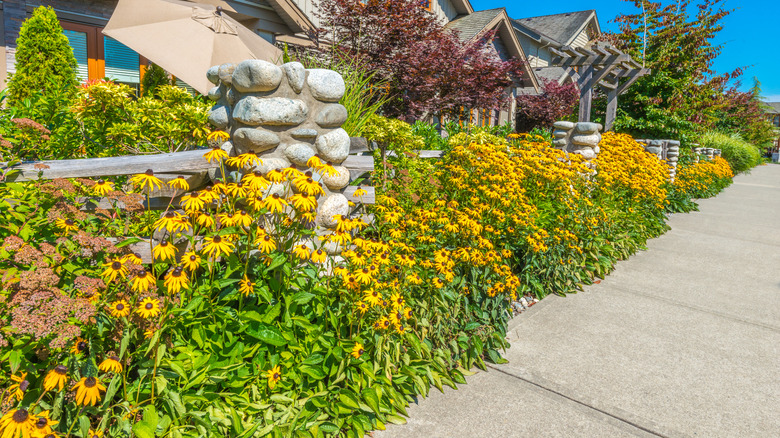
An area of native plants that attract pollinators means not only the pleasure of watching busy bees, birds, and butterflies, but also the satisfaction of healthy, beautiful blooms that will appeal to you and your neighbors alike. The best part is: pollinator gardens require very little maintenance to remain healthy and thriving.
Pollinators are on the decline, yet are needed to pollinate more than a third of crops worldwide. To start a pollinator garden, you'll likely need to locate your native pollinator plantings in a sunny area; both pollinators and many of the plants they gravitate to love those rays of sunshine. Native plants and pollinators go hand in hand because they evolved together over thousands of years in your area, making the plants native to your locale well suited to nearby pollinators. Include plants with different bloom times so you can provide nourishment to birds, bees, and butterflies during as much of the year as possible, and you will also find yourself with a colorful yard all the time. Consider the "3 x 3 x 3" formula, choosing three native plants for each of the three growing seasons, spring, summer, and late summer into fall. We've curated some of the best plants for your pollinator garden. For the sake of your pollinator visitors, it's important to choose plants that have not been treated with pesticides, neonicotinoids, and insecticides. Of course, don't use these chemicals in your pollinator area.
Xeriscape your lawn for curb appeal and water conservation
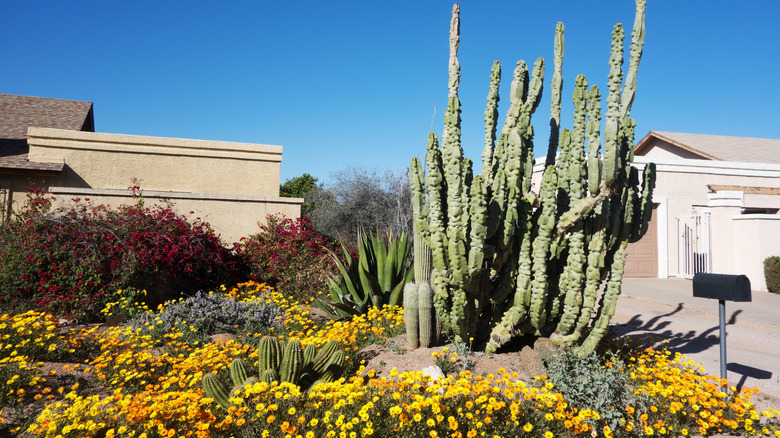
If your area is prone to drought, xeriscaping may be the optimal way to bring curb appeal to your yard. It's a way to create a thriving garden area using the least possible amount of water and one of the methods for creating low-maintenance landscapes that boost property value and save water. It's possible to use up to 70% less water with xeriscaping.
Not only should you choose drought resistant plants that will thrive without much water, but you should place plants with similar watering needs together for efficiency. Drought resistant doesn't mean dull; you can find plenty of colorful and gorgeous plants for your xeriscaped garden, such as California poppy, coreopsis, cosmos, daylily, and echinacea coneflower. Mulch is also your friend in a xeriscaped landscape, as it will help retain moisture. Consider a drip irrigation system so no water is wasted on overhead sprinkler watering and plants get water delivered close to their roots.
Turn your lawn into a wildflower meadow
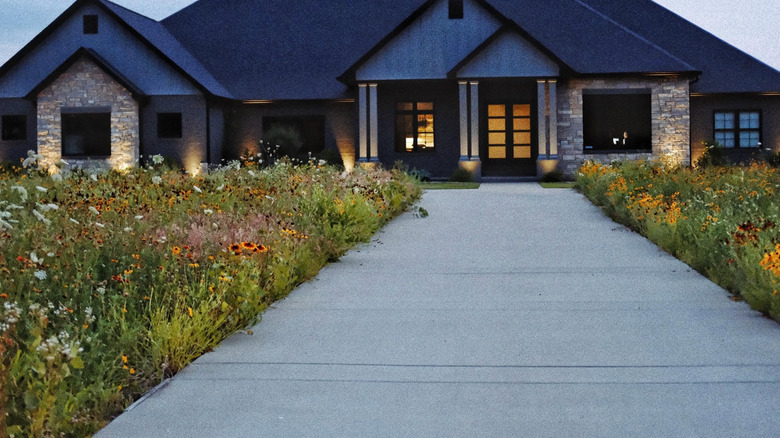
Wildflower meadows attract bees, birds, and butterflies just as pollinator gardens do, but meadows take saving the planet to another level by sequestering carbon, holding 70% more carbon than grass lawns do and keeping it out of the atmosphere, says regenerative landscape expert Owen Wormser (per Joe Gardener). Meadows also support wildlife beyond pollinators.
You can buy pre-mixed assortments of wildflower meadow seeds, but be sure to research what's in the mix to ensure all the wildflowers will grow in your area. If you want pollinators, avoid mixes in which seeds of grasses predominate. You can, of course, create your own mix. Get mostly perennials so your wildflowers will come back every year; order seeds in early summer to get the best selection. The University of New Hampshire Extension suggests 400 square feet as a minimum for a wildflower meadow. Broadcast your seeds in their designated meadow space and give them an inch of water every week to help them germinate.
Fill your yard with succulents
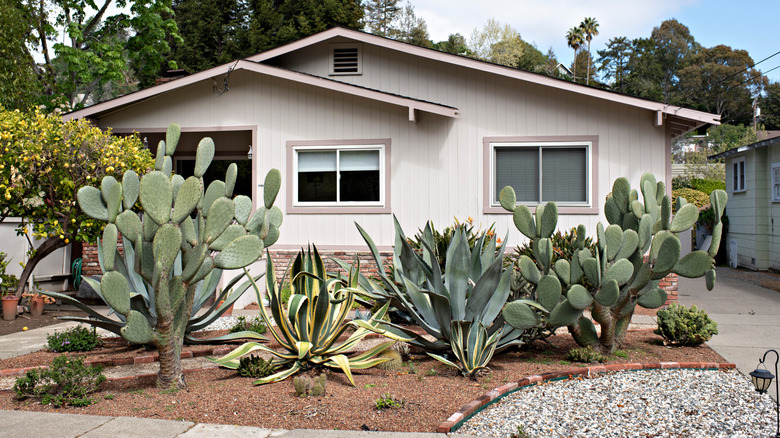
Itching to show off succulents in your landscape? Creating a succulent garden or area is a low-maintenance way to showcase succulents of multiple sizes, textures, and colors, and we're delighted to share beautiful succulent garden design ideas to add curb appeal to your yard. Your succulent garden could feature both succulent plants in-ground, as well as those in containers. It's easy to keep adding to your succulent garden since most succulents propagate easily from cuttings. To give your succulent garden a finished look, topdress with gravel.
You'll want to learn about succulents that thrive in outdoor environments, and how to care for them. Provide full sun exposure. Most outdoor succulents need little supplemental water once established; water them deeply when the soil is completely dry. Succulents in containers will need watering more frequently than those in ground, about twice weekly, and, of course, need drainage holes in their containers to keep roots from rotting.
Add a rock garden with water feature for stellar curb appeal
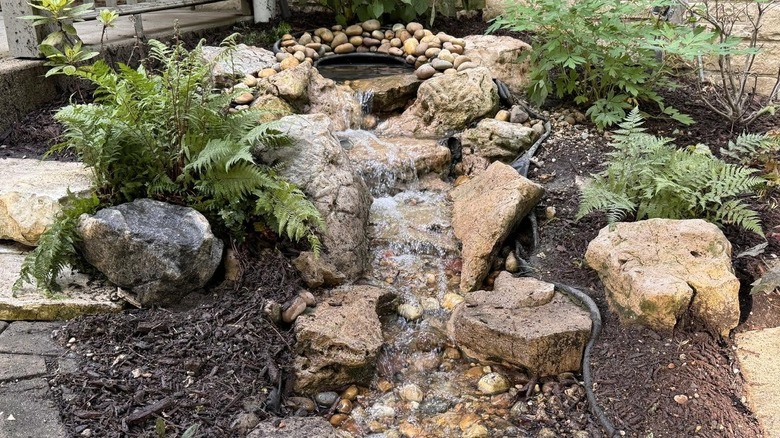
A rock garden makes a dramatic statement, especially if it includes a water feature. It's also likely the most labor-intensive of these curb-appeal solutions to get started simply because of the weight of the rocks and boulders you'll want to use. Consider also including smaller stones like river rocks in the mix.
Unless you have legal access to large rocks and boulders in nature, you'll need to visit a specialized landscape supply yard, local quarry, or stone retailer. You'll probably want to have your picks delivered, and ask to have the largest ones put in place. Design around the big rocks; one approach is to create a perimeter of rocks, clustering smaller rocks, stones, and plants around them. You may need a heavy-duty dolly to move larger rocks. The "chef's kiss" touch for your rock garden is DIY stunning waterfall made of stacked rocks or stones.
Grasses, flowering plants with dainty blooms, succulents, and colorful flowers are among the plants that work well in a rock garden. Consider making your rock garden look as naturalistic as possible. We invite you to get inspired by 30 beautiful rock gardens for your yard.