

What Happens If You Don't Drain Your Water Heater?
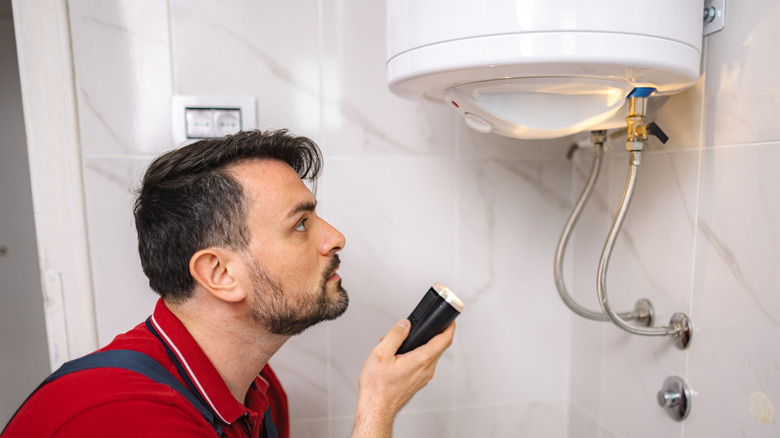
Considering the average cost to have a replacement water heater installed is almost $2,000, you'll want to avoid making water heater mistakes that shorten the lifespan of your appliance. Performing consistent maintenance and operating this appliance properly gives you the best chance of lengthening its lifespan, such as using a 120-degree Fahrenheit setting and replacing the anode rod every three to five years.
Another important maintenance step is periodically flushing or draining the water heater, often once a year depending on your manufacturer's guidance and water quality. When you fail to drain this appliance regularly, sediment collects in the bottom of the tank. Minerals that are naturally dissolved in hard water, such as magnesium and calcium, make up much of this sediment, although silt and rust may also appear. As this material builds, it causes the water heater to work less efficiently, increasing your energy bills (whether you run a gas or electric unit). The sediment buildup can also cause corrosion inside the tank, shortening its lifespan and increasing the likelihood of leaks. As the sediment builds up and hardens, it may cover the pressure release valve on the water heater. If this safety device is clogged, the unit may leak or rupture.
Over time, neglecting regular flushing can reduce performance, shorten the appliance's lifespan, and eventually contribute to premature failure. Many homeowners can perform the steps for draining a water heater themselves, or they can call a professional plumber to do the job.
How to recognize that it's time to drain your water heater
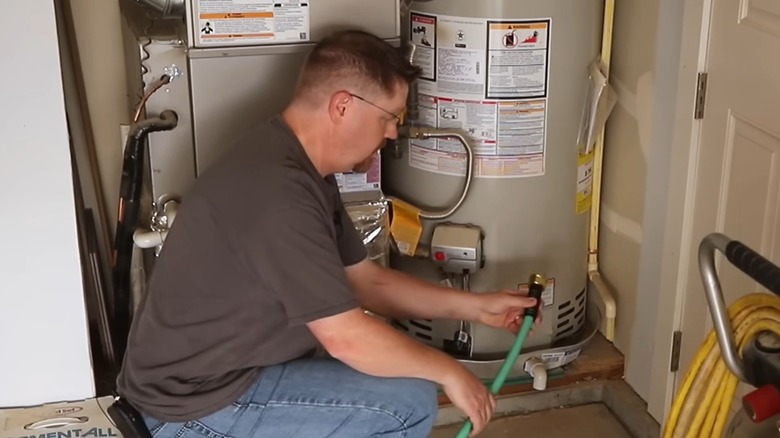
Even though you should drain the water heater at least once a year, some people simply forget to do this chore. Depending on the level of dissolved minerals in your water supply, the frequency with which you fill and drain your water heater, and the age of the appliance, you may need to do this job twice a year or more often.
If you're unsure how often to do this job or if you can't remember the last time you did it, you can watch the appliance for signs that your water heater needs to be drained now. If your hot water appears cloudy or discolored, flushing the water heater may help, although other plumbing issues can also cause these symptoms. Extremely cold water in winter or a sediment-blocked aerator in the faucet could also cause cloudiness, it's probably sediment in the tank that needs flushing.
Another common sign of excessive sediment buildup in the tank is hearing popping noises as it operates. Steam passing through the layers of buildup causes these noises. You might notice that you don't have as much hot water available as you did a few years ago. As sediment collects at the bottom of the tank, it reduces the amount of space available for hot water, meaning you're eventually going to start running out earlier than expected. If you have a lot of dissolved minerals, you could see 5 to 10 inches of buildup in the tank over several years of use.
How flushing the water heater tank works to remove sediment
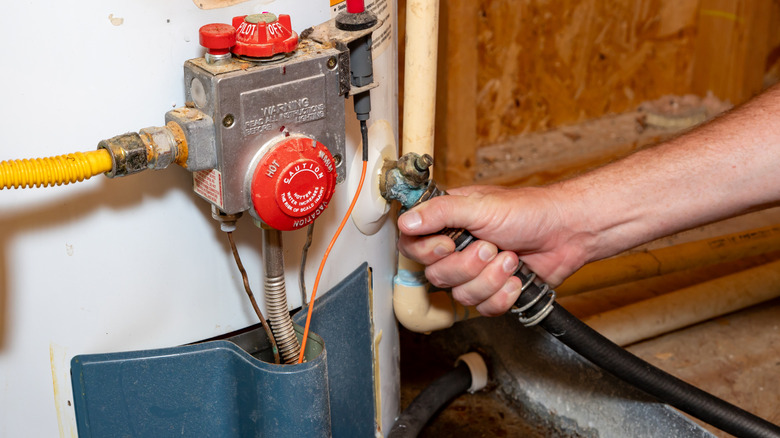
Flushing is the right way to drain your water heater tank because fresh water helps carry loosened sediment out through the drain valve. Turn off the water heater's power source and water supply. Partially open the hot water faucet that's closest to the tank to relieve some pressure. Then attach a garden hose to the drain valve and open the valve, carefully draining the remaining hot water from the tank into a bucket or floor drain. After the tank drains, close the valve, refill the tank, and repeat the process until the water runs clear, meaning the small pieces of sediment have all washed away.
If the flow from the drain valve slows or stops, larger pieces of hardened sediment may be blocking it. If your water heater has a full-port ball valve, it provides a larger opening than a standard drain valve and may make removing larger debris easier. Connecting a shop vacuum adapter to the full port valve makes it easier to suck out the larger pieces of sediment. (Not all units have a full port valve, meaning you might need a professional to install one to use this technique.)
If the tank has a lot of hardened sediment built up inside it, draining it could be problematic as a DIY job. Tanks that are around 10 years old (or older) can have this hardened sediment, especially if they haven't been flushed often enough in the past. You may need help from a professional for flushing, or you might need a replacement tank.