

Not Basil, Not Cilantro: The Herb With Flowers That Makes A Gorgeous Light Blue Ground Cover

There's something special about growing masses of a single fragrant herb that'll make your patio smell good all summer. While basil and cilantro are undeniably useful in cooking, they don't tend to work well in large-scale landscaping. Enter creeping rosemary — botanically called Salvia rosmarinus (Prostrata Group). It's the prostrate form of the familiar shrub many of us grow in sunny garden beds. Creeping rosemary is ideal for adding a pretty blue hue to rocky slopes and dry spots in a backyard where taller, water-hogging botanicals fail to thrive.
Creeping rosemary is the kind of ground cover that can make you feel like you're living in a Greek village nestled between the coast and hills covered in sweetly-scented herbs. Although this variety obviously doesn't have the height of its upright cousins, each plant still takes up plenty of horizontal space. In most cases, this fragrant herb will grow up to 12 inches tall and spread up to 36 inches. Some varieties, however, may grow twice that size.
No matter its stature, creeping rosemary produces dreamy lavender-blue flowers that attract butterflies, bees, and birds. Its needlelike foliage is bluish-green and strongly scented. This herb hails from the Mediterranean, and as such, is perennial in USDA Plant Hardiness Zones 8 to 10. For gardeners living in southern regions, creeping rosemary is an ideal ground cover that will thrive in the harshest sun — though it doesn't do well in high humidity, even if the climate is warm. This low-growing herb can bloom in every season of the year, depending on where you live.
Creeping rosemary loves to scramble across rocky beds and slopes
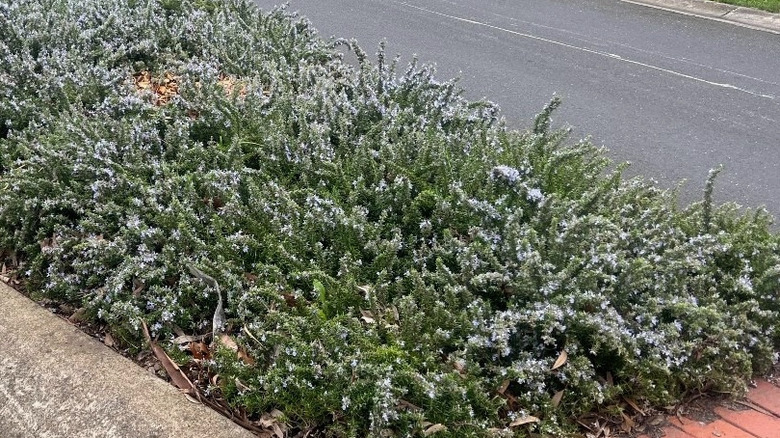
Creeping rosemary will grow where many other ground covers would wilt and wither. Choose the sunniest, driest patch in your garden to plant this herb. It's ideal for adding a touch of softness to slopes, xeriscapes (it's the perfect plant for a water-wise garden), and rock gardens. Of course, prostrate plants such as creeping rosemary are also ideal cascading ground covers to fill window boxes for added beauty.
Classic creeping rosemary has a subtle pine-like scent. 'Lockwood de Forest' produces darker blue flowers and lighter foliage. 'Blue Boy' is especially ornamental. Space each seedling according to the variety or cultivar's ultimate size, per the planting instructions on the nursery label. This low-slung rosemary variety is fairly low-maintenance, but as mentioned, extended periods of high humidity or overwatering can result in root rot or a powdery mildew infection. Immediately after planting a new creeping rosemary shrub, you will need to water it every two weeks or so. After that, however, consider it a low-water plant.
This sprawling ground cover benefits from strategic pruning to remove dead undergrowth and keep the upper foliage vibrant. You can also use pruning to control the height and shape of the plant, if needed. Make sure only to trim branches that have leaves on them — you need to avoid damaging the plant's woody base. Don't be too hasty discarding those cuttings! Like its upright cousins, creeping rosemary is great for adding aroma to your home and taste to your meals.