

Not Brick, Not Pavers: The Driveway Edging Idea To Add Visual Interest At Night
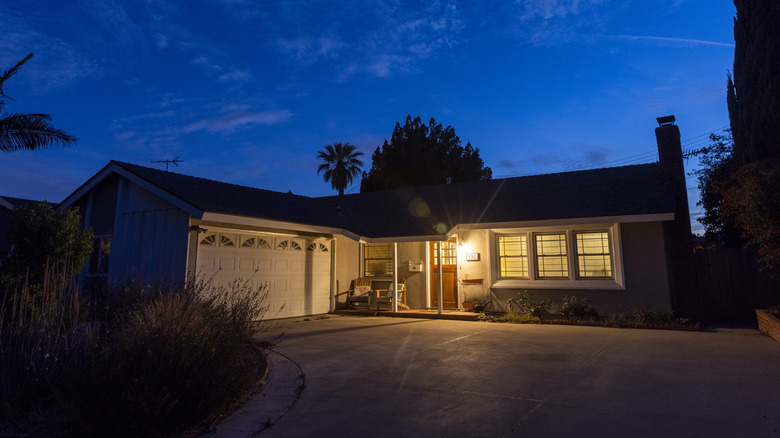
During the day, a walk through the neighborhood reveals a wide array of landscapes, with varying textures, structures, colors, and designs. But once the sun goes down, the differences between yards are hard to spot — the outdoor spaces become a blend of dark shadows.
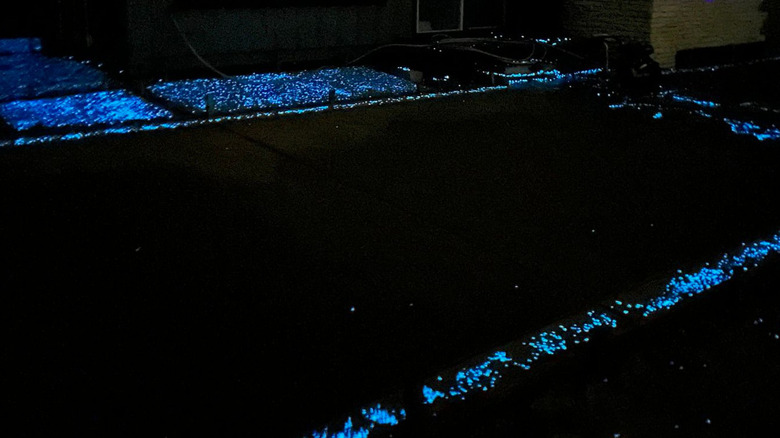
Although outdoor solar lights will illuminate your yard, consider incorporating photoluminescent, or glow, stones for more eye-catching visual interest after dark. If you've never heard of glow stones, they are exactly as they sound. During the day, the rocks absorb light from the sun and then emit a gentle glow at night. In yards or public areas, you may have seen these rocks used in pathways, driveways, steps, or even pools.
A common — and probably the most permanent — technique is to incorporate them into concrete or clear resin binder when you're installing hardscape. But if that opportunity has passed, you still have options. One of the easiest ways to add glow stones to your yard is to line your driveway with compacted stones or gravel. Mix glow stones with regular rocks, vary the sizes, or go all out with using only glowing products. The stones are non-toxic, waterproof, and will illuminate your driveway without using electricity. In addition, driveway edging is more than just for looks — it offers practical benefits, too. And if your edging glows, then it's a landscaping win-win situation.
Considerations when creating glowing driveway edging
You may already be familiar with glow stones used in aquariums or in planters, so how are these different from those used in landscaping projects? Stones typically purchased for gardening or decorative purposes range from $10 to $15 for 200. On the other hand, companies selling their propietary products for landscaping charge about $45 for roughly the same amount.
As with most purchases, you get what you pay for. Less expensive stones are typically made of hobby-grade plastic or resin, whereas the higher priced products are made with non-shrinking resin or glass. The rocks also have varying amounts and quality levels of glow pigment. For example, a higher quality stone will hold more glow pigment, and high-quality pigment will have a longer glow time than the lesser quality. Stones used by hobbyists are typically brightly colored and smooth, some available in the shapes of gemstones. Glow rocks specifically for the yard are mostly jagged and come in multiple grades, reflective of different types of landscaping rocks, with a white appearance by day and a green or blue glow at night.
When deciding whether or not glow stones work for your driveway, observe the area during the day and night. If your driveway is shaded all day, the rocks may not absorb as much sunlight needed for a strong nighttime glow. At night, lights from your home or streetlamp after sundown may dampen the wow factor of the rocks. If you need even more illumination, this driveway edging idea will light up your yard even more.