

16 Features & Designs That Make Your Kitchen Look High-End, According To Designers
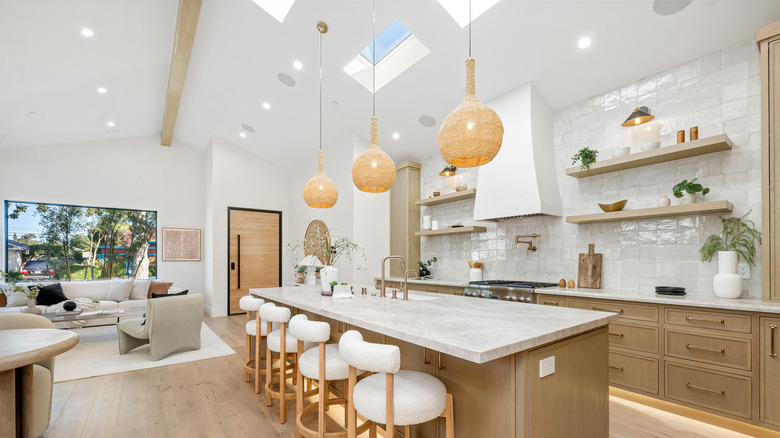
Finding ideas for your kitchen remodel is easy, but narrowing them down is far from it. The internet is awash with inspiration and hot takes from homemakers, and you need only spend a few minutes there in order to feel utterly overwhelmed by the options. This is why, for those who can afford it, it's almost always worth hiring an interior designer. But that's not to say that you have to. In fact, even if you're shooting for a high-end, custom look in the heart of your home, simply getting informed can pave the way to a standout space.
In a series of exclusive interviews, we asked five professional designers for tips on how to lend a bit of luxury to your kitchen. Some can help you embrace the invisible kitchen trend by managing visible clutter, and some can help you layer your lighting. There are tips on hardware choices, and if you're torn between materials for your kitchen counters, there's advice about that, too. Whether you know what you want and don't know how to design it, or are drowning in a pool of Pinterest, if a high-end look is your hope, then the guidance below is sure to help.
A single, purposeful material used repeatedly
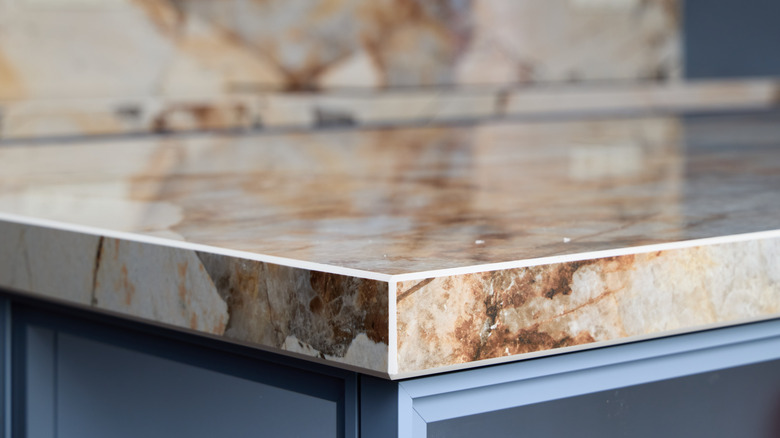
Few choices in the kitchen are as important as the materials you build it with. They need to be functional — capable of handling the heat, spaghetti sauce splashes, etc. But they also need to look good, since you'll be using the kitchen every day. And perhaps most importantly, they need to look good together. In an exclusive interview with House Digest, Lauren Lerner, founder and principal designer of Living with Lolo, suggests threading your design with a single material to invoke a sense of continuity.
Lerner explains, "When we choose one material and let it carry the room, whether that is a honed limestone on the counters, backsplash, and even a windowsill, the repetition creates a sense of calm that feels inherently high-end." Approaching materials this way, she says, avoids potential clashes, and signals that none of your decisions were made in isolation. In other words, they lend your space precisely the "designed" look that's typical of high-end kitchens.
Concealed or recessed ventilation
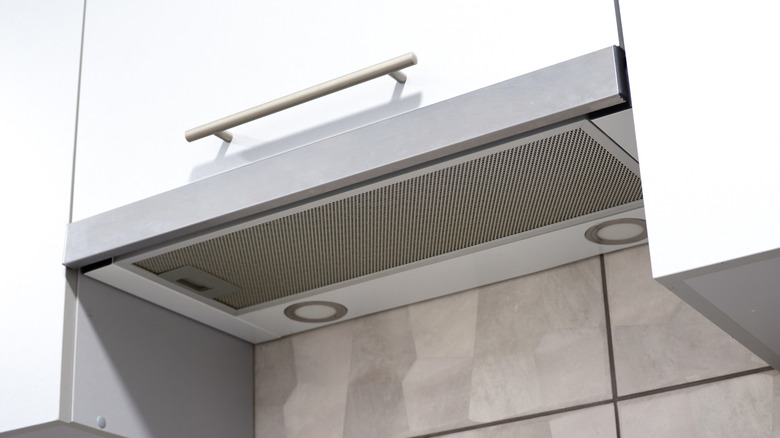
The hoods above our stoves have the potential to make or break our designs. And while there is, according to Lauren Lerner, an argument to be made in favor of statement range hoods, hiding them away can be equally as effective. Ultimately, it depends on the look that you're going for. "When ventilation disappears entirely into the ceiling or a structural element," says Lerner, "it creates an almost surreal cleanliness in the kitchen."
The reason that hiding away range hoods is so popular in high-end designs is that those uninterrupted sightlines are incredibly difficult to achieve with standard appliances. Concealed ventilation proves that some thought and effort went into the design, says Lerner, and that zero expenses were spared in the planning stage.
Integrated appliances
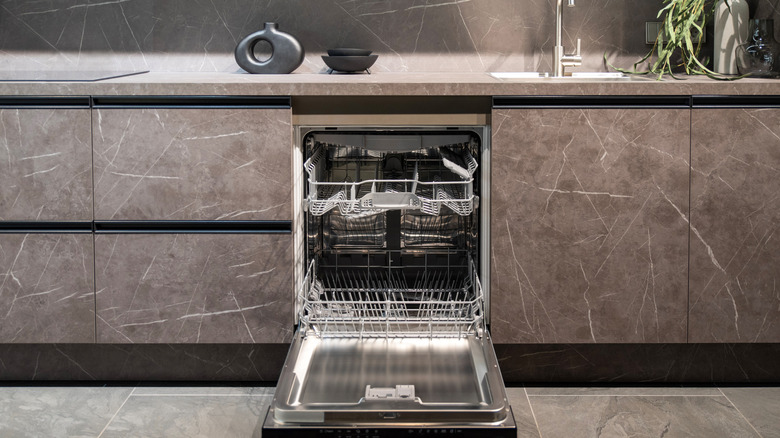
If you love a clean look, integrated appliances are one of the most enviable luxury kitchen design ideas. They keep visual clutter to a minimum, making the heart of your home a space that feels seamlessly cohesive. In an interview with House Digest, Kerrie Kelly, CEO and creative director of Kerrie Kelly Studio, agrees with this wholeheartedly.
"When appliances are fully integrated or panel-ready," she explains, "the kitchen reads more like furniture than a collection of individual pieces." Kelly says that this approach to design allows the eyes to move more fluidly through the space, without landing on the incongruous white and steel hues of large, unsightly appliances. By employing this idea, you'll achieve a more refined and tailored aesthetic that reads undeniably upmarket.
Custom millwork details
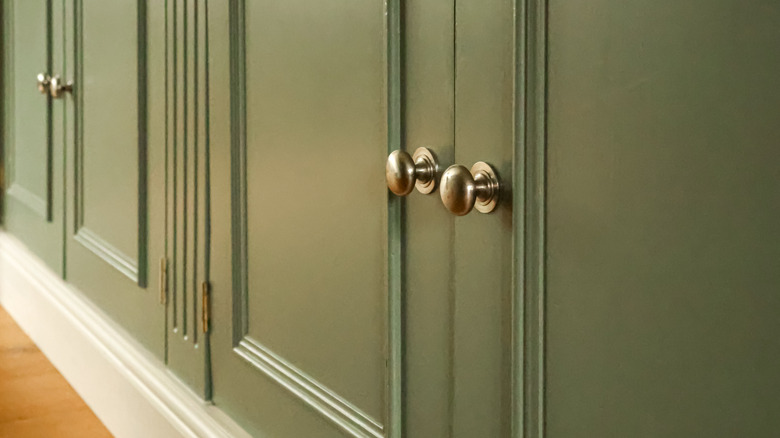
An under-the-radar detail that can lend your space a high-end look is the inclusion of custom millwork. "Details like flush inset cabinetry, tailored reveals, and intentional shadow lines signal craftsmanship," explains Kerrie Kelly. They are subtle, and that's precisely the point.
High-end design, these days, is no longer about expensive, flashy features. Instead, it's about quieter details that, when you add them all together, become more than the sum of their parts. The kind of custom detailing that Kelly suggests shows anyone in your kitchen that time and craftsmanship went into creating your cabinets. Those little touches exude luxury, and feel as far from "off the shelf" as it's possible to get. And if you have designer-minded folks in your family or friendship group, Kelly explains that your attention to detail won't go unnoticed. "These are subtle moves," she admits, "but they're what designers notice immediately — they create a sense of precision and elevate the overall composition."
Layered, intentional lighting
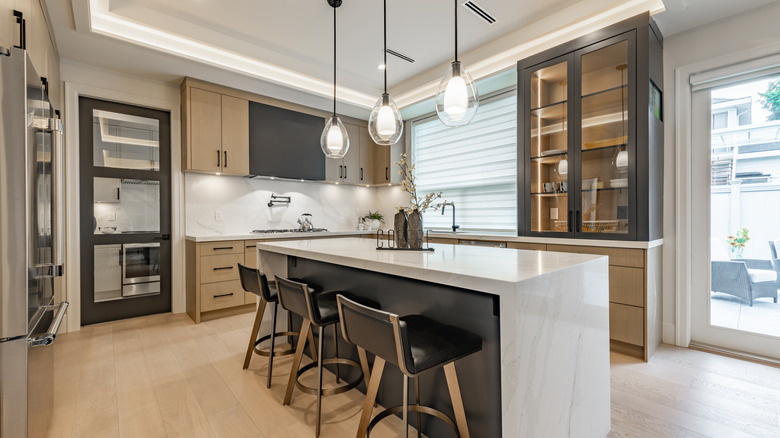
It's hard to overstate the importance of good lighting, and it's perhaps nowhere more important than in the kitchen. Bad lighting can make your kitchen feel cramped, and without proper layers — including both task and ambient lighting — even the most luxurious kitchen can feel dysfunctional. "High-end kitchens don't rely on a single light source," Kerrie Kelly explains. Instead, she says, the trick to illuminating a kitchen is to design your lighting in layers.
So, what does this mean? Well, regardless of the room you're redesigning, an effective lighting scheme typically comprises three layers: ambient, task, and decorative. Ambient lighting is the foundational light that allows you to navigate a room. Task lighting, meanwhile, is typically bright and more focused, designed to help you see what you're doing and work safely (undercabinet lights are one example). Decorative lighting, or accent lighting, is used to highlight focal points. Its role is to tie the space together while imbuing it with mood and personality — think a couple of decorative sconces or warm LED strips inside glass-fronted cabinetry. "A thoughtful mix of ambient, task, and decorative lighting — especially when dimmable — creates depth and allows the space to shift throughout the day," explains Kelly. This, she says, helps your kitchen to feel both luxurious and highly functional, which is ultimately the goal with any high-end kitchen.
Thoughtful hardware and negative space
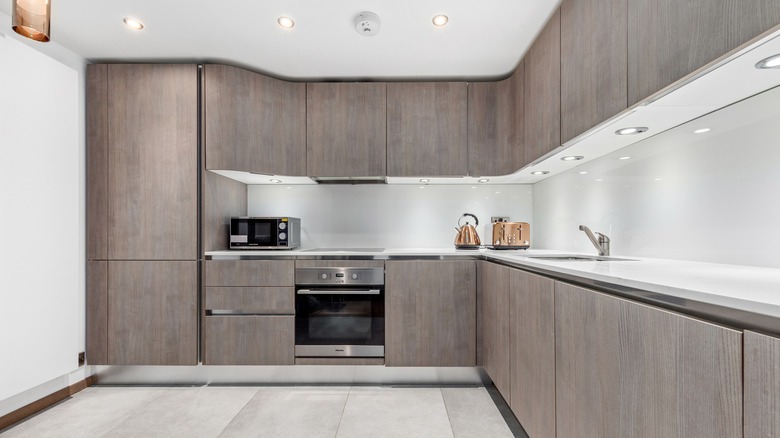
The first thing to say here is that you shouldn't mistake this tip with sheer minimalism. Instead, it's about thinking carefully about your design choices, and avoiding the temptation to fill in the gaps between them. As Kerrie Kelly says, high-end kitchen design is "not just what you add, but what you leave out." For example, beautifully scaled hardware, or the absence of it entirely — perhaps replaced with touch-latch or integrated hand-pulls — can really elevate your kitchen design.
So, employ some conservatism. Adopt a "less is more" mindset with your design elements, and don't be scared of negative space. As Kelly puts it, "Giving elements room to breathe creates a more sophisticated, gallery-like feel." In other words, by allowing the space around them to exist without adornment, those elements that you do decide to include will feel more intentional and curated. You'll achieve a visual balance that doesn't read as busy, while enhancing and drawing attention to the areas you want to highlight.
Appliance garages and hidden small appliance storage
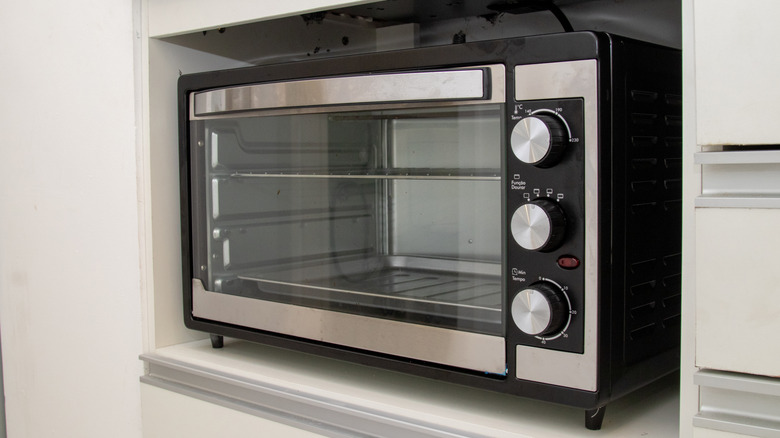
As we've discovered, integrating your larger appliances can lend your kitchen a seamless, high-end look. But what about small appliances, like your toaster, coffee machine, or smoothie maker? These can just as easily clutter up the space from a visual standpoint. They can also get in the way, especially if you're limited on space and only have so much countertop real estate to work with. In an exclusive House Digest interview, Jess Klein, founder and principal designer at Jess Klein Studio, suggests finding a way to hide them.
Like Kerrie Kelly, she says, "Panel-ready appliances are one of the most transformative investments you can make in a kitchen." But Klein takes it one step further, by finding a way to hide your small appliances, too. You could tuck them behind cabinet doors, or stow them in a dedicated appliance garage. The key, says Klein, is eliminating visual clutter. Do that, and you'll achieve the kind of calm, intentional quality that's expected in luxury kitchen design.
Custom cabinetry that goes to the ceiling
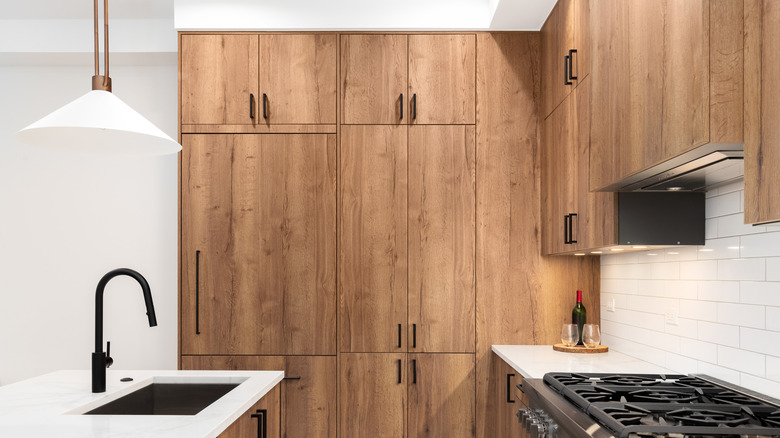
Designer-grade kitchen cabinets are among the most coveted custom kitchen features. And as we've already discovered, custom millwork in your cabinetry can go a long way towards achieving a high-end aesthetic. Taking it one step further, Jess Klein suggests having your kitchen cupboards extend all the way up to the ceiling. This, she says, is one of the clearest signals that a kitchen was thoughtfully designed.
As for why, she explains, "It eliminates the gap above standard cabinets where dust collects and the space feels unfinished." It shows that your cabinets have been custom-built for your space and matched to its exact dimensions, instead of selected from a shelf. It also draws the eye upward, says Klein. This makes the room feel higher, while achieving what she describes as "the kind of built-in, bespoke quality you'd find in a high-end kitchen."
A statement stone hood
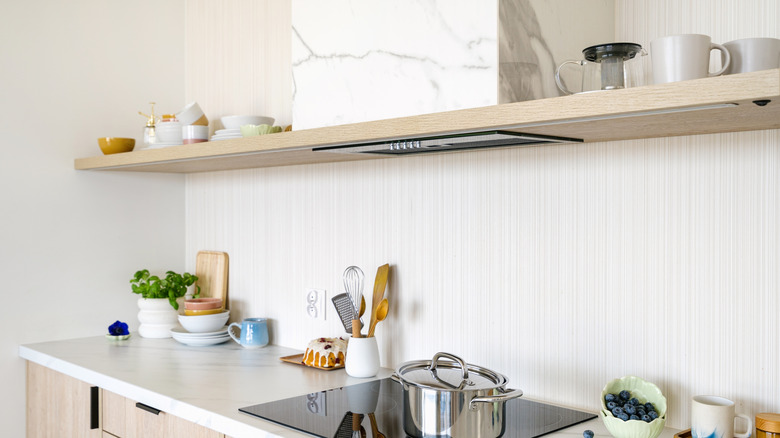
There's no one "right" way to design a luxury kitchen. As an example, we outlined earlier how hiding away your range hood can really help to lend a calming, luxe sense of cleanliness to the lines of your kitchen. However, in an exclusive interview with House Digest, Cara Woodhouse, interior designer and founder of Cara Woodhouse Interiors, explains that embracing the presence of your extractor can be equally, if not more, effective.
In fact, says Woodhouse, "one of the fastest ways to elevate a kitchen is with a sculptural stone hood." She adds that instead of treating the hood as a purely functional element, "I like to think of it as the focal point of the room." Of course, this takes some daring. And indeed, it may not be the right call if you have other existing architectural elements that you'd prefer to take center stage. But if you don't, Woodhouse says that a beautifully detailed hood in marble, limestone, or plaster can lend an otherwise characterless space the same visual impact as a fireplace in a living room. "It instantly draws the eye," she explains, "and gives the kitchen a custom, architectural quality that feels incredibly high-end."
Furniture-inspired islands
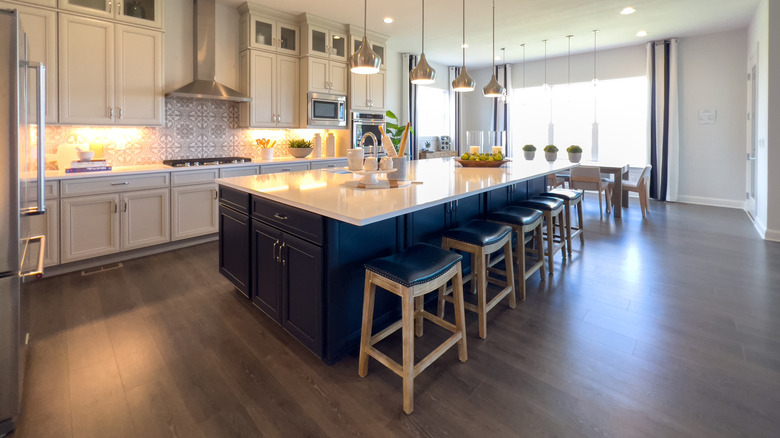
The most luxurious kitchens, says Cara Woodhouse, feel like more than a collection of cabinets. Instead, they feel curated, and one idea that she says can make or break your success is your inclusion of a kitchen island. That's not to say that you shouldn't include one. Rather, there are some important things to consider when planning a kitchen island.
Firstly, it has to be functional. What's more, it only makes sense to include an island if you actually have space to fit it. But if you do, then one key to a high-end feel, says Woodhouse, is treating islands more like furniture pieces than a mere extension of your cabinetry. "This could mean incorporating decorative legs, curved corners, waterfall details, unique stone profiles, or contrasting materials," she explains. In any case, the goal is to soften the island's impact on your wider kitchen, and to make it feel collected, rather than manufactured.
Natural stone with dramatic movement
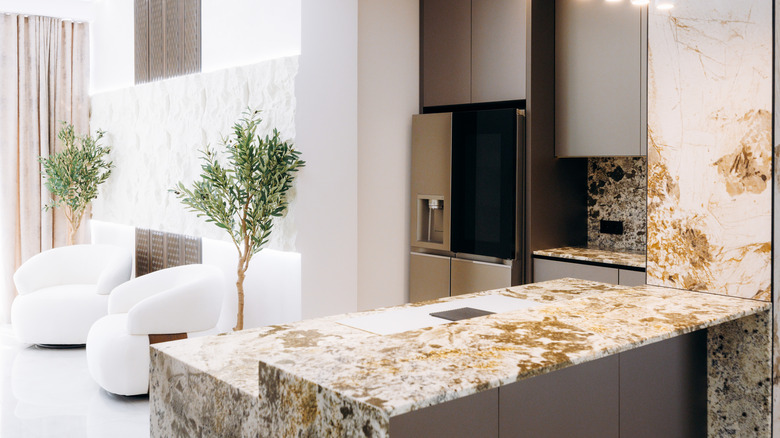
The inclusion of natural stone in the kitchen is hardly a new idea. Demand for it has perhaps never been higher, which is why there are now so many types of stone kitchen surfaces for home improvers to choose from. All have the potential to bring a luxury aesthetic to the heart of your home, and as Cara Woodhouse says, "Nothing elevates a kitchen quite like a spectacular slab of natural stone." But if you're hoping for a high-end finish, then it's important to choose your stone wisely.
"Materials with bold veining, movement, and character create an immediate sense of luxury," says Woodhouse, "because no two pieces are exactly alike." You can use stone on your countertops, backsplashes, or even wrapped around an island. It doesn't matter. The key lies in choosing a stone with dramatic natural movement. Do that, and it'll serve in your kitchen as a functional piece of artwork. More than that, it'll lend your space a level of uniqueness that simply can't be replicated.
Architectural ceiling details
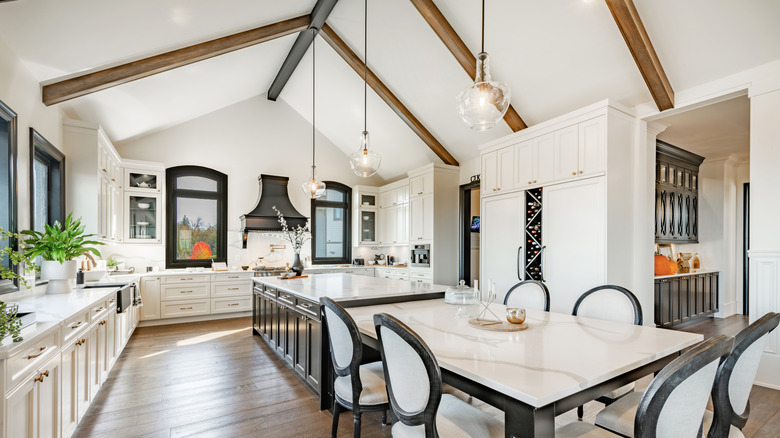
We've talked about range hoods, and we've covered cabinets that reach all the way to the ceiling. But what about the ceiling itself? Cara Woodhouse says that while many people focus on what's happening at eye level, "truly high-end kitchens pay attention to the ceiling as well." It's about detail, and architectural depth. It's about making it clear that no stone was left unturned at the design stage.
"Coffered ceilings, subtle beams, barrel vaults, wood detailing, or even carefully considered ceiling treatments add depth and dimension to the room," says Woodhouse. Of course, the specific detail must make sense with the rest of your space, and it should appeal to your own sensibilities, too. Otherwise, what's the point? But if you're aiming for a high-end design, and you can find a way to detail your ceiling that makes sense in the context of your kitchen, then do it! It could well prove the difference between a builder-grade kitchen and a room that reads custom.
Curves and softened forms
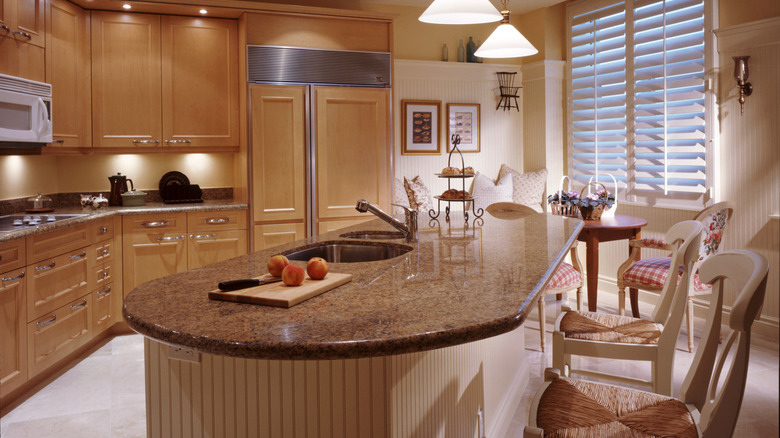
Anyone with their fingers on the pulse of the design world will know that the sharp, angular lines of yesteryear are steadily being ousted. In their place, homeowners are adopting softer curves and more organic edges — a trend that makes sense given the wider movement towards homes that are grounded in nature. And while you might think this is tricky in the kitchen, given the naturally "blocky" shape of traditional cabinets and counters, Cara Woodhouse believes it's actually well within the realms of possibility.
"We're seeing a shift away from kitchens filled exclusively with hard edges and sharp lines," she explains. Instead, curved islands and rounded stone edges, as well as arched openings and softer silhouettes, are helping homeowners to achieve a more refined and sophisticated vibe. "These forms," she explains, "feel intentional, artistic, and highly customized," which she says is why they're increasingly common in designer-grade kitchens.
Full-height backsplashes
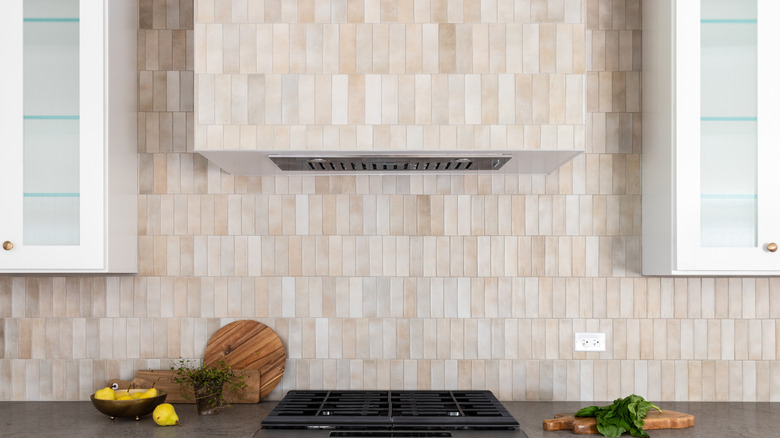
If you're already planning to use a statement material for your backsplash, then one of the quickest ways to make your new kitchen feel more high-end is to extend that feature to the ceiling. In an exclusive interview with House Digest, Bilal Rehman, CEO and principal designer of Bilal Rehman Studio, says that whether you choose stone, plaster, or a specialty tile, treating the wall as a continuous architectural canvas creates a highly custom, distinctly intentional look.
"It eliminates visual breaks and gives the kitchen the kind of permanence and sophistication you typically see in bespoke homes," says Rehman. It's certainly a far cry from builder-grade spaces where backsplashes are formulaically limited to just a few tiles in height. What's more, provided that you choose a backsplash material that suits the rest of your kitchen, you're sure to love looking at it whenever you come to cook.
Oversized architectural scale
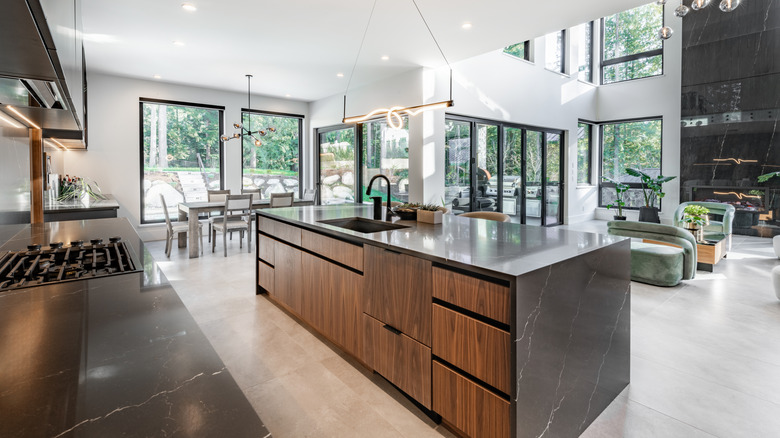
"Scale is something people often overlook," says Bilal Rehman, "but it's one of the strongest indicators of luxury." The only real limiting factor is the space that you have to play with. But if you have it, says Rehman, then you should absolutely use it. He suggests widening walkways, or incorporating generously proportioned islands. And if you're up for completely overhauling your space, making your openings taller can really help elevate the final result.
With that being said, knocking walls down and splurging on expensive islands is far from a necessity. More than that, it's likely to be unrealistic for the majority of home improvers. Instead, you could just as easily adjust the scale of your kitchen with something as simple as a pendant light. Provided that it's oversized, it'll add to your space a sense of grandeur and generous scale, which in turn will create the impression that your kitchen was custom designed.
Thoughtfully curated open shelving and display moments
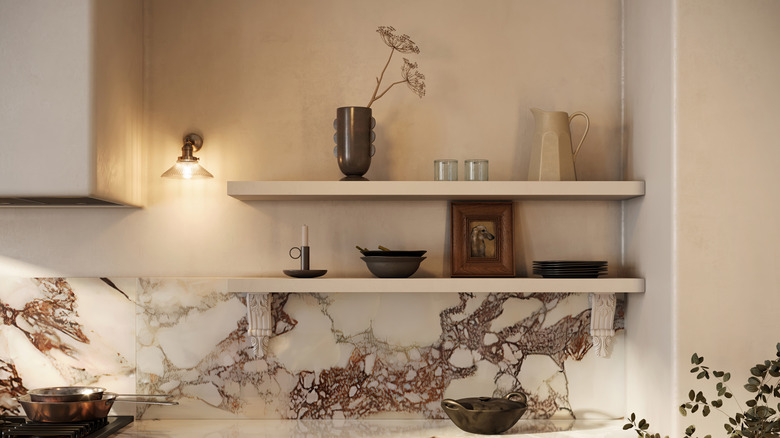
A high-end kitchen is so much more than a collection of expensive furniture and fixtures. Regardless of the money that's spent on it, a kitchen has to be functional. What separates higher-end spaces from those built on a budget are the stories those kitchens tell, Bilal Rehman observes. And Rehman says that one of the best ways to infuse your space with your own story is with thoughtfully curated shelving.
"I love incorporating a dedicated display area," he says, "whether that's open shelving, a niche, or a glass-front cabinet, because it introduces personality and layering." However, he adds that it's important to show some restraint. Cluttering up your shelves with utensils, pots, and pans will quickly make your shelves read more utilitarian than high-end. On the other hand, says Rehman, "when these spaces are carefully edited with beautiful objects, ceramics, or collected pieces, they make the kitchen feel designed and lived in."