

Not Milkweed: Plant This Bush With Berries And Flowers That Butterflies Love
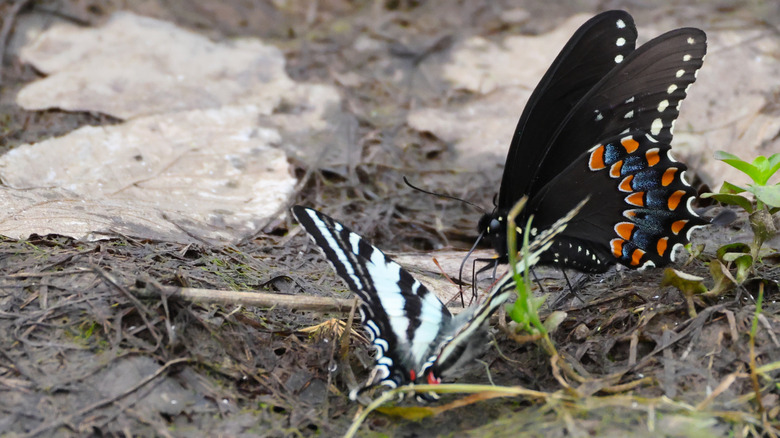
When you're looking for a highly ornamental shrub you can plant that produces pretty red berries, not to mention fragrant flowers and leaves, you can't go wrong with this pollinator-friendly plant. The shrub is so valuable to North American butterfly populations that a dozen butterfly and moth species rely on it as a food source and life cycle plant. Birds eat the berries, too. If you haven't guessed already, we're talking about the spicebush (Lindera benzoin). In fact, there's even a species of butterfly called the spicebush swallowtail! The adult females lay their eggs on the shrub's leaves.
Spicebush is perennial in USDA Plant Hardiness Zones 4 to 9 and grows to between 6 to 12 feet tall at maturity. It has slim, arching branches that form a rounded but irregular shape. Pale yellow, fragrant flowers herald the coming of spring, before the leaves emerge — a trait common to forsythias. The aromatic leaves are a dark, glossy green on the upper surface and pale green underneath. In fact, the leaves and twigs produce a spicy aroma that gives spicebush its common name.
Of course, the shrub's fruit also contributes to its spicy reputation. The red drupes appear in the fall — around September, depending on your region, just as the leaves are beginning to turn an ornamental yellow. You need, however, both male and female cultivars to produce the berries. The fruit, which was once used as an allspice substitute, draws songbirds like thrushes and catbirds. Can you really go wrong with an aromatic bush that begins and ends its growing season with bursts of gold while hosting birds and butterflies?
Ensure red berries by planting both male and female spicebush shrubs
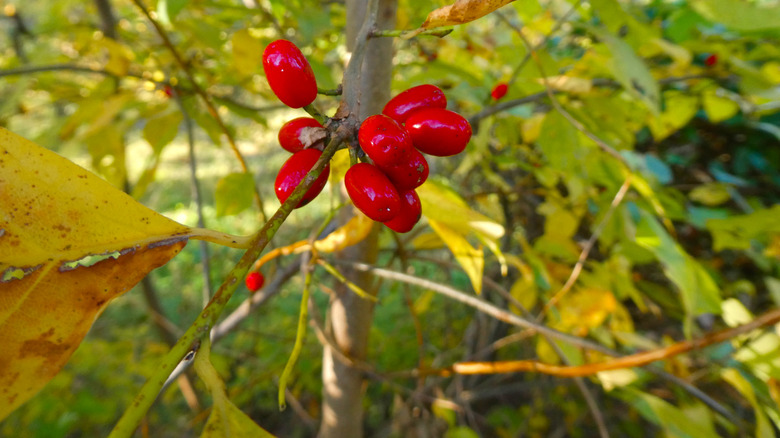
If you only have space for one spicebush, that plant will fill your garden with a variety of butterflies, but it won't set the berries that birds love. You'll also miss out on a spectacular show once leaves drop in fall. If you want to see the shrub's full lifecycle, you'll need to grow both a male and female shrub in your yard. Having at least one of each ensures the female plant sets fruit — the flowers require cross-pollination in order to produce the characteristic red drupes.
While the regular spicebush is arguably one of the best fragrant, romantic flowering shrubs (that aren't roses) out there, it gets even better when you explore the cultivars. For example, 'Xanthocarpa' is highly sought-after for its yellow-orange berries, while 'Rubra' is a male-only cultivar with attractive, brick-red foliage. Whatever you choose, site your shrub in an area that sees partial shade — these native plants only need 2 to 6 hours of sun each day — and stays continually moist. The closer you get to 6 hours, the more you'll need to keep an eye on the soil's moisture levels. Use a soaker hose or automatic irrigation if you can't keep up with hand watering.
If you're planting a spicebush hedge — ideally with both male and female cultivars — consult the nursery plant label for spacing information, since advice ranges from 6 to 10 feet apart. You can also dot pairs of male and female specimen shrubs throughout your property if you don't have room for a living fence. Underplanting options include anything shade-loving and native: ferns, windflowers (Anemone canadensis), and Virginia bluebells (Mertensia virginica). Witch hazel (Hamamelis virginiana) is a common companion in the wild.