

Not Stone, Not Concrete: The Cheaper Material To Use For A Functional Retaining Wall
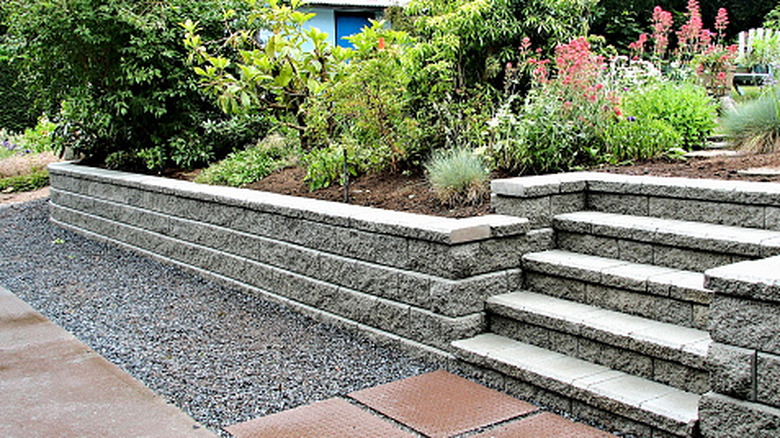
Gardening on a slope can be challenging, and one popular solution is to break the area up into different levels and sections with retaining walls. There are a number of natural stones you could use, and their color and texture can look very attractive. Concrete is an option, though its negative impact on the environment means many people would prefer not to use it. Another way to build functional retaining walls is by using sandbags, and you'll struggle to find a material that's cheaper.
Many people think of sandbags as the thing you turn to for emergency flood defense, and it's a job they do particularly well because their flexibility produces a very effective seal. That same flexibility means they will sit firmly on top of each other to create a solid retaining wall. Prices can vary considerably, but you can get standard 16 x 24-inch polypropylene sandbags for under 15 cents each. More eco-friendly canvas and hessian bags are available, but they are for emergency use only as, unfortunately, they won't stand up to changing weather conditions for long. The fill material is also inexpensive, particularly when bought in bulk, rather than in bags from your local hardware store.
Although sandbags are available in several colors, you probably won't want them as a prominent garden feature. The simplest solution is to plant climbers against fencing or trellis to hide them. Don't plant against the sandbags themselves, though, as the roots can cause damage.
How to build a sandbag retaining wall
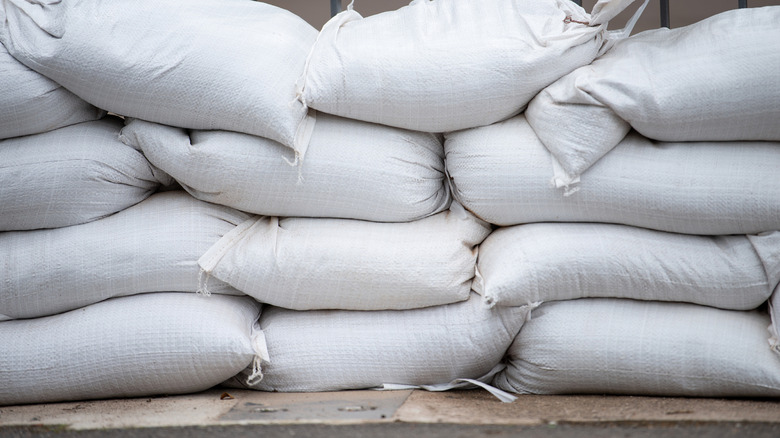
There are several do's and don'ts of building a retaining wall worth checking before you start. Although the bags will conform to some irregularities, it's a good idea to create as level a base as possible. Fill the sandbags to between 1/3 and 1/2 full with coarse sand. Adding more causes two problems: They'll be very heavy and difficult to move, and they won't mold together well. Avoid fine sand that can leak through the weave.
If you're only building a low retaining wall, a single thickness of sandbags laid like bricks can be sufficient. Tuck the tied ends well in, and compress each layer using a hand tamper, or by stamping, before moving onto the next. Walls more than a foot tall need to be thicker, with each layer running at right angles to the one before. As a general rule, the wall should be at least twice as thick as it is tall — although experts recommend three times the thickness.
The most environmentally friendly approach is to ditch retaining walls and use a living solution, but that's not always practical. If you're building a feature wall, then natural stone may be your best choice. However, if you want a functional and budget-friendly answer, sandbags could be the way to go.