

Not Miracle Gro: The Fertilizer You Can Make For Thriving Leafy Greens
We may receive a commission on purchases made from links.
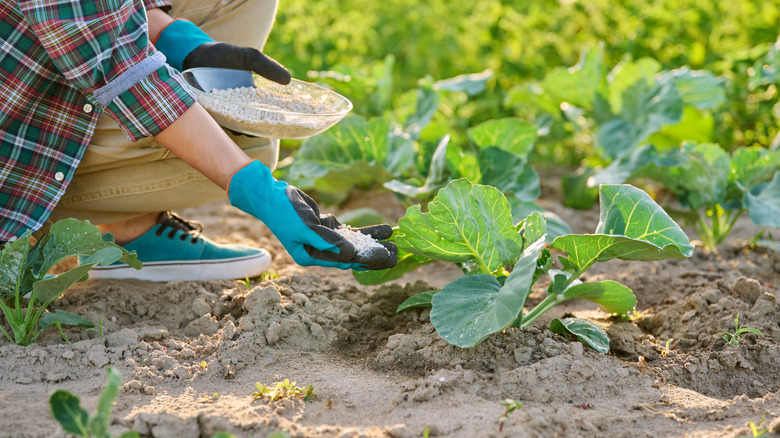
If you want your leafy greens to thrive and produce a plentiful harvest, you'll need to give them a good dose of nitrogen, which helps promote all that lush green growth. While you could use a commercially available fertilizer to provide your edibles with the nutrients they need, it's also possible to make your own plant food from a more natural ingredient. For example, instead of using a product like Miracle-Gro, you could use alfalfa meal or pellets to make a nutrient-rich fertilizer tea that your greens can use straight away.
Alfalfa (Medicago sativa) is a legume that can take nitrogen from the atmosphere and the soil and convert it into a form usable for plant growth. For gardeners, it's available as either pellets or meal. While you could apply either product directly as an organic fertilizer that will do wonders for the soil, if you steep it in water to make a nutrient-rich tea, the soluble form will be available for your plants' immediate use. This approach will result in the lush, green growth that you're looking for. On the other hand, adding alfalfa pellets or meal to the soil means that the nutrients will be released gradually over one to four months. If shopping online, you can buy a meal product like this Down to Earth plant food, with an NPK (nitrogen, phosphorus, and potassium) ratio of 2-0-1, or find alfalfa pellets at a local feed store at a lower price (they'll usually have no additives).
How to make your own alfalfa tea for leafy greens
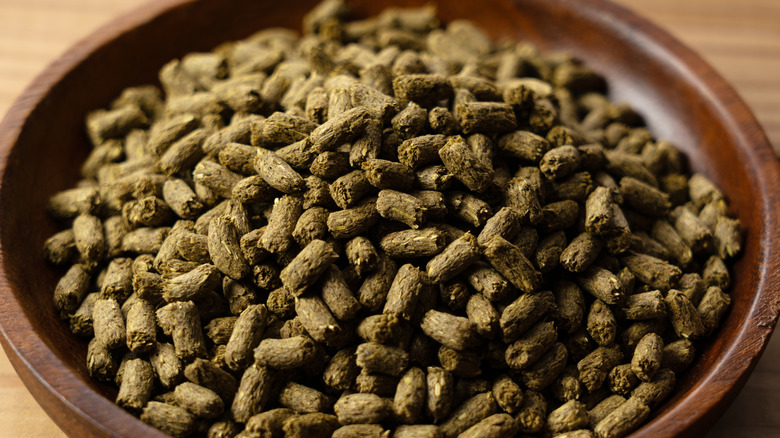
Apart from the alfalfa meal or pellets, to make your own DIY fertilizer tea, you'll also need a 5-gallon bucket with a lid and some water. For a gentle nitrogen-rich fertilizer that won't burn your plants, add one cup of meal to 5 gallons of water. Give this a good stir, so that it's all mixed well. Let this concoction sit for around 24 to 48 hours. When ready, just water your greens with the mixture, making sure you stir it to disperse any of the remaining alfalfa particles. If possible, use up the entire batch quickly.
As an alternative, you can also make a fermented tea, which uses the same ingredients but requires a little more time. Make the mixture using 1 pound of pellets per 1.05 gallons of water, then leave it to sit for around seven to 15 days. As the fermentation process begins, the brew will start to stink, which is why you'll want to put a lid on the bucket. However, the resulting liquid fertilizer will be more nutrient rich, because the alfalfa will have broken down further. The tea will also contain micro-organisms, which are beneficial for your plants. You'll need to strain the liquid before watering plants, but any leftover pulp can be used to give your compost a major nutrient boost. While alfalfa meal and pellets make a great liquid feed for leafy vegetables, actual alfalfa plants also serve as a beautiful flowering cover crop for garden beds.