

Not Coneflower: The Sunny Annual Flower That's Great For Your Pollinator Garden
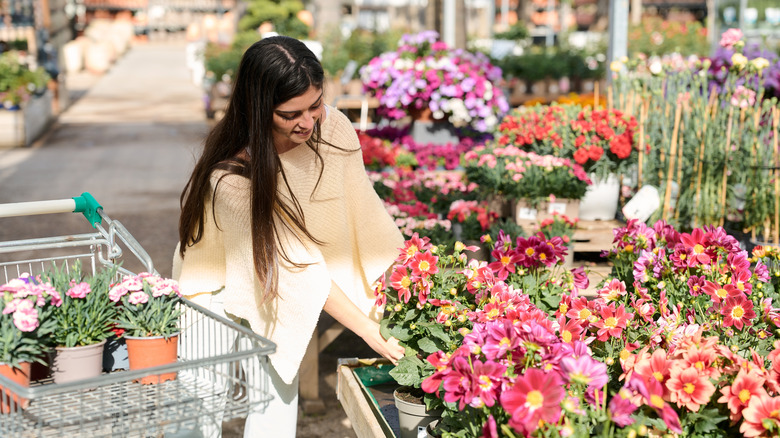
When establishing a pollinator garden, you need to include colorful flowering plants that love the sun. The bright blooms will attract plenty of bees, butterflies, and other insects. You may even get some hummingbirds visiting. Coneflowers are a go-to plant for gardeners in this position — after all, there are plenty of colorful coneflowers to attract pollinators and birds, as suggested by our professional gardener. However, there's another genus of flowering annuals that should be on your list: Cape daisies (Arctotis spp.). Also commonly known as African daisies, these bold and colorful blooms will not only brighten your backyard, but they'll also draw in the bees and butterflies.
Cape daisies come in a huge range of flower colors, including yellow, orange, red, pink, and white. The vibrantly hued petals are arranged around an often dark center, depending on which cultivar you choose. Much like coneflowers, the contrast between petal and center is striking. For example, the white-flowering cultivar 'Zulu Prince' has snow-white petals and a brown and orange center. The blooms appear on the plant in abundance in summer, opening on sunny days and reaching 3 inches in diameter. Interestingly, they close once it gets dark and may stay closed on cloudy days. These heat-loving annuals reach 1 to 2 feet tall, and their stems are covered in heavily lobed, silvery-green leaves.
How to grow Cape daisies in your pollinator garden
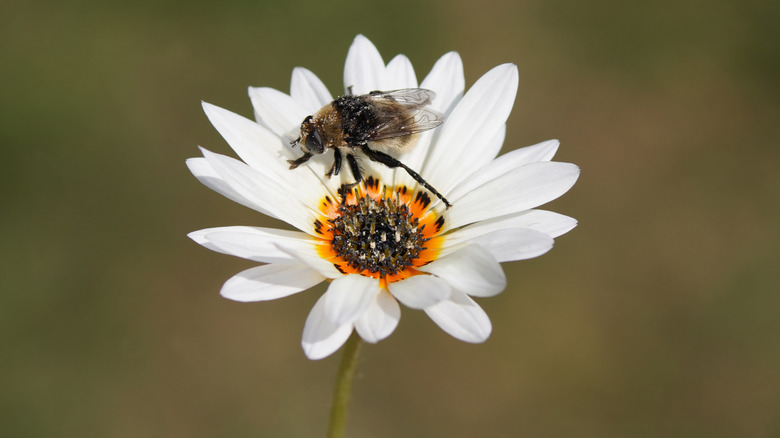
Most Arctotis species are native to dry areas in southern Africa, and are happiest when grown in well-draining sandy or rocky soil. They need a full sun spot if you want to get lots of stunning flowers that actually open and attract pollinators. In fact, this is another gorgeous flower to consider planting when you have no shade in your yard. You should be able to find seeds for Arctotis species plants — and cultivars and hybrids — either online or at your local garden center. Confusingly, they may be labeled as Venidium instead of Arctotis. You can either sow the seeds directly in the garden in spring, after the danger of frost has passed, or start them indoors in late winter. The seeds will take about a week to germinate.
Cape daisies are quite drought-tolerant, so you really only need to water them during spells of dry weather. If you're growing them in containers, let the top 1 inch of soil dry out before watering. To ensure that you have plenty of the pretty flowers all summer long, deadhead the spent blooms regularly. However, once you have this annual growing in your garden, you may want to let a few flowers turn into seed heads — you can collect the seeds and grow the plant again season after season. Another advantage of Cape daisies is that rabbits and deer will generally leave them alone. Finally, don't forget the planting trick that makes it 10x easier for pollinators to find your garden: plant your Cape daisies in large clumps or groups with a spacing of 12 inches.