

Not Leaves: The Overlooked Scrap From Your Garden To Add To Compost
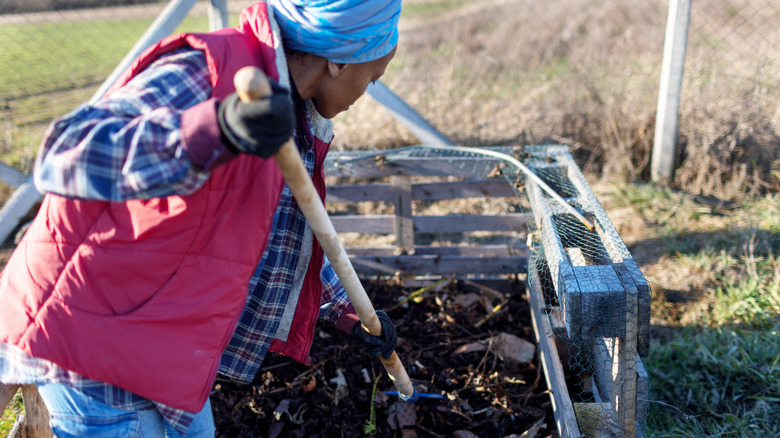
In fall, most people strip out their spent flower displays from their containers. They might compost the finished plant matter, but they tend to discard the potting mix, dumping it in a bag and setting it on the curb for collection. People have been doing this for decades, assuming that once the compost is depleted it has no other use. However, the bare bones of depleted potting soil are still very useful. If you make your own compost, old potting mix is a great addition. Spent potting mix may be nutritionally incomplete, but it is still organic matter. Those physical components are still largely intact, even if it's been stripped of nutrients and the structure has taken a battering from a full season of constant watering and drying out.
Most commercial potting mix is built around an organic base of peat and coconut coir, and then bulked out with perlite or vermiculite for added drainage, composted bark for structure, and a small amount of lime and fertilizer. After a growing season some of this, specifically the peat, coir, and bark, are partially broken down but that doesn't mean they're no good. These things are slow to decompose and they are carbon-rich materials which you'd call browns for your compost bin. The perlite and vermiculite don't break down at all, which is actually not a bad thing. Generally speaking, compost bins are often unbalanced and have a lack of browns with an overabundance of greens, like kitchen scraps and green garden waste. What they tend to lack is bulky carbon-rich material or browns to balance them. That's why old potting mix is so useful in the compost bin.
What old potting mix actually does for your compost
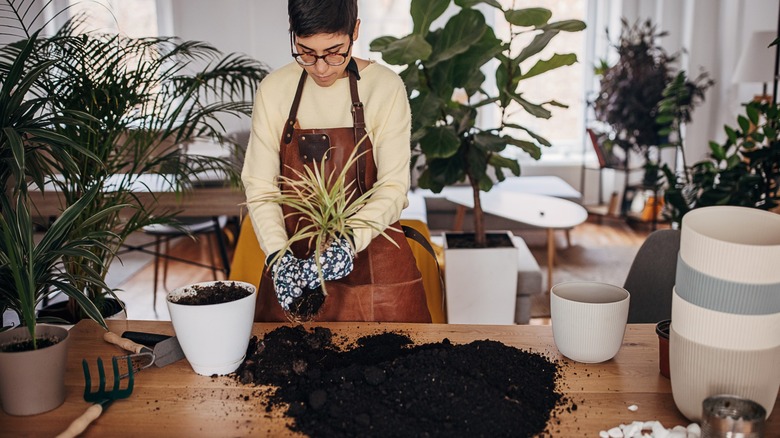
The depleted, crusty mix your plant was in can go straight into the compost – it's one of the brilliant ways to reuse old potting soil. The old medium functions as a slowly decomposing carbon source, helping to keep the pile healthy, aerated, and balanced. Many backyard composters end up with a mixture that doesn't break down properly or that gets stinky and slimy. That is often a direct result of not enough browns. When you have too many greens in a compost pile, they compress, hold water, and limit air flow. With the poor structure and not enough air getting in, you end up with an anaerobic, slimy compost pile that's exceptionally slow to decompose.
Old potting mix is carbon rich, thanks to the coco coir, bark pieces, and sphagnum peat moss, so it helps to give the pile structure and leaves room for air flow. This is what your mixture needs to break down into finished compost quickly and cleanly. Plus, the perlite from the old soil doesn't break down at all. It is a heat-expanded volcanic rock, and its job is to hold the structure open and keep water moving freely. Because it doesn't decay, it makes it through the entire composting process completely intact. When you spread the finished compost on beds or use it in new containers, the perlite is viable, doing the same structural job as it did when you first added it to a container. Over time the perlite builds up to give you looser, better aerated soil structure in the compost and in the containers or beds where you spread that compost.
When you shouldn't add depleted potting mix to your compost bin
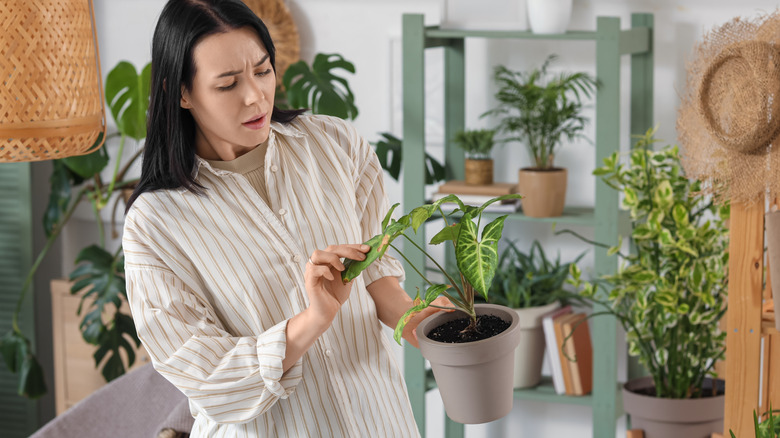
Generally, potting mix is safe to add to your compost bin, whether it comes from houseplants, outdoor container plants, or seed trays from the greenhouse. However, if any plants that were growing in that potting mix showed signs of fungal infections, bacterial diseases, or viral diseases, then it's not a good idea to add that potting mix to your compost. Destroying plant pathogens requires high temperatures, and most backyard compost bins don't get hot enough to reliably kill these problematic diseases. It's the same reason that diseased plant material is something you should never put in a compost bin. If the compost doesn't get hot enough right through the pile, not just at the very center where it's at its hottest, then you risk spreading plant pathogens in the finished compost.
The other time you shouldn't compost your potting mix is if you have used a lot of synthetic fertilizers, pesticides, and herbicides around the containers, especially if you plan on growing edible crops. Some plant and garden products contain persistent chemicals that you don't want to get into your growing beds. Some inhibit plant growth and others are potentially harmful, as they can end up in the crops you grow. But if the old soil is disease- and chemical-free, then it's safe to become new life through the compost cycle.