

Concrete Blocks Vs Cinder Blocks: What's The Difference?
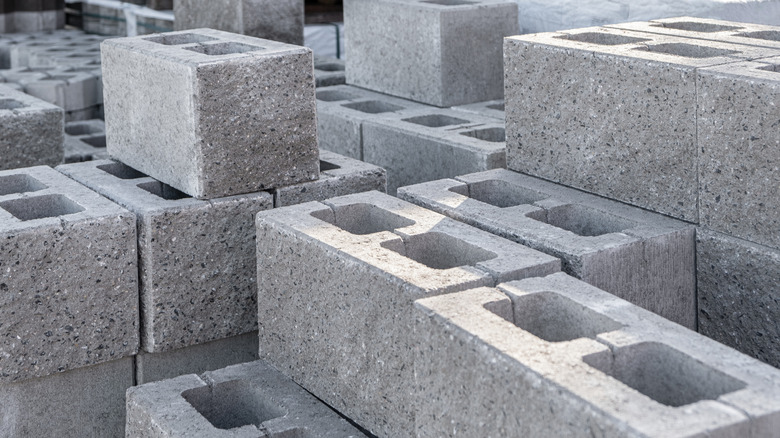
When it comes to home improvement vernacular, few terms are mixed up as often as "concrete block" and "cinder block." Most homeowners — and even many seasoned DIYers — use them interchangeably to describe the ubiquitous gray masonry units stacked in basements or lined up at the local lumberyard. However, treating them as identical materials is a structural misstep. While they may be incredibly similar, the fundamental difference lies in their chemical composition and aggregate makeup.
True concrete blocks (also called heavyweight or normal-weight concrete masonry units or CMUs) are the workhorses of modern construction. They're a blend of Portland cement, water, sand, and aggregates such as crushed limestone or granite. This compact mixture makes a typical 8 x 8 x 16-inch concrete block weigh a hefty 30 to 55 pounds (depending on whether it's hollow or solid), but that weight translates into incredible durability.
True cinder blocks, on the other hand, are not as common as they used to be. They are considerably lighter and structurally weaker than concrete blocks because their aggregate consists of industrial coal cinders (bottom ash), whereas modern concrete blocks are made from crushed stone or gravel for maximum density and weight-bearing strength. These generally weigh from about 20 to 25 pounds and are not recommended for structural walls. This difference in composition makes it very important to assess these elements when choosing between them, especially if you are analyzing the common materials you can use for DIY raised garden beds or other outdoor structures, where structural traits and material safety count.
How concrete and cinder blocks compare
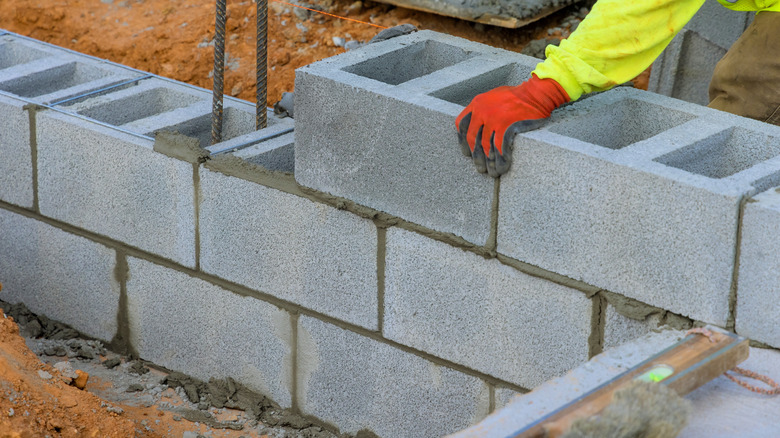
The total difference in aggregate material and density directly affects the performance of these two blocks under pressure. Concrete blocks are made of dense stone and gravel and have an incredibly high compressive strength — generally rated at around 2,500 PSI. This makes them the industry standard for load-bearing structures, foundational walls, and retaining barriers that must withstand heavy soil pressure. On the other hand, cinder blocks don't have the structural integrity to withstand severe vertical or lateral loads.
Beyond raw strength, moisture resistance is another critical difference. True cinder blocks are very porous, so they will soak up moisture like a sponge if subject to groundwater or humid basement conditions. When that trapped moisture undergoes seasonal freeze-thaw cycles, the block expands and cracks, rapidly deteriorating. Modern concrete blocks are far denser and naturally more water-resistant, though below-grade foundation walls still require proper waterproofing membranes to ensure a dry interior, forcing many homeowners to consider how much it costs to waterproof a basement before serious damage occurs.
This brings up a common dilemma for someone walking the aisles of a home improvement center: How do you actually tell them apart today? The truth is, if you are buying brand-new blocks from a major retailer, you are almost certainly buying concrete CMUs. True coal cinder blocks were largely phased out of mass manufacturing after World War II due to the decline of industrial coal-burning plants and the availability of better technology. However, if you are working on an older home built before the 1970s, knowing how to spot the difference by weight, texture, and color is essential before you begin stacking — plus, it opens up plenty of unexpected ways to repurpose cinder blocks in your home and garden.