

Everyone Had It In The 60s: The Living Room Art That Has Timeless Beauty
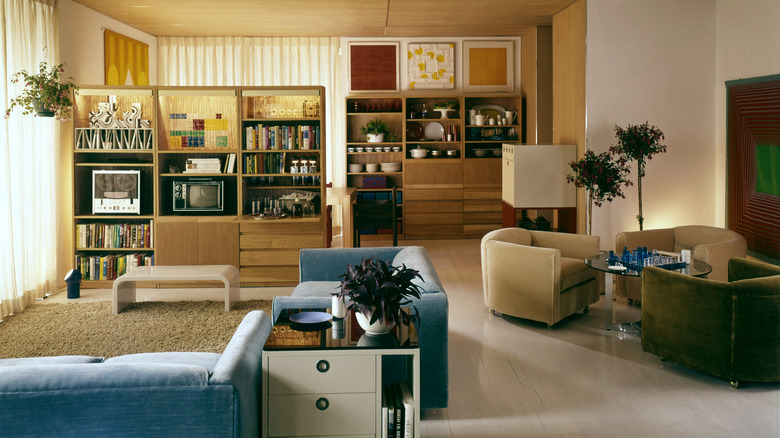
We may receive a commission on purchases made from links.
Having a lackluster living room sounds almost too oxymoronic — a space meant for bonding with family and friends should look a little more appealing and full of, you know, life. So if this space is starting to feel a little too dull, monochromatic, or scattered, then what it needs is a focal point that can help set the room's energy. Adding stylish furniture and choosing the right accent wall are great options, but another effortless solution is to put up wall art. And if you're looking for something that instantly injects personality and color into a room, it's hard to go wrong with paintings from one of the most iconic art movements of the 1960s: pop art.
The rise of pop art in the 1960s happened alongside the growing popularity of acrylic paint, a medium artists embraced because it dried quickly, produced bold, saturated colors, and worked well on a variety of surfaces. This medium helped artists create the vibrant artworks the movement became known for. Moreover, pop art stood out because it challenged traditional ideas of fine art by using commercial products, celebrities, and icons of modern American and British culture as its subjects. Today, pop art paintings continue to make an impact in the art world and can still serve the same purpose they did decades ago: grabbing attention, sparking conversation, and giving spaces a vibrant focal point.
Give living room walls life through acrylic pop art paintings
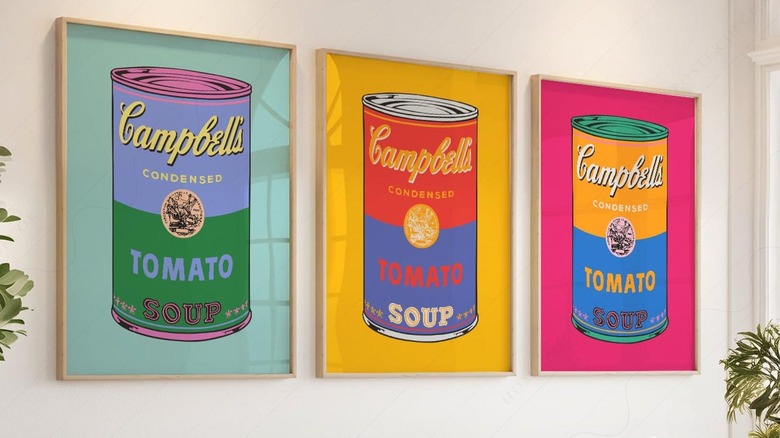
True to its name, pop art is meant to stand out, so it is pretty easy to spot these artworks. You don't have to be an art history expert to recognize bright, saturated colors and distinguishable shapes, line work, and silhouettes — and that's to say nothing of its recognizable subjects. Andy Warhol, for one, painted 32 panels of Campbell's Soup Cans and silk screened 50 portraits of Marilyn Monroe, which made him and his work hallmarks of pop art. Roy Lichtenstein borrowed the visual language of comic books and painted panels with thick outlines, halftone backgrounds, and vibrant colors. Beyond faces and products, though, if you've seen flat yet bright landscape paintings depicting a sunny California neighborhood, then you'd likely recognized one of the signature styles of David Hockney.
There are many different ways to incorporate pop art in your home, but it takes more than just hanging them on blank walls to make your living room look more interesting. If you want to make the painting look and feel more balanced, try taking one color from the painting you'll display — a swatch that complements the main color of your living room — and find any blankets, pillows, or trinkets that can help add contrast. Alternatively, if you want to introduce more vibrance and concentrate your living room's focal point to just one wall or section, mixing and matching different pop art paintings is also worth trying, especially if you want to create the perfect gallery wall.