

Avoid Carpenter Bees Damaging Wood Decks And Fences With An Alternative Material
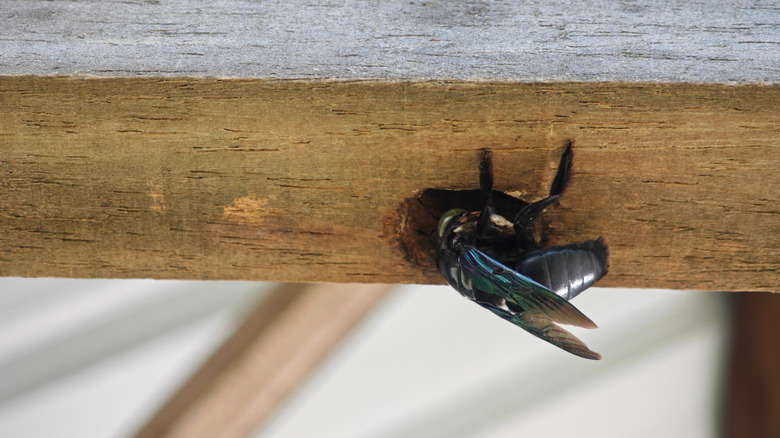
Adding a large deck to your home gives you plenty of space for entertaining guests, cooking food al fresco, and relaxing outdoors with a good book — all of which make your home more valuable and enjoyable. However, if you live in an area with wood-damaging insects, such as carpenter bees, you might feel like adding, maintaining, and repairing a deck — or a wooden fence, for that matter — is more hassle than it's worth. Keeping carpenter bees from drilling into your deck using a sweet smell they can't stand, like almond oil, is one way to handle the problem.
Or, if you haven't built anything yet, you could construct a new fence or deck from materials carpenter bees don't like to bore into for laying eggs or seeking shelter. Using composite decking or adding metal trim and flashing to a deck can greatly reduce damage from carpenter bees. Alternatively, consider building a metal fence instead of a wooden one.
Likewise, if you want to ditch pesticides, a better way to keep carpenter bees from drilling into your deck is to build it with composite or metal from the start. Applying pesticides outdoors harms insects other than your target species, including beneficial critters like bees. You also need to keep children and pets away from freshly applied pesticide until it dries. All things considered, alternative building materials are a safer, smarter option.
The deck and fence materials that may thwart carpenter bees
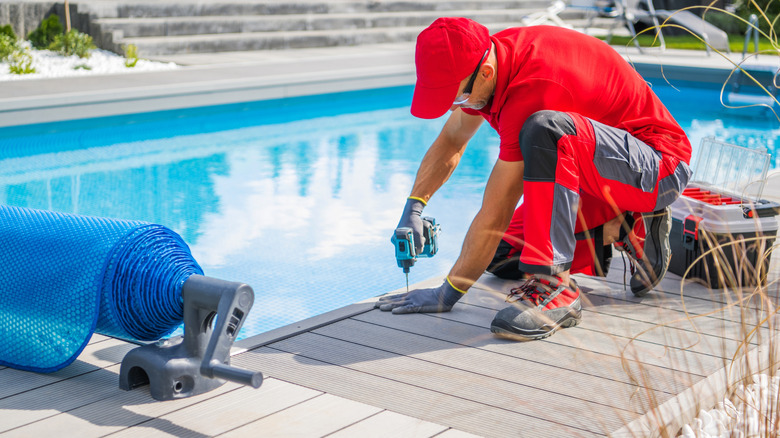
Carpenter bees prefer soft, worn wood when boring holes for nests. They're less likely to bore into hardwoods, wood treated with oil-based paints, and pressure-treated timber. However, they will still do so if there's not much else around, especially in early spring. Composite building materials are made of a mixture of plastic — typically polypropylene or polyethylene — and wood fiber. The exact ratio of plastic to wood fiber varies across brands. You can construct both decks and fences out of this durable material. Adding plastic to the wood fiber makes the resulting planks denser than untreated and pressure-treated timber. What's more, composite boards don't weather as quickly as their natural counterparts, which also makes them less attractive to carpenter bees.
If you choose to build a deck or fence completely out of metal, carpenter bees will also leave the structure alone. They can't, after all, bore into metal. Alternatively, if you already have a wooden deck or fence and replacing it isn't in the budget, you may be able to discourage carpenter bees and protect the timber by installing wire screening or metal flashing. Flashing doesn't just protect against water intrusion that can lead to rot — you can also use it to cover exposed joints or cuts that attract carpenter bees. If your fence or deck has already been damaged by these pesky wood-boring insects, hire a professional to treat the nest holes before adding any protective metal fittings.
Carpenter bees may still damage some alternative materials
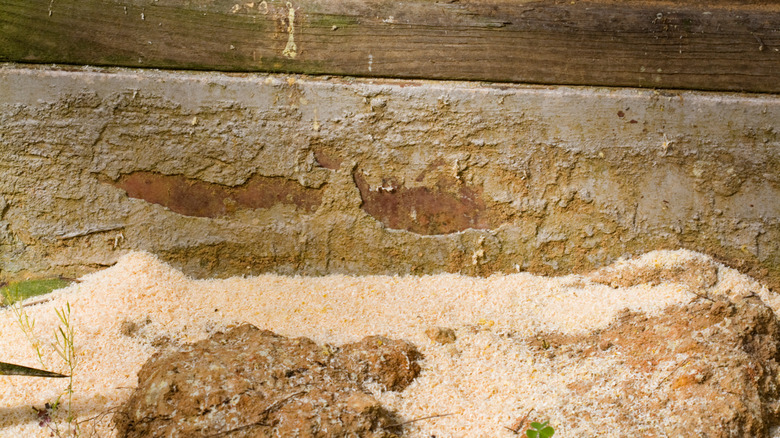
Even if you use alternative materials for your fence and deck, you may experience some damage from carpenter bees. If you see small piles of sawdust near your composite deck or fence, it may be a sign that carpenter bees are boring into the structure. Likewise, a determined carpenter bee can find a way around metal flashing or wire screens on a wooden fence or deck, especially if it's trying to enlarge an old nest. To ensure proper protection and prevent the insects from gaining access, you need to affix the metal tightly to the timber, leaving no gaps for carpenter bees to exploit.
If you've installed metal coverings or gone with a composite fence and are still battling carpenter bees, it's time for a two-pronged approach. You may be able to keep carpenter bees away from your deck or porch with clever nesting alternatives — these ideas work for fences, too. You could place untreated softwood blocks, planks, or logs with a few holes drilled in sunny spots around your yard. These provide alternative nesting sites for carpenter bees away from your deck or fence. You can also hang a few fake wasp nests near the deck or fence. Carpenter bees will generally avoid nesting in areas near wasp nests because wasps are predators. You can make the nests by filling paper bags with air or buy a four-pack of Diimoy Waterproof Material Fake Wasps Nests for about $14.