

Can You Use A Simple Concrete Block To Sharpen Blades?
We may receive a commission on purchases made from links.
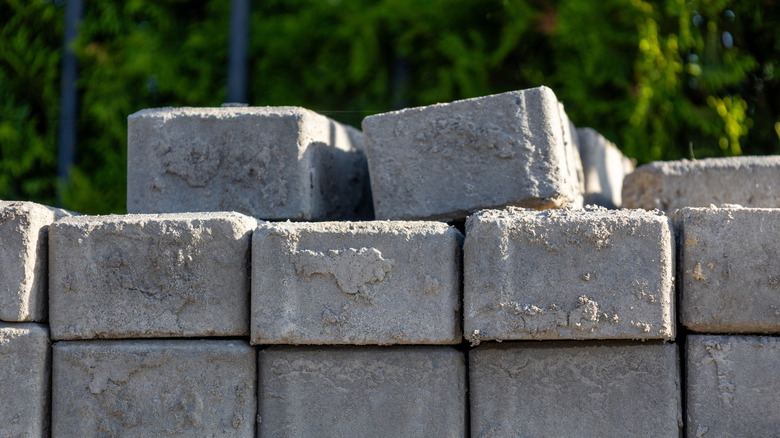
Whether you're doing woodwork or sprucing up your garden, sharp tools are a vital factor in the success of any home improvement project. There are several gardening tools you should be sharpening regularly to ensure clean cuts that keep plants healthy and tidy, such as lawn mower blades and shears. Alternatively, using properly sharpened hand tools like chisels or saws will ensure you're able to finish DIY projects safely and efficiently. Due to the extra effort needed to wield them, dull tools can actually be much more dangerous than sharp tools, which is why no toolkit is complete without some sort of sharpening kit. This often comes in the form of whetstones and strips of hard leather called strops, but you don't need specialized equipment to keep your blades sharp. If you're in a pinch or don't want to fork over money on special tools, it's totally possible to sharpen blades with a simple concrete block.
The mechanics of sharpening is basically grinding two edges down until they meet at a point, and that grinding can be done with any material harder than the metal you're sharpening. Steel tools can be ground down with a variety of materials, including ceramic mugs, leather belts, and even glass using the proper technique, and concrete is no different. The roughness of the concrete can wear down the surface of metal blades; just add a bit of water to the block before you get to work. As the metal and concrete rub against each other, microscopic bits of debris will break off and mix with the water to form a textured slurry, which is what actually does the sharpening.
Concrete is a cheap way to sharpen tools
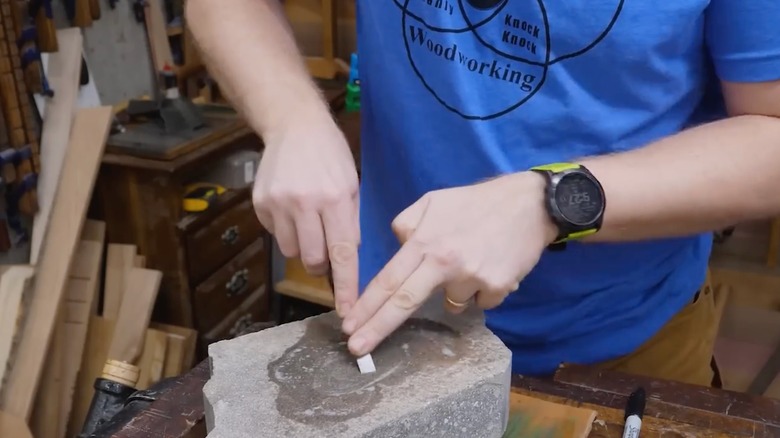
A major benefit of using concrete as a whetstone is how accessible it is. Depending on where you live, it's possible to use your own driveway or garage floor as a sharpening surface. An uneven concrete curve or scrap chunk of leftover medium from your edgy DIY concrete planter can be perfectly suitable for sharpening large blades that can handle some imperfections, such as a shovel or rake. However, if you're trying to hone a finer blade, you're better off sourcing a smaller chunk of concrete that you can verify has a perfectly flat surface.
The sharpening process is as simple as using a circular motion to gently scrape each side of a blade at an angle across the concrete. Remember to add a sharpening fluid like water or something like Lansky Sharpeners' natural honing oil. You can check your progress by looking closely at the metal after you've done a bit of scraping — you should see scratch marks across the entire surface, indicating that the blade is sharpening evenly.
Concrete will not leave your tools with a polished edge, but that's not necessary for all tools. For example, while it is recommended to remove lawn mower blades before sharpening them, they don't need a mirror finish before being used again. Concrete also does not make sharpening blades easier than a whetstone or file, but it is extremely convenient. So the next time you find your garden shears starting to dull mid-prune, don't be afraid to give them a few scrapes on the sidewalk to get them back to working order.