

Not Hostas, Not Impatiens: The True Blue Perennial To Grow In Your Shaded Flower Beds
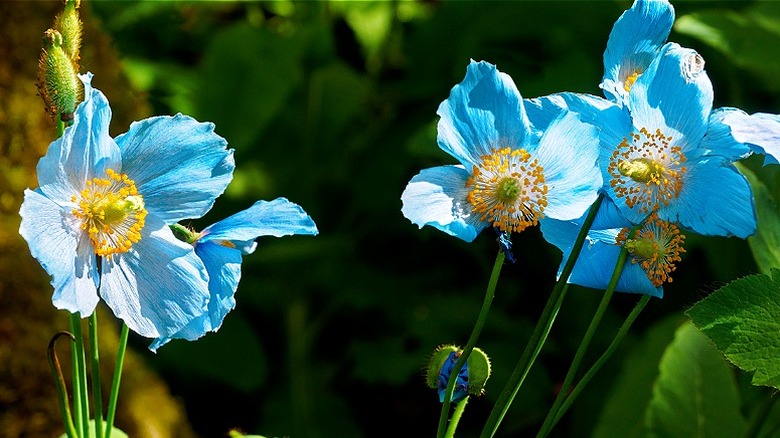
If you're lucky enough to live in the conditions required by the Himalayan blue poppy (Meconopsis betonicifolium) to thrive, rejoice! This stunner of a shade-loving plant provides drama that hostas and impatiens can't quite match. Its shock of true-blue color makes the Himalayan blue poppy an unusually vivid option for shade gardens.
While M. betonicifolium isn't literally a poppy (Papavar sp.), it's not hard to see why its appearance inspired its common name. Technically, the blue poppy is a perennial, growing in zones 3a to 7b. But it's important to look more closely at what the mountain-dwelling flower needs and what it prefers: a combination of continually cool, moist conditions that are coupled with excellent drainage and acid-to-neutral soil.
If you live in an area such as the Pacific Northwest, for example, this stunning blue flower in your garden may be just what the shadier parts of it have been lacking. The flowering perennial grows 3 to 4 feet high and features blue, fairy-like flowers with clusters of tiny yellow stamens at the center.
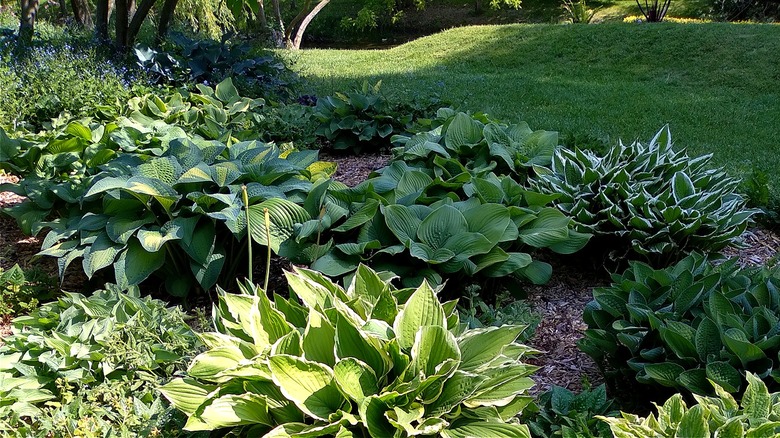
Given the Himalayan blue poppy's height and contrasting foliage, this flower would make an ideal perennial companion plant to thrive next to hostas. On that note, don't give up if you think where you live is too unlike the alpine conditions the blue poppy prefers. Several blue Meconopsis cultivars and hybrids exist beyond M. betonicifolium, some of which may be better suited to your climate.
Provide shade and moisture for these tall blue flowers
When choosing a site for the Himalayan blue poppy, find one that provides indirect sunlight and protection from the wind. (Dappled shade from an overhead tree, for example, would prove ideal.) To grow them, plant holes that are about 18 inches wide and 18 to 24 inches deep. When planting more than one, be sure to set the plants as far apart as their predicted width (or more), or what's recommended on their planting label. Up to 3 feet apart is about average.
Although this pretty plant thrives without direct sunlight in your yard, don't make the mistake of thinking it's carefree. To get your Himalayan blue poppies off to the best start, prepare their bed carefully. To achieve conditions most like the Asian mountains from which they hail, the growing area should be moist, but also well-draining. For the bed's soil, of which original soil should comprise half, mix in equal parts compost and fine bark mulch (or alternatively, sand and perlite) for the other half. Remember, consistent moisture in the summer is crucial to the poppies' success. Also, during growing season, provide light feeding using a slow-release granular fertilizer.
And then, after all that, comes perhaps the hardest part of growing the Himalayan blue poppy: To ensure their longevity, consider removing all the buds for the first year. Why? By doing so, you'll be trading in Year 1's blooms for more robust flowering in future years.