

Not Toilet Paper Rolls: The Fragrant Bathroom Staple To Add To Your Compost
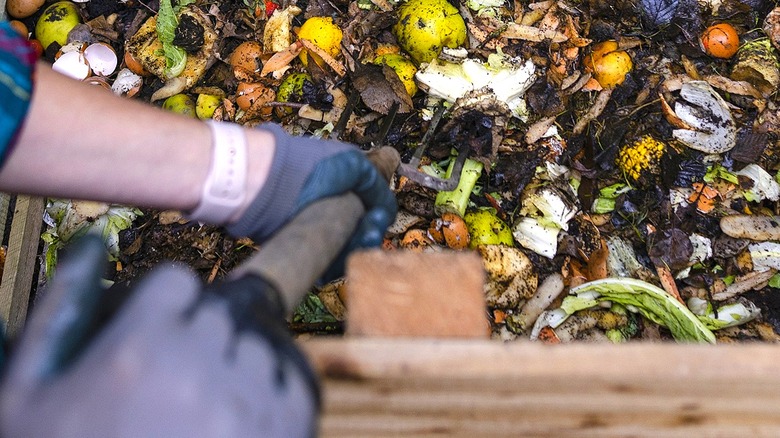
It's never too late to start composting, and sometimes breaking down misconceptions is the best place you can start. When you think of compost, you might visualize kitchen scraps, like potato skins and banana peels, but compost is much more than that, as a mixture of "greens" and "browns." For one, not all food should be composted, while many non-food items can be added to the pile but get overlooked. Dairy products, for example, are among the things you should never add to a compost heap, while bathroom staples like tissue and (100%) cotton balls are fine. And you can add natural potpourri to that list, too.
The operative word for potpourri is natural, seeing as scent boosters come in all forms. It isn't safe to toss just anything into a compost pile, because you don't want chemicals or microplastics leaching off into your garden. This would harm your plants, as well as the environment around your home. Dried and colored, artificially scented potpourri that you purchase would not be safe to compost and needs proper disposal, but natural potpourri is a different story. And it isn't difficult to come by either.
Crafting and composting natural potpourri
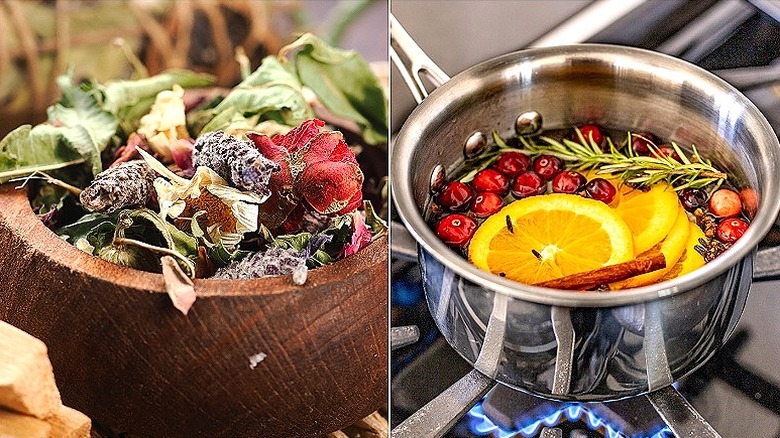
Finding natural potpourri can be as simple as reading the ingredients on a batch before you buy it, but you can also make your own. All it takes is some dried flowers, herbs, spices, and fruit slices, as well as somewhere to display them, like the bathroom, an entryway, or a living room coffee table.
When making potpourri, it's important that all ingredients are dry in order to avoid mold growth. If you need to, you can dehydrate the flowers, herbs, spices, and fruit slices yourself. You can also add a few drops of essential oils to enhance the scent profile. Using the same ingredients, you could also combine them in a simmer pot on the stove; the steam will fill your house with the scent more quickly.
When your natural air freshener stops freshening, don't toss the leftover materials; compost them. Compost consists of nitrogen-rich greens and carbon-rich browns. Further, green material is mainly wet, while browns are dry. A compost pile should comprise more browns than greens, with a ratio of 2:1, 3:1, or 4:1 being typical. The dried flowers in your natural potpourri would count as a brown, but the dried herbs and fruit would classify as a green, as they're still rich in nitrogen.
Meanwhile, the simmer pot ingredients would all still be wet, and so much like composting flower cuttings, would, therefore, be green. But whether a green or a brown, the main takeaway here is that natural potpourri ingredients can be composted, too. So don't discard them. (Discover brown materials that will give your compost pile a serious carbon boost.)