

What's The Difference Between Laminate And Vinyl Flooring?
We may receive a commission on purchases made from links.
If you're shopping for new flooring, you know what an exciting but overwhelming process it can be. After all, you'll be looking at these floors for the next decade or two, so there's definitely some pressure to make the right choice. So, if you've narrowed your options down to laminate and vinyl, how do you know which one is better for your needs? While these popular flooring materials share quite a few similarities, there are also notable differences — and understanding them can help you decide which one is best for your home.
We'll dive into the specifics shortly, but for now, here's a quick rundown of how laminate and vinyl flooring compare. For starters, both types of floors contain synthetic materials and are designed to look like genuine wood, stone, or tile. However, laminate uses wood byproducts in its construction, whereas vinyl is 100% synthetic (it's made from polyvinyl chloride or PVC). In terms of price, laminate tends to be slightly more expensive than vinyl. According to HomeAdvisor, installing laminate flooring costs an average of $2,998, while vinyl flooring costs $2,561. However, both are available at a range of price points, so you might find that some laminate products are cheaper than higher-quality vinyl options.
Laminate vs. vinyl flooring: Which one should you choose?
If you're trying to decide between these popular flooring styles, there are a couple of things to focus on. Laminate and vinyl can both resemble natural flooring styles, and their costs are fairly similar, but laminate tends to have a more realistic wood appearance. Next, consider how important water resistance is to you. Vinyl's PVC construction makes the plank totally waterproof, so you don't have to worry too much about splashes and spills damaging your flooring. That's why it's often used in bathrooms and kitchens. It's also the easiest type of flooring to clean. Just keep in mind that excess water sitting for extended periods can pass the planks through seams and edges, potentially damaging the underfloor. In comparison, since laminate has a core that's made from wood byproducts, it's only water-resistant (rather than waterproof).
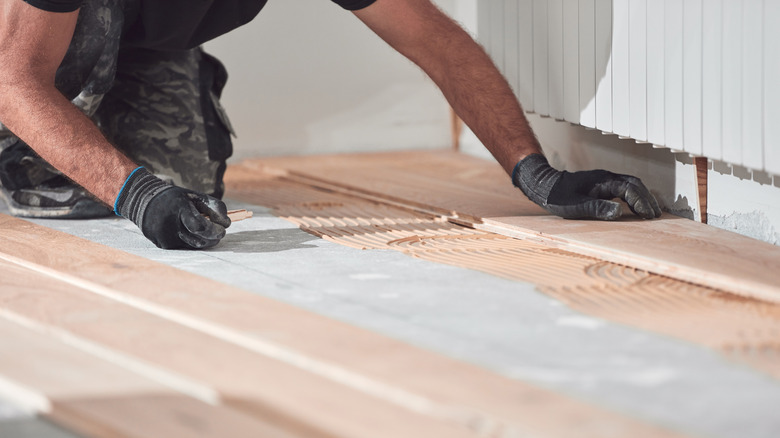
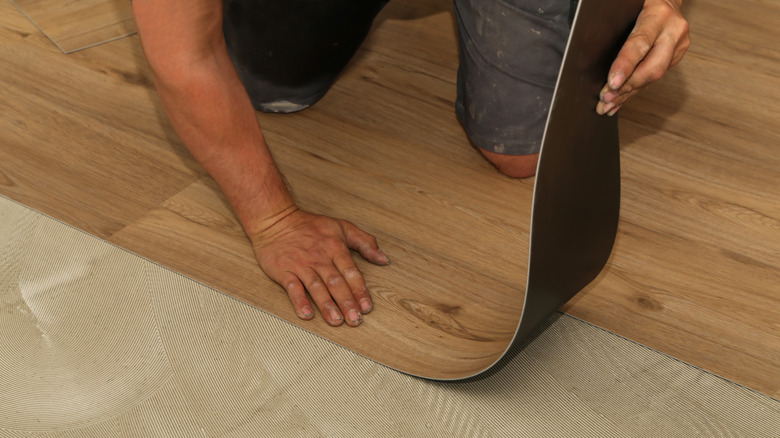
Installation is another factor to think about if you plan on doing it yourself. Laminate flooring typically comes in planks (like the Pergo Outlast+ Arden Blonde Hickory from Home Depot), which you'll need to cut with a saw and then snap together. If you don't have much DIY experience, trimming the flooring yourself can be intimidating. In contrast, vinyl is available in multiple styles, including plank and sheet form, so there's more flexibility (just be sure to avoid these common mistakes when installing vinyl plank flooring). Sheet vinyl (like this Stainmaster Midtown peel-and-stick flooring from Lowe's) can be difficult to handle and cut properly, so it's best to have a professional lay it for you.
Finally, you should also consider the lifespan of each material. According to Lowe's, laminate flooring lasts between 15 and 25 years — assuming you maintain it properly. If not, its lifespan could be as short as 10 years (or less). Meanwhile, thin or low-quality vinyl may only last for up to 10 years, but you can get 20 years out of higher-quality vinyl.