

Not Edging: The Hardscaping Feature Gravel Driveways Need
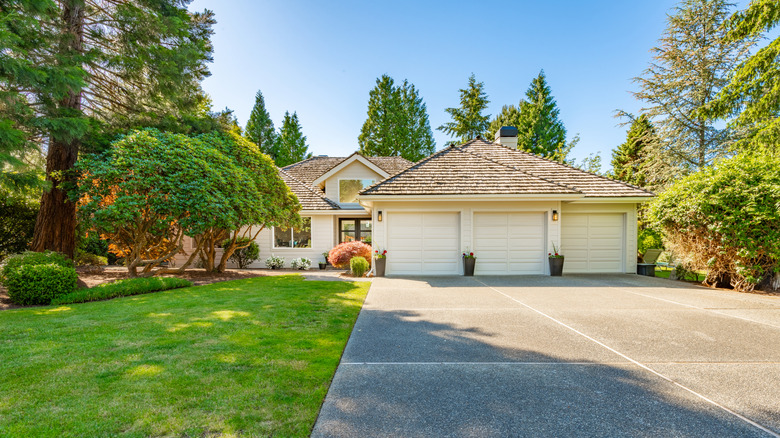
Putting a driveway together might seem like a single event, but there are actually several pieces to this puzzle. From choosing between gravel and asphalt to deciding on the right driveway edging and other hardscaping features, there are plenty of choices to make. Whether you're a DIYer or you're contracting the work to someone else, one of the features you should know about is the driveway apron. This hardscaping feature boosts curb appeal while also serving an important practical purpose, especially for gravel driveways.
The driveway apron sometimes gets overlooked, but it plays a couple of important roles. The apron is a transitional strip where your driveway meets the street, and it's typically the first 8 to 15 feet of your actual driveway. It's sometimes called a driveway skirt or approach, but don't let the terminology confuse you. What it does is keep you from bouncing over the curb when you're entering and exiting your driveway, so it protects your vehicle as much as it does the curb appeal. It also plays a role in drainage, helping to focus rainwater toward the street's gutter system.
While soft driveway materials like gravel are some of the best types of driveways when you're on a budget, gravel tends to migrate on inclines, especially ones greater than 12 to 15%. A driveway apron helps contain gravel where the driveway meets the street, reducing washout and displacement at this high-traffic area. On average, people pay about $7 to $18 per square foot for a driveway apron.
What to know if you're considering a new driveway apron
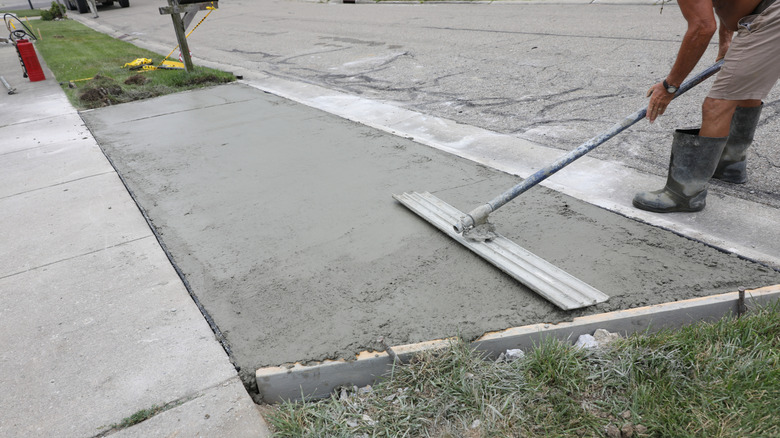
No matter what type of clever driveway layout you choose, you need to plan for a driveway apron to transition from the street to your property. Although you may not need a permit, you should always check with your municipality first, because permit requirements often vary depending on whether you're inside or outside city limits. In a typical scenario, the driveway apron is accessed from the public right-of-way, and even though the rest of your driveway is private, you have to get a permit for any installations or changes to the apron. Keep in mind that in places where permits are required, codes usually define slope, thickness, and dimensions.
Site preparation begins with removing an old driveway or the grass and topsoil before compacting and installing a gravel base. To prevent settling, the apron base should be as deep as the street's base, but you won't know how deep that is until you start digging. Then, plan for a thickness of about 4 to 6 inches of concrete for the apron itself. If you live in an older neighborhood, replacing a grandfathered driveway apron may require bringing it up to current code, so don't assume it can simply be rebuilt as-is. Moreover, some municipalities also require the work to be completed by a licensed contractor, making this a project that isn't always suitable for DIY installation.